
A training week with a championship still at stake
Emirates Great Britain have completed an important block of SailGP training in Pensacola as their 2026 title defence reaches a decisive stage. Driver Dylan Fletcher used the new Florida facility to work on starts, light-air technique and crew combinations ahead of the season's two final race weekends in the United Arab Emirates. The development matters because the British team enters the closing phase outside the three places that reach the championship shootout. Extra hours in a high-performance F50 may help, but it is the race-course results that will ultimately decide whether the defending champions remain in contention.
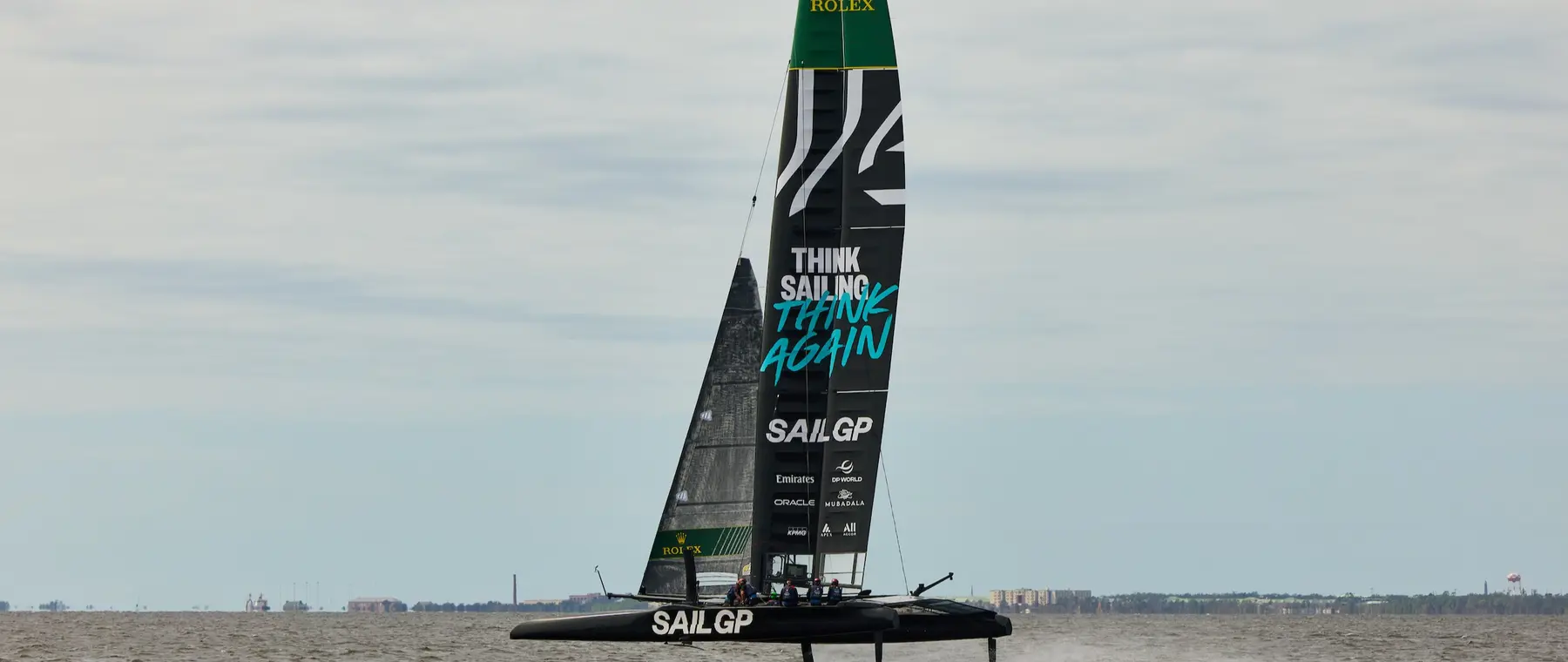
SailGP's 23 October update says Fletcher's crew were first to use the championship's new dedicated training centre at the American Magic High Performance Center in Pensacola. The programme took place outside a scheduled grand prix and used a league training F50. That distinction is important: the training opportunity is not another counted event in the championship standings, nor proof of performance gains in a points race. It is a chance to rehearse boat handling and decisions without the immediate consequence of championship scoring.
Emirates GBR sat fifth in the official championship discussion published earlier in the week, a position independently confirmed by separate SailGP reporting on the Grand Final qualification battle. The title holders were still mathematically capable of reaching the three-boat deciding race, but they faced rival crews with their own strong seasons. That is an unusually exposed place for a defending champion to be late in the calendar. The Pensacola week is therefore more than a routine technical exercise; it is an attempt to reduce avoidable mistakes at a point when the margin for recovery is shrinking.
Why Fletcher has made starting the priority
The starting sequence was the clear theme of Fletcher's post-camp comments. In the governing series' account, he acknowledged that the team had not been consistently strong enough off the line and said the camp was being used to rebuild its approach. In foiling catamaran racing, the first seconds of a leg can shape access to clear wind and dictate the tactical options that follow. For an observer more familiar with club or offshore sailing, the immediate lesson is not that every race can be won at the start, but that a poor start can make every subsequent decision harder.
This season's use of group racing makes the issue more significant. SailGP introduced a split-fleet format during 2026, giving competitors fewer opportunities to repair a weak position by overtaking a large group of rivals. Fletcher's public comments identified that challenge directly. It changes the balance between taking an ambitious line and protecting a clean, repeatable launch. A team may have the boat speed to pass competitors, but tactical space and time are scarce when the course and race format restrict the possible moves.
Fletcher's squad also used Pensacola to focus on sailing in light wind, the conditions they expect to encounter in Dubai and Abu Dhabi. That work involves more than choosing a setting and sailing a few fast laps. Crew timing, flight control, acceleration and smooth manoeuvres all become visible weaknesses when the apparent wind is less forgiving. There is no reliable basis for promising the exact conditions of the November races weeks in advance, but the team's chosen training theme reflects the demands described in SailGP's official race previews.
The series' comparison of leading Grand Final contenders makes the stakes clearer without reducing the sport to a single number. The official analysis published on 22 October identifies Artemis, the United States and Emirates GBR as closely contested teams around the final qualifying place. It also distinguishes strengths in starting performance and light-air sailing, suggesting that no single crew has a universal advantage. Those figures are a snapshot of earlier racing, not a forecast. Pensacola provides practice conditions; it cannot recreate every tactical problem the teams will face in a live fleet.
Shared training changes the pathway for crews
The Pensacola facility is itself an important development for elite sailing. It gives teams access to training outside the narrow windows of championship competition, making it possible to rehearse techniques with less pressure and bring additional sailors into unfamiliar positions. Fletcher's crew tried different role allocations during the week, according to the league. That can matter in a high-speed programme whose success depends on communication as much as individual skill. A team with several sailors confident in more than one task gains flexibility when a line-up changes or an event requires a different response.
American Magic, the host partner, described the centre's purpose as a year-round platform for athlete development and technical work. Its own 19 October announcement confirms that access is intended to be available fairly to the wider SailGP fleet, rather than permanently reserved for one nation. The sharing model means a first user does not own the advantage forever. Other teams can book their own blocks and apply similar methods, making the ultimate difference the quality of the training and its transfer into racing decisions.
The host arrangement reflects a broader shift in how professional sailing talent is developed. Race weekends generate attention but leave little room for an inexperienced crew member to make mistakes safely. A separate training boat and technical base provide space for repeated drills, measured debriefs and systematic work. For younger sailors watching from clubs and training programmes, the visible progression is instructive: elite performance requires deliberate repetition well before the spectators arrive. The model is not directly transferable to ordinary recreational boats, but the emphasis on structured practice is easy to understand.
Dubai and Abu Dhabi put the progress to the test
The next scheduled championship stop is the Emirates Dubai Sail Grand Prix on 21–22 November, followed by the Abu Dhabi Grand Final weekend on 28–29 November. Both date windows are shown in SailGP's published 2026 calendar. Dubai is the immediate test of whether a better starting plan and light-air preparation can translate to points. Abu Dhabi is where the championship reaches its conclusion, subject to the qualifying positions and racing rules that apply when the teams arrive.
For Fletcher and Emirates GBR, the operational challenge is unusually clear. They need to keep refining their starts without undermining the speed and manoeuvring that made them champions. They also need to convert confidence gained on a training F50 into race-day decisions under traffic and pressure. The camp's purpose was not to announce a breakthrough technology or a guaranteed winning formula. Its value lies in the chance to identify weak habits and practise better ones before the final high-stakes events.
The closest rivals will not be standing still. SailGP's official Grand Final coverage says several teams remain in mathematical contention, with a smaller group clustered around the last qualifying place. Every race in Dubai can therefore reshape the problem facing the British crew. Observers should separate the title narrative from the actual points table as results come in; a strong individual race may be important but insufficient on its own. The decisive measure will be the championship position after the qualifying rounds, not the optimism of a successful training report.
Pensacola has given Emirates GBR the thing a troubled season needs most: time on the water for deliberate correction. The organisers' own photographs show the British sailors training aboard an F50, and the published comments explain why starts, light air and squad depth were central to their work. The story now moves back to competition, where improved preparation must stand up against other nations pursuing the same Grand Final place. That makes the November double-header compelling even for people whose ordinary sailing is far removed from the speed of a foiling race boat.