
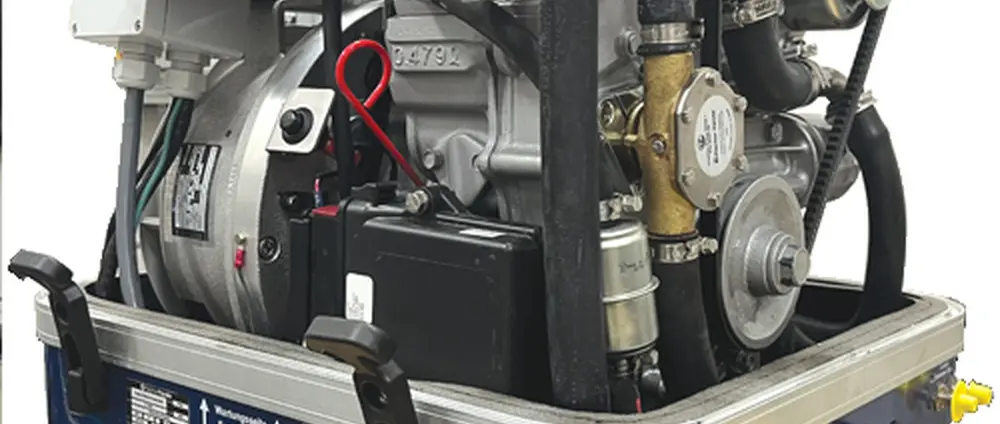
A compact cruiser may need more electrical power than a battery charger and a few lights when refrigeration or other domestic loads are running. Fischer Panda's 5.5e inverter generator is positioned as an option for onboard supply where a higher load must be managed.
The model's suitability depends on a complete vessel electrical assessment, including ventilation, cooling, fuel, exhaust and available space. Its name should not be treated as a universal continuous-output promise.
Matching demand to the system
A generator has to support the intended connected loads and the pattern in which they run. Inverter technology can form part of a modern onboard power arrangement, but correct integration remains important.
An owner should measure typical consumption rather than add catalogue maxima without considering real use. Battery storage and shore power may still provide part of the overall solution.
Installation on a small hull
Noise, vibration, service access and exhaust routing can make a genset impractical in some boats. Mounting and protection should follow the manufacturer's instructions and relevant standards.
Fuel arrangements and periodic servicing add operating responsibilities. A professional installer can assess whether the equipment belongs in the actual boat.
Compare before ordering
The 5.5e sits within a broader catalogue of onboard power equipment. Owners should obtain its current data sheet and contrast it with other models in the intended market.
LBG uses Fischer Panda's official named-product image and release, focusing on practical energy choices rather than a boat-specific installation claim. Power demand should be measured.