
A complete fender kit instead of loose purchases
Fendertex's current Docking Pack brings together inflatable textile fenders, matching covers, spliced lines and an inflation adapter in a configurable package. The French supplier offers several pack sizes, including a C52 configuration positioned by some European distributors for boats around seven to nine metres. This is an examination of an established product range and its current specification, not an announcement that the packs have only just been invented.
For a small-boat owner, the attraction is organisational: buying equipment as a matched set may reduce the chance of forgetting lines or suitable fittings. Whether it is good value depends on the exact contents, dimensions, berth and boat rather than the word 'complete' alone. Packs sold in different markets should not be assumed identical.
Choosing the correct number of fenders
The manufacturer's European product information describes Docking Packs containing six, eight or ten fenders according to the selected configuration, with corresponding covers and ropes. An individual owner may need a different arrangement for a home berth, a visitor pontoon or rafting alongside another boat. The number required is determined by the hull's vulnerable contact points, freeboard, berth height and the conditions in which the boat will be left, not simply by a generic metre range printed on the packaging.
A short motorboat might normally use fenders along one side but need extra protection when alongside a larger vessel. Before ordering, sketch the likely mooring arrangement and check how the fenders will be hung securely. The most generous pack is not automatically the most practical one.
Dimensions are more useful than labels
For example, European Fendertex information lists a C52 fender at approximately 500 millimetres in height and 220 millimetres in diameter, and a C73 at roughly 700 by 250 millimetres. These sizes help show why a pack aimed at a compact boat is different from equipment used against a high quay or on a larger cruiser. The correct fender must reach the contact area between the boat and pontoon and provide enough separation without being so bulky that it slips out of position.
Freeboard varies greatly among open motorboats, sailing craft and small cabin cruisers. Owners should measure the actual hull and mooring environment instead of choosing only by stated vessel length. An otherwise excellent product cannot protect a section it does not cover.
Textile outer construction and air bladders
Fendertex describes a textile outer part made with polyester yarn and a separate polyurethane inner bladder. The manufacturer says the bladder can be replaced if punctured, an important maintenance consideration when comparing a complete assembly with a simpler one-piece product. Its material information also refers to stainless-steel D-rings and reinforced straps.
These details may appeal to owners concerned about handling and storage, but they do not remove the need for checking wear, seam condition and abrasion. A fender rubbing repeatedly against a rough quay can experience concentrated loading that differs from ordinary contact with a smooth pontoon. Service life depends on how the equipment is used, cleaned, stored and protected from sharp edges.
Inflation and storage need a routine
Deflatable fenders can occupy less locker space when not in use, which may be especially useful in a seven-metre boat with few deep compartments. The Docking Pack includes an inflation adapter, while bags and pumps may be included or selected as options depending on the market and supplier. A crew should practise inflation before relying on the kit during a hurried arrival.
The time taken to prepare six fenders is a real operational consideration if a boat frequently enters unfamiliar harbours. Conversely, a skipper who keeps the same berth all season may prefer some fenders left ready at their working pressure. A correctly organised bag and dry, clean storage help ensure the equipment remains available when it is actually needed.
Lines and attachment points are part of protection
A fender's protective effect depends as much on where it hangs as on its diameter. Ropes should be securely attached to suitable cleats, rails or other approved points, adjusted to protect the expected contact area and kept clear of propellers and moving equipment. The packs use spliced lines, but the owner remains responsible for choosing appropriate lengths and locations.
A fender hung too high may leave the hull exposed to a low pontoon; one hanging below the contact point may not help at all. On some boats, a broad beam or pronounced rubbing strake changes the optimum arrangement. The correct response is to test the complete setup alongside, then adjust it for prevailing conditions rather than rely on a brochure photograph.
Not every market sells the same package
An important comparison trap is that distributor offers vary. Some European configurations use six fenders for the smaller sizes, while US-market packages advertised by distributors may contain four fenders and an included battery pump. These are not necessarily contradictory descriptions of the same stock keeping unit; they can be different product bundles. An owner should request a written item list that names each fender model, quantity, cover type, rope length, inflation equipment and bag before comparing prices.
Local delivery costs, taxes and availability can also alter the total. A displayed starting price for a smaller kit should not be compared with a larger pack containing additional hardware. Clear specification prevents the 'complete kit' phrase from obscuring what is actually supplied.
What to inspect before a first mooring
Before relying on a new set of inflatable fenders, practise at a calm berth and check that every valve operates as instructed. Inflate to the manufacturer's recommended condition, examine the textile for damage and verify that lines and attachment hardware remain secure. Then position the boat alongside with appropriate assistance and observe where contact actually occurs.
Strong wind, wash from passing boats and tidal height changes can move fenders away from their intended contact points. Do not rely on the fender pack alone to control a boat: mooring lines, springs and the vessel's position remain crucial. A kit chosen primarily for convenient storage still needs to provide dependable protection under the conditions of the home marina.
Maintenance and replacement are long-term costs
The manufacturer's separate bladder construction may offer a service route after a puncture, but owners should verify whether replacement parts are available in their market and how they are fitted. Salt deposits, grit and prolonged chafing should be addressed according to the care instructions for the specific textile and inner material. The appearance of a soft cover can conceal a small tear or a fastening that is beginning to wear.
A regular inspection should include valves, line attachment points, protective fabric and the condition of the boat surface that contacts the fender. An inexpensive replacement line is preferable to discovering damage when the vessel is already pressing against a pontoon. Keeping one or two spare fenders can also be sensible on longer cruises.
Matching a system to a real small boat
For an owner of a seven-to-nine-metre craft, the Docking Pack is worth considering when locker volume, handling weight and matching accessories are important. It is not automatically a cheaper or safer purchase than separate conventional fenders, and the supplied models should be checked for the precise berth and use. Current manufacturer information confirms that the packs can be configured in multiple sizes, colours and quantities with textile fenders, covers, lines and inflation hardware.
It does not establish an independently measured damage-prevention advantage across every type of quay, or a standard price covering all options. The right decision begins with boat measurements and a written configuration, followed by a practical trial at the berth. This is a more useful ownership test than a promise of convenience alone.
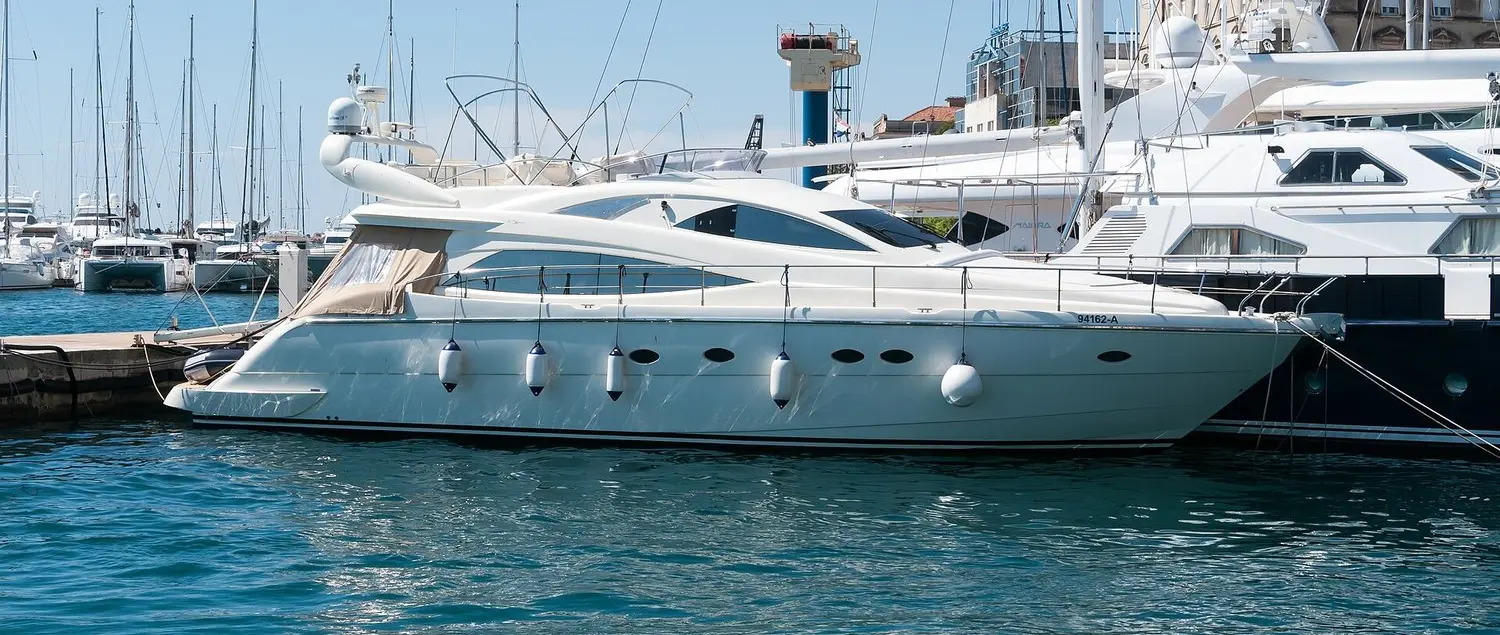
Sources: Fendertex official product specifications; European distributor's size and pack comparison. This is a current product guide, not a claim of a November launch. Photograph: archival Zadar harbour view by Matti Blume, Wikimedia Commons, CC BY-SA 4.0, illustrating mooring rather than a Fendertex product installation. Resized for web use. Original photograph and detailed author credit (Wikimedia Commons). Licence CC BY-SA 4.0.
