
A planned power increase, not a delivered engine
ExploMar intends to outline development plans for a 400hp electric outboard at METSTRADE 2026, adding another high-power target to a market where range, weight and charging remain difficult questions. The announcement distributed by marine communications agency MAA dates to 5 November and places the preview at the Amsterdam industry exhibition on 17–19 November. The company describes the next step as an expansion beyond its current high-performance products, with a fuller debut planned for 2027. It has not announced that customers can immediately take delivery of the new unit.
That distinction matters. A planned power rating is not the same as a verified production specification, and an exhibition preview is not an independent sea trial. For leisure boat owners, the headline is a sign of where propulsion development is being directed. It is not yet proof of an achievable range, a particular battery weight, an installed price or compatibility with a named hull. Those details must be tested and documented before the equipment can be evaluated as a purchase.
What is actually being shown in Amsterdam
The scheduled presentation comes as METSTRADE prepares to welcome industry professionals to RAI Amsterdam. ExploMar's own website lists its attendance for 17–19 November 2026, with a stand reference, and presents a broader electric-propulsion platform that includes outboards, batteries, controls and charging equipment. Its 400hp announcement concerns plans and a first look, not a finished product demonstration with public performance data. Editors and prospective buyers should resist filling that gap with estimates borrowed from the existing 300hp model.
An engine's nominal horsepower is only one part of a useful marine system. The associated battery, cooling, cabling, control software, mounting arrangement and charging provision determine whether a particular boat can operate effectively. Performance claims also depend on hull weight and operating conditions. A motor manufacturer can make an exciting statement about peak output while the skipper's everyday questions remain unanswered: how far can the boat go, at what speed, carrying what load, and how reliably can it recharge?
Why a small-boat audience has reason to watch
A high-powered outboard may seem remote from the needs of a simple dinghy, yet the development is relevant to the upper end of the sub-12-metre leisure-boat market. Fast rigid inflatables, sports fishing boats and compact day cruisers can use substantial outboard power. For such craft, an electric system potentially changes the experience of manoeuvring, noise and local emissions. It may also introduce trade-offs in usable range, battery mass, cost and charging time that need careful scrutiny.
The company has already demonstrated high-power electric propulsion on a shorter boat: its previously reported 8.3-metre XNRG RIB used a WAVE 300 outboard at the 2026 Monaco Energy Boat Challenge. That result relates to an existing 300hp system, not the proposed 400hp engine. It establishes a context for the company's interests in performance-oriented craft, but it cannot be used to predict what the newer unit will do. Owners should treat future demonstrations as evidence only when the actual configuration is disclosed.
Charging is a waterfront problem as well as a boat problem
ExploMar presents charging hardware alongside its motors, including small portable arrangements and higher-power installations aimed at different operators. Those systems highlight a central issue for electric leisure boating: an outboard does not operate independently of an energy supply. A boat that can be charged at its home berth may have a different usage pattern from one launched from a trailer at several sites. Marina power provision, cable handling, charging rules and available time ashore are therefore part of propulsion planning.
It would be premature to say what charger the 400hp unit will require. The new motor's electrical architecture and battery package have not been established publicly in sufficient detail through the announcement. The meaningful questions are about supported charging standards, shore-side infrastructure, thermal management and the actual time needed to replace the energy used during a typical outing. In the absence of these answers, headline horsepower is an interesting development marker rather than a complete ownership proposition.
The battery question cannot be separated
Electric outboard comparisons often begin with a motor's physical size and forget that energy storage must be carried somewhere in the vessel. For a small boat, kilograms devoted to batteries can affect trim, freeboard, seating arrangements and trailer weight. Designers need to consider how mass is distributed and how the installation performs when the boat is loaded with passengers, fuel for any auxiliary system and normal cruising equipment. None of this is solved merely by finding a transom strong enough for a powerful motor.
Battery design also raises questions about protection against water ingress, fault management, cooling, service access and end-of-life handling. ExploMar's published company overview describes a battery platform and integrated monitoring, but owners need model-specific certification and instructions before drawing conclusions. The proposed 400hp outboard's eventual technical documentation will be more useful than its teaser photographs in answering these matters. A credible electric transition depends on the whole package working at sea.
Performance figures need context
The marine industry often quotes power, top speed and endurance as if they were interchangeable measures of progress. They are not. A brief maximum-speed run may demand a very different energy profile from several hours of family cruising. A motor rated to produce high power may not continuously deliver the same output under all thermal and battery conditions. Propeller choice, hull design and weather also influence the experience. These general engineering considerations are especially important when comparing a new electric propulsion system with a familiar petrol outboard.
When full details arrive, useful testing should publish the vessel's dimensions, displacement, crew and load, battery capacity, charging conditions, sea state and speed profile. Independent observations would help distinguish performance demonstrated on the water from marketing projections. Until then, an owner should not assume that a 400hp electric outboard is interchangeable with a conventional 400hp installation. The numbers may be similar on a brochure while the operating constraints differ significantly.
A wider range of possible users
The announcement places particular emphasis on larger and demanding applications, including commercial marine uses. That is an important qualifier for a leisure-boat publication. The product's eventual priority customers may not be families buying compact runabouts, and no claim has been made that it will suit every sub-12-metre vessel. Nevertheless, technology developed for demanding operators can later inform recreational designs, while some high-performance smaller craft share the same engineering challenges of weight and power delivery.
Boatbuilders, dealers and service providers will want to understand integration and support as well as raw performance. An outboard system needs suitable controls, diagnostics, spare parts, trained technicians and warranty arrangements in the regions where it is sold. The company's stated international dealer ambitions are a sign of the direction of travel, but actual service availability should be checked locally. A powerful propulsion concept is useful to a recreational owner only when it can be maintained reliably.
The 2027 timetable
According to the announcement, ExploMar expects the 400hp unit to receive its formal debut at the China (Shanghai) International Boat Show in March 2027, following the Amsterdam preview. That is a proposed timetable, not a delivery guarantee. Product development can reveal technical or certification issues that affect availability. No responsible purchase decision should rest on a calendar announcement alone, especially where a boat requires structural, electrical or charging modifications to accommodate a different propulsion system.
The METSTRADE preview is therefore a sensible point to seek answers: how will the manufacturer define continuous and peak power, what is the intended battery platform, which hulls are initial targets, and when will independent sea-trial and compliance information be released? Clear answers will matter more than the first photographs. Buyers should compare the eventual 400hp offering with other available propulsion options using practical mission requirements rather than assuming newer always means better.
What this announcement means now
ExploMar's 5 November statement adds a proposed 400hp class to the conversation about high-power electric outboards. It follows development work on lower-rated systems, and the company intends to use the November trade show to explain its next step. The important factual boundary is clear: the proposed unit is not yet a confirmed, fully specified production engine. That boundary protects readers from mistaking a technology roadmap for an available boat upgrade.
Leisure Boat Guide will assess the model against real small-boat use when technical specifications, verified testing and pricing become available. For now the source is MAA's ExploMar announcement, supported by the manufacturer's description of its broader propulsion platform and the official METSTRADE dates. It is welcome evidence of continued investment, but the eventual test will be range, safety, serviceability and value when installed in a real hull and operated by ordinary crews.
Sources and image credit
Primary announcement: MAA / ExploMar media announcement. Additional official context: reference 1; reference 2.
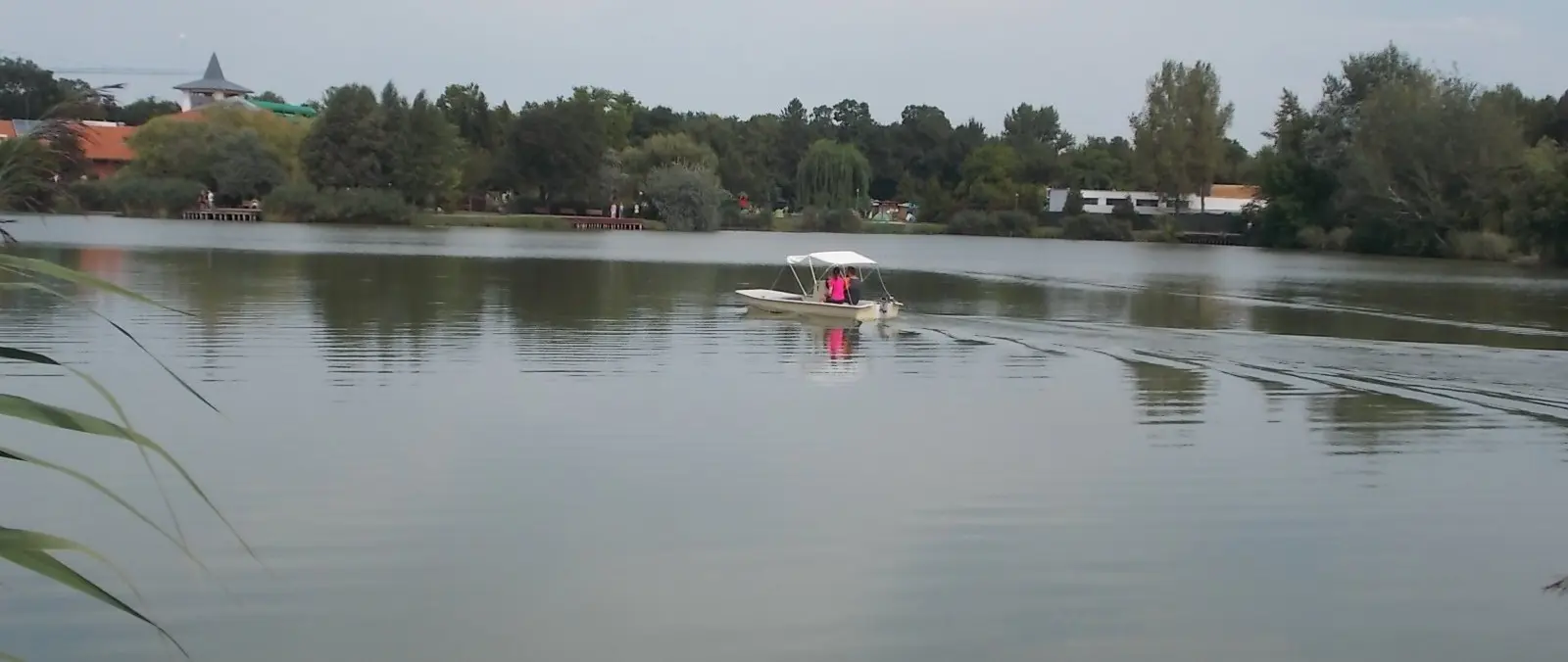
Illustrative archive photograph of an electric boat in Hungary in 2017; not ExploMar's proposed 400hp outboard. Photograph: Globetrotter19 / Wikimedia Commons, CC BY-SA 3.0; resized and recompressed for web and shared under the same licence.
