
Europe puts recreational boating inside its tourism plan
The European Commission’s newly published Sustainable Tourism Strategy gives recreational boating a more explicit place in the European travel agenda. Released on 4 November 2026, the policy paper identifies two issues that matter directly to boat owners and marina operators: licences that are not consistently recognised when crossing national borders, and the need to modernise ports and marinas. The Commission is proposing further work on these obstacles; it has not announced an immediate new licence valid automatically in every European country.
That distinction is essential for sailors planning passages this winter or charter customers reserving a boat for next summer. A Commission strategy explains a direction of policy rather than replacing national rules overnight. The document, formally numbered COM(2026) 777, also covers wider tourism investment, visitor management, business skills and digital infrastructure. Leisure boating is only one part of that agenda, but its inclusion is notable because yacht cruising often involves several jurisdictions within a single trip.
A proposal to tackle conflicting licence recognition
The Commission’s communication recognises that visitors travelling by leisure boat can encounter difficulties when a qualification accepted in one country is not accepted in another. It says it intends to seek harmonisation through a proposed Council Decision applying United Nations Economic Commission for Europe Resolution No. 40. That resolution concerns the International Certificate for Operators of Pleasure Craft, commonly known as the ICC. For the moment, the plan is a future policy action, not a completed legal change.
National rules still matter for a visiting skipper. Requirements can vary with vessel size, propulsion, inland waterways, commercial use and the flag or registration of the craft. A charter company may also impose insurance or competency conditions that go beyond statutory minimums. The proposal could eventually make documentation more predictable, but it would be wrong to tell boaters to stop checking local requirements. Anyone organising a cross-border cruise should continue to confirm the relevant qualification rules with the appropriate authorities and operator.
Why the ICC framework is part of the discussion
UNECE Resolution No. 40 provides an established international framework for an operator competency certificate. The Commission has chosen it as the foundation for its proposed Council action instead of suggesting an entirely new recreational licence designed from scratch. The approach could offer a common reference point when countries assess a visiting skipper’s credentials. It does not necessarily mean that every existing national qualification will be considered equivalent without conditions or that all countries have adopted the framework.
From the perspective of the ordinary owner, the value would lie in reducing uncertainty before arrival at a foreign marina or inland-waterway entry point. A clear certificate-recognition process could also help charter firms explain what documentation customers need. Yet implementation may require decisions on participating jurisdictions, categories, issuance and enforcement. The published strategy does not supply those operational details, and responsible cruising advice must keep the boundary between the Commission’s ambition and rules presently in force.
Marina upgrades feature in the Commission's language
The strategy also states that infrastructure at EU ports and marinas should be upgraded, modernised and made more sustainable. That is a broad policy commitment that recognises the practical role of waterfront facilities in tourism, especially for islands and coastal regions. Moorings, shore utilities, reception arrangements, waste handling and safe access all affect how visitors experience a destination. However, the document does not promise a dedicated grant to each marina or publish a list of approved building projects.
Marina investment can have very different priorities from one location to another. A busy harbour may need electrical capacity and wastewater collection, while a smaller coastal facility could benefit more from reliable pontoons and weather-resilient access. Environmental measures must be considered together with local navigation and habitat requirements. The Commission encourages infrastructure investment, but individual schemes will still need finance, permits, technical design and agreement among the relevant public and private parties before anything is built.
The industry has pressed for change for years
European Boating Industry has long called for clearer cross-border qualification rules and better recognition of water-based tourism. In its earlier policy work, the trade body described fragmented requirements as a barrier to boaters, rental businesses and the wider nautical economy. The Commission’s November document responds to this kind of concern by naming pleasure-craft certificates directly in a major tourism strategy. Industry support for the proposal does not mean that the requested legislation has already been adopted.
The association has also emphasised the importance of investment in marinas, greener infrastructure and fair treatment of boating as tourism. These positions reflect the needs of a sector that includes boatbuilders, charter firms, marinas, repair yards, watersports businesses and local service providers. The full economic effect is difficult to infer from a policy announcement alone. The useful development is that issues once discussed mainly within the marine trade now appear in a broader European Commission programme.
A wider strategy shaped around smaller businesses
The Commission estimates that tourism contributes around ten per cent of the EU’s gross value added when direct and indirect effects are counted, supporting more than twenty million jobs and approximately five million businesses. It says 99 per cent of those businesses are small or medium-sized enterprises. The figures cover tourism generally, not just boating, but they help explain the emphasis on simplifying administration and giving smaller operators better access to skills, technology and investment.
For a boatyard offering visitor repairs, a sailing school serving holidaymakers or a family-owned marina, administrative complexity can absorb resources better spent on customers and maintenance. The EU strategy proposes initiatives to improve tourism information, business capacity and cooperation between destinations. It does not specify that all such firms will receive direct financial assistance. Owners and businesses should watch the design of individual schemes, including eligibility and application arrangements, before relying on anticipated benefits.
Digital tools and balanced visitor flows are priorities
The announced programme includes an EU Tourism Observatory, a Common European Tourism Data Space, a tourism academy and a simplification initiative. The Commission wants destinations to use better information and tools to manage visitor numbers, make travel easier and encourage visits beyond the busiest periods. These proposals are cross-sector programmes rather than new electronic navigation requirements for pleasure boats. Their relevance to marinas and coastal towns will depend on how nautical tourism is reflected in the eventual data and services.
Better information could help a coastal destination understand seasonal demand for berths, local transport and shoreside amenities, but this is a potential application rather than a system the Commission says is already operating. Similarly, a strategy to spread visitors across regions might benefit lesser-known cruising harbours while creating questions about local capacity and environmental protection. Tourism planning works best when resident needs, harbour safety and the physical limits of a waterfront are recognised alongside visitor numbers.
Funding is encouraged but no marina grant is guaranteed
The communication asks Member States to consider sufficient public and private investment for tourism infrastructure, explicitly including ports, marinas and waste-management facilities. It also reviews the range of existing European funding programmes that have supported tourism development. This should not be reported as a newly created marina construction fund or as evidence that any particular harbour has secured money. Financing decisions generally occur through separate national, regional or European programme procedures.
Operators assessing upgrades will still need project budgets, environmental and planning assessments and clear evidence that a facility meets local needs. The strategy may strengthen the case for eligible proposals, but it does not remove procurement requirements, state-aid questions or other applicable controls. Boaters can reasonably welcome a stronger policy emphasis on well-maintained infrastructure while remaining realistic about how long waterfront projects take. For now the official text is a framework for action, not a timetable of completed improvements.
What this means for owners, charterers and clubs
An owner planning a Mediterranean cruise should view the licence-recognition proposal as a future possibility and continue using current official guidance for each coastal state. The same is true for clubs organising cross-border events and charter operators checking the qualifications of prospective skippers. An ICC held by one person may be accepted in some places, but the Commission’s announcement does not create universal recognition. Equally, any eventual change must be understood in relation to the vessel and activity concerned.
For marina customers, the infrastructure language is encouraging because dependable facilities influence both safety and enjoyment of boating holidays. The strategy also recognises that transport connections and local services are part of the visitor experience; a berth is rarely the whole holiday. None of these considerations changes existing navigation rules, environmental obligations or local harbour requirements. The immediate practical value is awareness of the policy direction, followed by careful monitoring of concrete measures when they are formally proposed.
The milestones that will show whether policy becomes practice
The next important step for cross-border boating credentials is the Commission’s proposed Council Decision and any subsequent procedure that clarifies scope and implementation. Owners should look for an official text setting out which certificates and circumstances are covered, not rely on social-media claims that Europe has introduced a single boating licence. For marinas, future funding calls, national infrastructure programmes and individual planning decisions will show whether the strategy translates into tangible improvements around the coast.
The Sustainable Tourism Strategy puts recreational boating into a wider discussion about more competitive and resilient European travel. Its explicit references to pleasure-craft qualifications and sustainable marina infrastructure are meaningful, particularly for small businesses and visiting sailors. Yet the careful conclusion is limited: on 4 November 2026 the Commission published a strategic plan and committed to further proposals. Existing licensing arrangements remain relevant while those proposals are developed, examined and, if approved, put into effect.
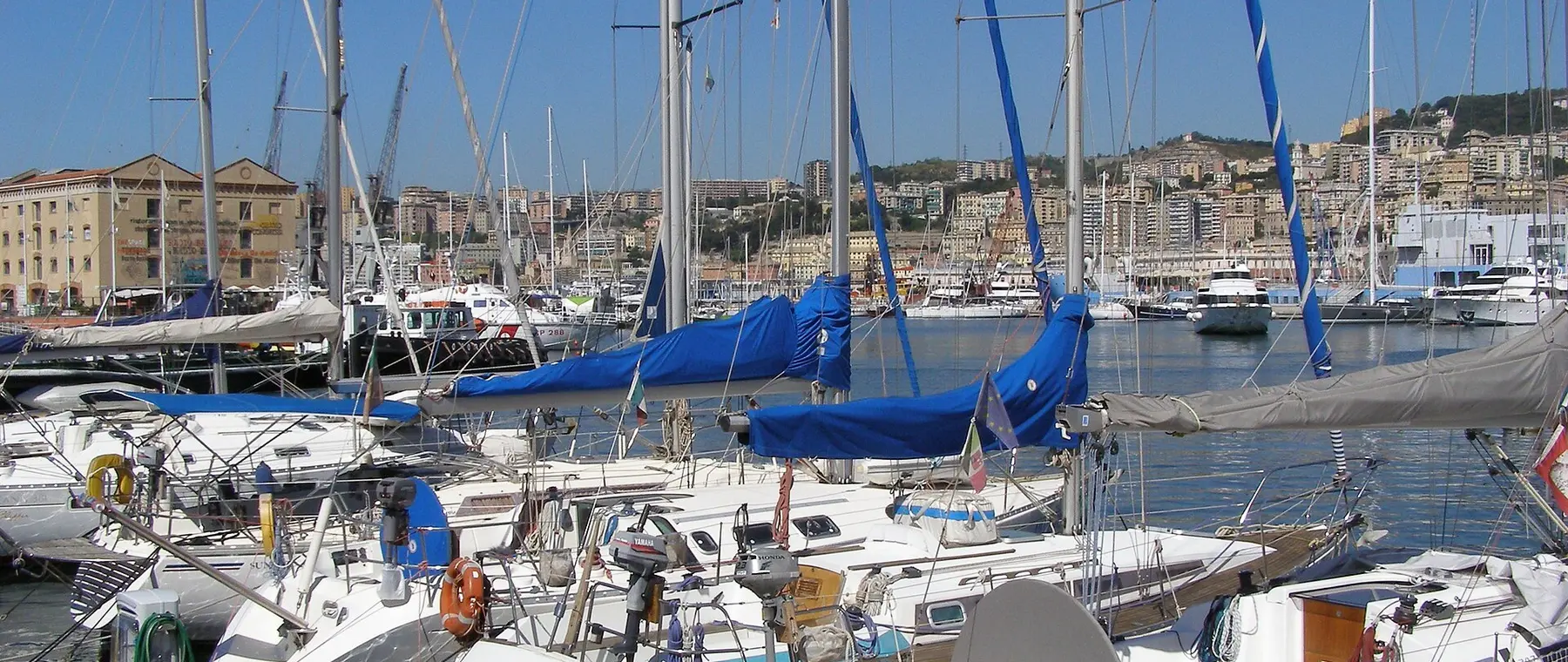
Image credit: Andrzej Otrębski / Wikimedia Commons, CC BY-SA 3.0 — licence. Illustrative photograph; resized for presentation.

Source: European Commission Sustainable Tourism Strategy, 4 November 2026 (COM(2026) 777).