
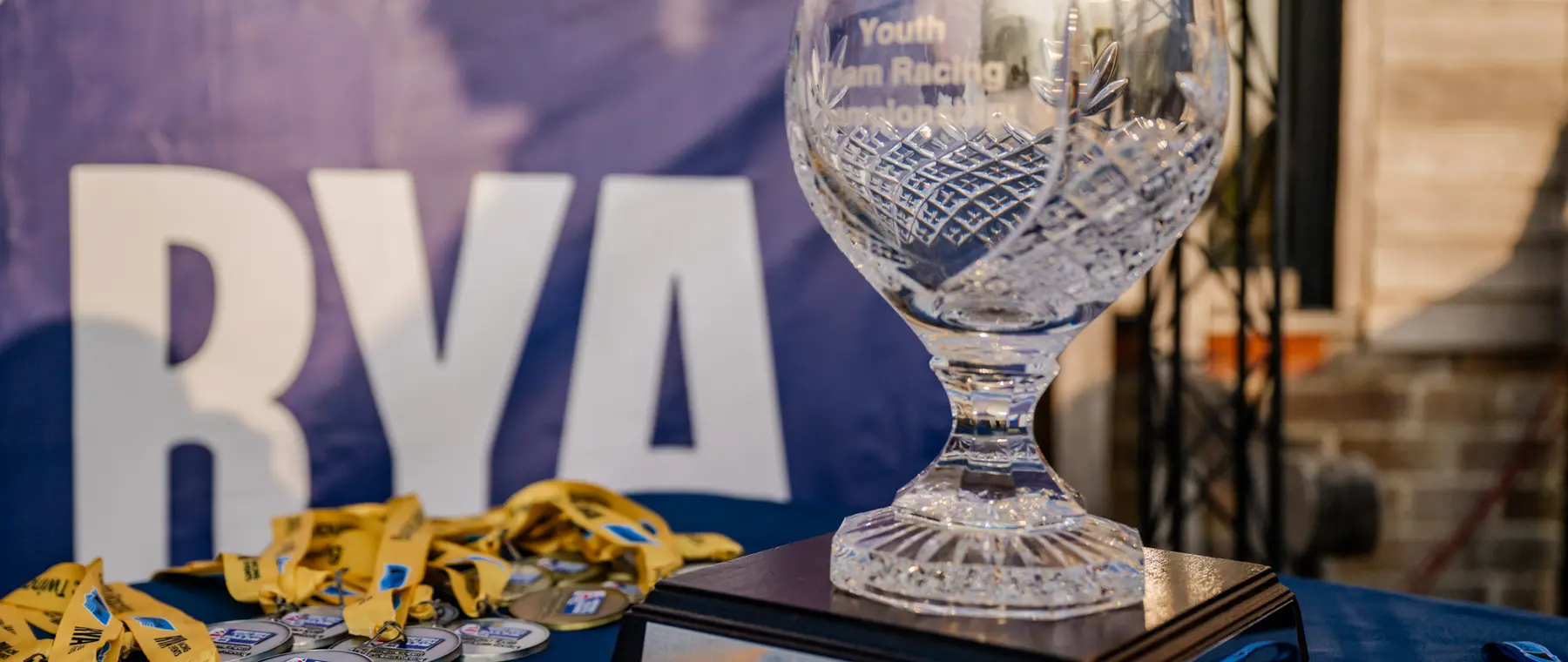
A championship decided by decisions, not just boat speed
The 2026 RYA Eric Twiname Youth and Junior Team Racing Championships brought three age groups together at Oxford Sailing Club on 10 and 11 October. The event tested something more complicated than a single boat crossing a finishing line first: crews had to manage the combined positions of their team, protect partners under pressure and adapt their choices as a race developed. The Royal Yachting Association published its championship account on 19 October, providing the official finishing order.
Team racing rewards tactical coordination, and the format can produce reversals that would look surprising in an ordinary fleet race. A sailor gaining a place is not always the decisive move if a teammate is left behind. Equally, slowing an opponent through a permitted manoeuvre can alter the balance for the whole team. That is why the final standings deserve attention beyond the winning names: they reflect a succession of quick decisions across multiple boats.
Rutland Rebels take the Youth title
In the under-19 Youth division, the Rutland Rebels won the championship in Fireflies. According to the RYA's post-event account, their final against Sevenoaks White was decided by two races to one. Ryde on Time completed the podium in third place. The separate youth results published through the kSail competition service provide a useful independent record of the Youth division, supporting the reported championship outcome.
The Youth format put teams of six sailors into three boats racing against another three-boat team. That creates a particular tactical puzzle: one strong finish can be insufficient when the remaining teammates are exposed, so sailors must constantly read the relative positions of all six boats. Rutland's narrow final margin illustrates how a championship can remain open until the last contest, with the ability to recover and cooperate as important as an early lead.
Seaford College claims Junior honours
The Junior title went to Seaford College, with Rutland Racers second and Sevenoaks Black third. This was the under-17 division and it used RS Fevas in two-against-two competition. The RYA's championship report identifies that podium, and the Junior results on kSail also show the corresponding order. The format gives younger teams a smaller but no less demanding racing picture to manage.
In two-boat team racing, the priority is the pair's result rather than an individual finish. Crews have to judge when to cover an opponent, when to continue sailing fast and when helping a teammate will produce a better overall combination. For parents and coaches following junior sailing, this makes the class a valuable indication of transferable abilities: rules awareness, calm communication and the habit of making choices with another crew in mind.
Walhampton Blue wins Super Junior division
Walhampton Blue secured the under-15 Super Junior championship, ahead of NEYYSA mINEOS in second and Walhampton Red in third. This youngest category also raced RS Fevas in a two-against-two configuration. The RYA published the podium in its recap, while the event's Super Junior kSail results offer a second way to check the order. The presence of two Walhampton teams on the podium was a notable feature of the final table.
The Super Junior competition matters because young crews are learning to combine sailing technique with judgement about the wider race. A boat can have good starts and strong straight-line speed yet still struggle against a pair that communicates better around the course. The best lesson for aspiring team racers is not that individual pace is irrelevant; it is that pace must be used at the right moment, in support of the team's overall position.
Oxford Sailing Club hosts demanding conditions
The championship took place at Oxford Sailing Club over the weekend of 10–11 October. The RYA reported winds in the region of 17 to 23 knots, conditions that placed a premium on confident handling and effective decision-making. Those numbers come from the organiser's account of the event, rather than a separate weather observation. They describe an environment in which sailors needed to manage boat control while reacting to opponents.
Windier racing can amplify small errors. An untidy manoeuvre may cost more ground, and a boat that loses momentum can become vulnerable to a well-placed opponent. In team racing, such errors affect not only the crew making them but also the choices available to teammates. For a national youth championship, coping with that extra workload is part of the sporting challenge, particularly when competitors must transition rapidly from one race to the next.
How the formats change the contest
The oldest age group raced in three-versus-three Fireflies, while both younger divisions used two-versus-two RS Fevas. These are not merely different boat selections; the number of boats changes the tactical possibilities. Three-boat teams must consider more finishing-order combinations and often have more opportunities to reposition an opponent. A two-boat contest is easier to read from the shore but places a sharp emphasis on the relationship between the two friendly crews.
Different formats can encourage the same underlying skills. A successful team must understand the racing rules, anticipate where other boats will be in the next few seconds and communicate without distraction. Sailors also need to recognise when an apparently aggressive move is unnecessary. Protecting an already favourable pair of finishing positions can be the more mature choice. The championship therefore provides useful experience for competitors progressing through the RYA's youth racing pathway.
What the results tell coaches and sailing families
These results should be read as a record of the championship, not as a ranking of every young sailor or sailing programme in the country. Performance at one event is shaped by pairings, changing conditions, the specific racing format and how well teams respond to pressure. Nevertheless, the podium gives clubs and schools a clear reference point for reviewing their training and offers younger competitors teams to watch as they develop their own racing.
For families new to the sport, the practical distinction between fleet racing and team racing is worth understanding. Fleet racing usually measures how a boat finishes within a group; team racing measures whether a coordinated group of boats produces the stronger combined result. It develops a collaborative dimension that is sometimes less visible in individual competition. Watching a race with that principle in mind makes sudden changes of pace or course far easier to interpret.
Organisers and volunteers underpin the event
The Royal Yachting Association acknowledged the support of Oxford Sailing Club, the Eric Twiname Trust, RS Sailing and the volunteers involved in running the championship. An event with multiple age groups and racing formats depends on more than the sailors and their coaches. Courses need managing, races need officiating and results must be assembled accurately enough for teams to understand how a round or final has been decided.
Those supporting roles are particularly important in youth racing, where a well-run regatta allows participants to concentrate on competing and learning. The published results also matter after the boats are ashore. They let clubs review outcomes and families check the record without relying on informal reports. The RYA recap and the separate kSail divisional results together provide a clearer documentary trail for this year's winners.
The final podium and where to check it
The three champions were Rutland Rebels in Youth, Seaford College in Junior and Walhampton Blue in Super Junior. Sevenoaks White and Ryde on Time filled second and third in Youth; Rutland Racers and Sevenoaks Black followed Seaford College in Junior; and NEYYSA mINEOS and Walhampton Red followed Walhampton Blue in Super Junior. These placings are taken from the RYA's 19 October championship report and cross-checked against the published kSail division tables.
The next useful step for interested sailors is to examine the official divisional results alongside the summary, because a podium alone cannot explain how the racing developed. For clubs preparing young crews, the championship is a reminder to practise boat-handling and team communications together, rather than as unrelated exercises. Above all, the results celebrate coordinated sailing at three stages of development—and the work that makes competitive junior team racing possible.