
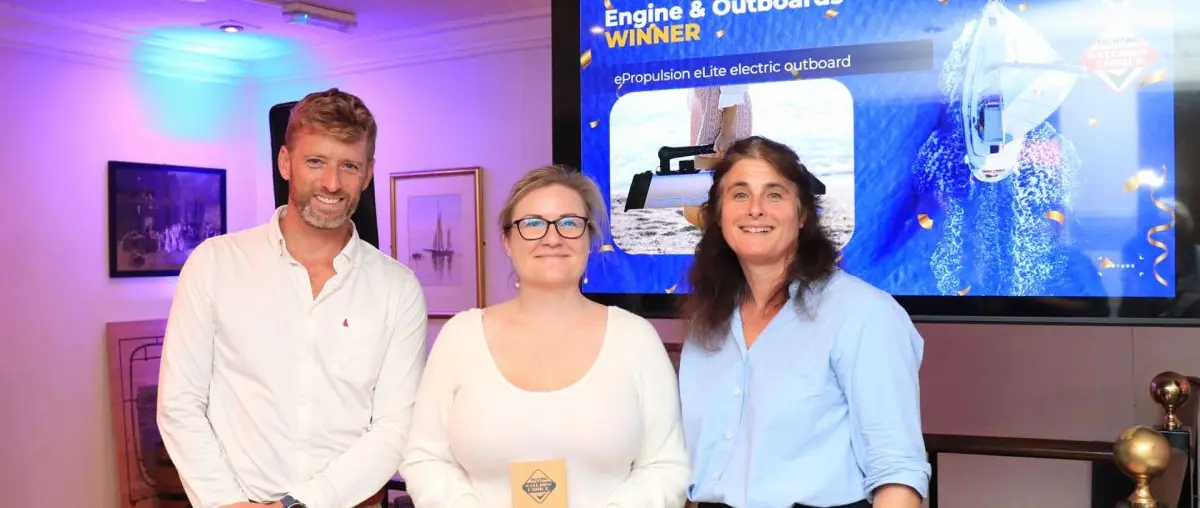
A small electric outboard aimed at everyday tender use
The eLite combines its motor, battery and controls in a single 6.7kg package intended for tenders, dinghies and other lightweight craft. Its direct-drive motor produces 500W of nominal power, with a Sport Mode that can raise output to 750W when extra thrust is required.
An integrated 378Wh lithium battery removes the need to carry a separate fuel tank or external traction battery. A folding tiller and compact form are intended to make the unit easier to move between storage, car, dock and boat.
Public voting decided the award
The Sailors’ Choice Awards were organised by Practical Boat Owner and Yachting Monthly with sponsorship from Haven Knox Johnston. Products were nominated by sailors and boat owners before category winners were determined through a public vote.
That format makes the award different from a purely technical jury assessment because it reflects the preferences of participating users. It does not replace independent performance testing, but it provides another indicator of how owners perceive current equipment.
Low maintenance is part of the electric proposition
ePropulsion promotes the eLite around quiet operation and minimal routine maintenance compared with a small petrol outboard. There is no fuel system, engine oil or pull-start mechanism, and the direct-drive arrangement reduces the number of mechanical components.
Electric propulsion still requires realistic planning around battery capacity, charging access and expected range. Wind, current, load and hull efficiency can all have a substantial effect on how long a small electric outboard can provide useful propulsion.
The award adds to growing small-boat electrification
Lightweight electric outboards are becoming a practical alternative for short tender trips, sheltered-water dinghy use and low-speed harbour operation. Their strongest case is usually where short range, easy carrying and quiet operation matter more than sustained high output.
For LBG readers, the eLite sits at the accessible end of marine electrification rather than the larger integrated systems used in cruising yachts. Buyers should compare thrust, battery endurance, charger availability and total carrying weight against the petrol outboards they would otherwise consider.
Official sources: www.epropulsion.com.