

British Marine has welcomed a provision in England's proposed visitor-levy legislation that appears to keep most ordinary boating and moving holiday vessels outside the planned charge, while continuing to oppose tourism levies in principle. The trade association published its position on 9 November 2026 after the Visitor Levy (England) Bill was introduced in Parliament on 4 November. The Bill received its second reading in the House of Commons on 16 November and is due for further committee scrutiny in December. It has not become law, and no owner should treat a proposed exemption as a final tax ruling. The distinction that matters to smaller leisure boats concerns vessels permanently situated in one location and used for commercial accommodation, as opposed to boats that travel.
A proposal for local visitor charges
The legislation would provide a national framework under which eligible strategic authorities in England could introduce levies connected with paid overnight accommodation. The government has described the measure as giving local leaders a new source of revenue for services and the visitor economy. The proposed powers are not identical to an immediate nationwide tax on every overnight stay. Each participating authority would need to act under the legal framework and any subsequent requirements. The rate and detailed local arrangements may vary when powers are eventually implemented. For boat owners, this means that the existence of a bill is not evidence that a marina has already acquired the right to add a new charge to a visiting berth.
British Marine's central concern
The trade association argues that a boat travelling as a vessel should not be treated as though it were a stationary hotel room. British Marine has opposed broad tourism taxes and has campaigned for marine-sector distinctions to be reflected in legislation. In its November statement, the organisation welcomed wording that it believes excludes most vessels from the proposed visitor levy. This is the association's interpretation of the Bill, not a definitive judicial ruling. Readers should examine the enacted law and any official guidance when the process is complete. A marine-industry position can be a useful indicator of potential practical consequences while remaining separate from the legal text itself.
Permanently situated vessels are treated differently
The Bill's proposed definition of local visitor accommodation includes a vessel only when it is permanently situated at, or attached to, a single location for relevant accommodation purposes. That is a narrower concept than simply being a boat with sleeping berths. A moving narrowboat, a visiting cruising yacht and a stationary floating holiday lodge may have different characteristics. The precise application will depend on final definitions and the nature of the commercial use. It would be misleading to suggest that every boat that stays overnight in a marina is automatically within scope. Equally, it would be wrong to promise that all floating accommodation is excluded regardless of how it is operated.
An ordinary berth is not necessarily accommodation
A mooring charge generally relates to the use of a berth or other marine facility. Such a charge may include access to utilities, security or marina services, depending on the contract. A visitor levy aimed at accommodation concerns a different subject. British Marine says it has argued against treating ordinary boat berths as taxable overnight lodging under this type of policy. The proposed provisions appear to recognise an important distinction, but the final legal and administrative position must be confirmed. Owners should not assume that an invoice containing an overnight mooring fee is equivalent to an accommodation invoice for a floating holiday property.
Moving hire boats occupy a special place
The UK has a substantial inland-boat holiday market, with narrowboats and other craft used to travel between destinations. Guests may sleep aboard while the vessel moves along canals or rivers. That experience differs from booking a stationary structure permanently used as visitor accommodation. British Marine's statement argues that most ordinary boating holidays should remain outside the new charge under the wording presented in November. Actual treatment may depend on the way a particular business operates, so hire companies should follow legislative developments rather than rely solely on broad descriptions. A boat permanently fixed in one location could create different questions from an otherwise similar vessel actively used for cruising.
Floating lodges may fall within the definition
Some businesses provide accommodation aboard floating structures that do not function in practice as travelling boats. A vessel permanently moored or attached to one site and marketed as an overnight holiday unit may resemble other kinds of paid accommodation. The government's proposed definition explicitly refers to the situation of a vessel permanently situated at one location. That does not automatically answer every case; details such as the legal status of the structure and the terms of the let may be important. Businesses considering investment in floating accommodation should seek advice on the final legislation before committing to a particular tax assumption. The distinction concerns use and location, not simply whether the structure can float.
The Bill is still going through Parliament
As of 21 November 2026, the Visitor Levy (England) Bill has passed its second reading but remains subject to parliamentary scrutiny. The Public Bill Committee has invited evidence and is expected to begin detailed examination on 1 December, with a reporting deadline in December. The current draft may change before enactment. Some political debates have focused on the burden of additional charges on tourism businesses and the extent of local discretion. Those arguments do not themselves amend the law. Readers seeking current legal details should consult the Parliament Bill page and official explanatory material rather than relying on summaries that may reflect an earlier version of the text.
National definitions and local discretion
British Marine's concern is not only whether boats are excluded in the first draft, but whether the framework keeps the scope clear when local authorities set their arrangements. The association has asked for reassurance that discretionary powers will not be used to extend the levy beyond the nationally defined accommodation types. This is a practical issue because boating takes people across administrative boundaries, and a vessel may use several marinas on one journey. Consistent treatment would make it easier for operators to explain charges to customers. A patchwork of unclear interpretations could create administrative work for marinas and confusion for visiting crews. The final legislation and regulations will determine how much certainty is achieved.
A political debate with different interests
Supporters of visitor levies argue that overnight tourism creates demand for local services and that authorities should be able to raise dedicated revenue. Opponents worry that extra charges may discourage visitors or increase costs for hospitality businesses. British Marine belongs to the group urging caution about the consequences for its sector. These arguments are contested and require evidence rather than assumptions about inevitable outcomes. A levy could affect areas differently depending on the rate, the destinations and the types of accommodation offered. The boat-specific question can be considered separately from the wider debate: does the framework distinguish boats used for navigation from stationary holiday accommodation in a clear and workable way?
Visiting yacht owners may want written clarification
A skipper booking a short stay in an English marina should confirm the advertised berthing charge and any existing fees or taxes. If a marina refers to the proposed visitor levy, the owner can ask which current legal provision or published policy applies. A future tax should not be presented as already enacted. If the Bill becomes law, the individual situation may still depend on whether the customer is paying for a berth or a qualifying accommodation service. Written information helps owners budget and reduces disagreement at checkout. No one should assume that an ordinary marina can invent a visitor-levy surcharge without a relevant legal basis.
Inland tourism businesses face operational questions
A hire company may operate several bases or allow a boat to be collected at one location and returned to another. Such arrangements can be more complicated than the fixed address of a hotel or guesthouse. A levy based on permanently situated accommodation would need definitions that work with the realities of boats that navigate. Operators would also need guidance on mixed-use businesses that offer both travelling boats and static accommodation. British Marine's response focuses on avoiding unintended inclusion of ordinary boating activity. The Bill's progress may therefore interest businesses whose products combine tourism and vessel operations. However, the association's interpretation should not substitute for the final rules.
Residential use is a distinct issue
People living aboard boats can have very different arrangements from commercial visitors. Some are long-term marina residents, while others travel frequently or use private moorings. A visitor levy intended for paid temporary accommodation should not simply be assumed to apply to every residential arrangement. Other tax, planning or contractual issues may arise in a particular case and are outside the scope of this announcement. Owners should be cautious about broad claims that one piece of legislation resolves all questions concerning liveaboard vessels. The present Bill is about specified accommodation and the powers of eligible authorities, not a wholesale rewrite of every legal rule affecting boats on inland waterways.
Previous debates help explain the concern
British Marine says its position reflects earlier engagement with government consultations and experience of similar arguments in Scotland. It has sought to prevent ordinary berths and moorings from being treated as taxable visitor accommodation. Those previous discussions provide context for why the association is responding to England's proposed framework now. They do not establish that the English Bill will ultimately have identical wording or enforcement to any Scottish measure. Legislative systems and local powers differ. The most reliable approach is to assess the current Bill on its own terms while noting the industry's consistent request for a workable distinction between navigating boats and permanently situated holiday units.
Clear information helps tourism and marinas
Even an exemption can create uncertainty if operators do not understand how it works. Marina staff may have to explain charges to visiting crews, and a hire company may need to show customers what is included in a holiday price. Confusion can lead to disputes or inaccurate advertising, especially while the law remains under discussion. British Marine's request for ministerial reassurance reflects a desire to make the position clearer before implementation. The government may issue additional guidance as the legislation develops. Until then, businesses should avoid making categorical promises about future liability and should distinguish existing fees from proposed changes.
The parliamentary timetable matters
The Bill was introduced on 4 November 2026 and received its second reading on 16 November. Committee scrutiny is scheduled to continue into December, providing opportunities for further consideration of the wording. Those dates help clarify that the measure is still a proposal at the time of this report. A boat owner reading about the Bill in November should not interpret a newspaper headline as a notice that charges begin immediately. Legislation can be amended, delayed or otherwise changed during parliamentary proceedings. Businesses with significant exposure to floating accommodation would be prudent to monitor official publications and obtain appropriate professional advice before finalising future prices.
A boating photograph is not evidence of a tax
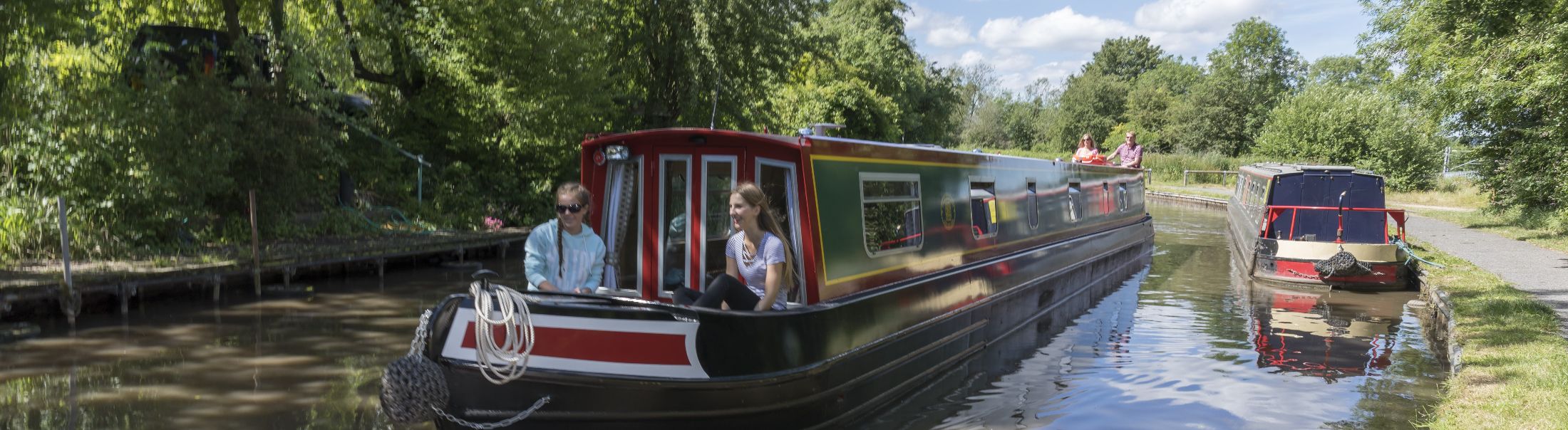
A separate British Marine press release about ABC Boat Hire's Fenny Marina base supplies an original photograph of a narrowboat travelling on an English canal. That image illustrates the type of moving recreational holiday boat discussed in the proposed legislation. It is not a photograph of an actual taxpayer or a vessel legally assessed for the proposed levy, and it does not show parliamentary proceedings. The photo remains credited to its original supplier, with the original image linked in this article's source notes. The legal reporting rests on British Marine's statement and the published Bill, not on the illustration.
What is known and what remains open
The available November material supports several conclusions: the government has introduced a visitor-levy framework for England, British Marine believes the current wording excludes most ordinary moving boats, and the definition concerning vessels permanently situated at one place is central to the discussion. It does not support a claim that a final levy is in force or that all conceivable boat-related accommodation arrangements have been definitively classified. The rate, participating areas, effective dates and final guidance remain subjects for further action. Separating those matters helps readers understand the issue without overstating either the association's success or the government's policy.
A relevant distinction for recreational boaters
For owners of smaller cruising boats and hire craft, the Visitor Levy (England) Bill raises a straightforward question: should travelling by boat be treated like purchasing a night's stay at a fixed accommodation property? British Marine has argued that it should not, and the November draft appears to draw a boundary around permanently situated vessels used commercially for lodging. The final law may still change, so operators and boat owners need to keep the parliamentary process in view. The industry's immediate interest is clarity, fairness and the avoidance of confusion at marinas and hire bases. As of 21 November 2026, this remains a developing legislative proposal rather than an enacted new charge on ordinary overnight boating.
Official sources and photography
Reporting independently based on Original primary November 2026 issuer announcement.
Official source product photograph: Actual ABC Boat Hire narrowboat navigating an English canal, original company-provided 2026 British Marine press photograph illustrating moving holiday craft, not the visitor levy law. Original image rights remain with the source publisher and photographer. Official press-image source.
Independent background or documentary context (not the source of the new announcement): Documentary source 1, Documentary source 2.