
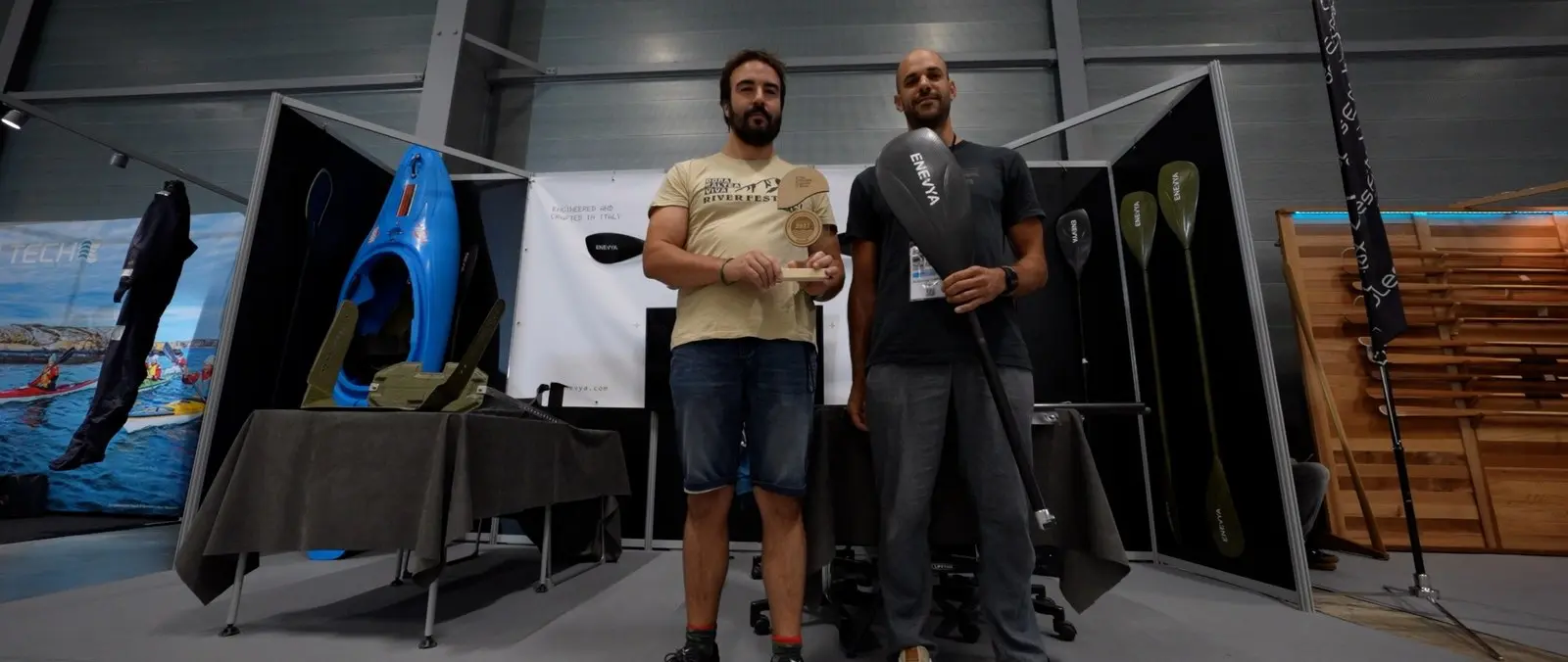
An award for an essential piece of river equipment
The Enevya Strato has been named Paddle of the Year for 2027 at the Paddle Sports Show in Strasbourg, placing attention on a component that matters to paddling performance every time a boat is used. The organiser describes a high-performance carbon paddle with foam-free construction, a standard-size blade and a choice of one-piece or two-piece arrangements. The product is intended to deliver power and control across a variety of river conditions.
Unlike a kayak hull, a paddle moves continually through the water and must feel comfortable over hundreds of strokes. Blade shape, shaft construction and the way the components are balanced all affect technique. A category award highlights a design but cannot establish that the same paddle length or blade area will suit every user.
Why the blade's dimensions are important
Enevya's Strato is described with a standard-size blade rather than an extreme shape intended for a narrow group of athletes. A blade needs to grip the water while allowing the paddler to maintain a manageable stroke cadence. Oversized blades can place additional loads on shoulders and arms, while an unsuitable shaft length can make efficient movements difficult.
A test paddle is valuable when possible. A person who paddles fast, technical whitewater may prefer a different response from someone on longer mixed-water journeys. Factors such as torso length, kayak width and technique should guide the decision rather than a product's award history alone.
Foam-free carbon construction in context
Carbon composites are widely used for performance paddles because they can provide stiffness without unnecessary mass. The show identifies the Strato's construction as foam-free, a feature that may interest buyers comparing internal materials and manufacturing approaches. However, durability, buoyancy, repairability and weight should be assessed using the manufacturer's actual specifications rather than inferred from the absence of foam alone.
A stiff paddle can transmit input precisely but may also feel different from a more flexible alternative during extended use. Buyers should consider the strain on joints and the environments in which the equipment is likely to contact rocks. Experienced local retailers can help explain these differences without assuming one construction method is ideal for everyone.
One-piece and two-piece configurations
The company offers the Strato in both one-piece and two-piece versions. A one-piece shaft may appeal to paddlers who leave their equipment ready for immediate use, while a split configuration can be more convenient for travel and storage. The engineering quality of the joint matters because play or poor alignment can reduce confidence during demanding manoeuvres.
A two-piece paddle is also useful as spare equipment aboard some craft, although its suitability as a primary whitewater paddle depends on manufacturer guidance and the strength of the connection. Users should practise assembling and checking it before entering the water. Small adjustments to feather angle or shaft orientation can have a substantial influence on how natural the stroke feels.
The role of specialist awards and testing
The Paddle Sports Show awards provide visibility for innovations introduced to the trade ahead of the following season. They also encourage discussion about materials, performance and the real needs of boaters. Enevya's Strato is a good example of why equipment design should be evaluated as carefully as a more visually striking new kayak.
The official result confirms the 2027 Paddle of the Year recognition, but not the suitability of every specification for every paddler. Buyers should check the available lengths, grip, weight, warranty and replacement policy directly with Enevya. A well-selected paddle can make a familiar boat feel more responsive and comfortable without changing the hull at all.