
A new charging idea moves beyond the conventional solar panel
A small boat's battery often has an unglamorous job: keeping instruments, lights and essential electrical systems alive between periods of use. Slovenian venture Primum is presenting Elvalen, an onboard generator that attempts to capture a modest amount of the motion created as a boat rocks in waves. The concept was profiled in METSTRADE's October 2026 start-up coverage and is described on the manufacturer's own website as a way to support 12-volt boat batteries. Rather than fitting a turbine to a propeller shaft or placing a generator on deck, the proposed unit works with movement inside the craft. It offers a distinctly small-boat proposition, although the published figures suggest that owners should think first about maintenance charging and small electrical loads, not replacing a conventional charging system. This report separates the manufacturer's claims from the practical questions a sailor should resolve before installing unfamiliar electrical equipment.
What the company says is inside the unit
In METSTRADE's interview with founder Primož Kunaver, the design was described as using an internal eccentric mass whose movement drives a generator through mechanical transmission. Electronics then condition the variable output for a 12-volt battery circuit. The mechanical idea is understandable: a floating boat moves relative to its surroundings, and an internal moving component can be arranged to extract some of that kinetic energy. The energy cannot be free of consequences, and an actual installation must be designed so that motion, noise and wear are acceptable. The precise energy available depends on sea conditions, the unit's location and its mechanical efficiency. The manufacturer's home page explains the general principle but does not make every engineering test report publicly available. A responsible consumer assessment therefore starts with the published claimed output and asks how it was measured on a representative small boat.
Three watts is a maintenance-scale figure
The organiser's original company interview gives approximately three watts in moderate waves, a number that should be understood in proportion to a small boat's ordinary consumption. At a constant three watts, a full twenty-four hours would amount to 72 watt-hours before allowing for conversion losses, the charging profile and any time spent in calm conditions. In practice a moored boat will see variable motion, and the generated power may be substantially lower for periods. This is unlikely to run large appliances or restore a deeply discharged domestic bank quickly. It might, however, contribute to keeping a lightly used battery from gradually falling in state of charge where local conditions provide sufficient movement. Owners should not confuse a peak or representative figure with a guaranteed daily energy budget. A logged test over different sea states would be more informative than a short demonstration with unusually favourable rocking.
How wave conditions change the result
A moored sailing boat does not move in a predictable rhythm. A protected marina berth may be almost motionless for hours, while an exposed mooring can pitch and roll sharply. The frequency and amplitude of movement differ between a light trailer-sailer and a heavier coastal cruiser. Because the Elvalen mechanism depends on motion, its actual charging pattern should be expected to reflect those differences. The producer has not published a universally applicable table of daily watt-hours for every hull, mooring and location. Even if a unit performs well in one harbour, a sheltered inland berth might produce very little useful output. Buyers should ask for measurements in calm water, moderate swell and real passage conditions, ideally with independently logged battery current. Such evidence would help determine whether the device is a worthwhile addition to the electrical system or simply a novel accessory for the particular boat.
The winter-storage argument has a limitation
Elvalen's website refers to preventing battery discharge during periods when boats are not regularly used, including winter. That is a relevant problem: some boats sit in the water for long periods with alarms, automatic bilge pumps or other small electrical demands. But a wave-motion device cannot draw meaningful energy from waves when a boat is stored ashore on stands or a trailer and is not rocking. A manually operated generation function might provide a brief emergency contribution, but it should not be treated as autonomous winter charging in dry storage. The distinction matters to owners planning maintenance. When a boat is lifted out, a properly selected battery maintenance charger or a manufacturer-approved storage and disconnection routine remains the more predictable option. The appropriate choice depends on battery chemistry, available shore power and the need to preserve circuits such as safety monitoring while the boat is unattended.
Manual generation is a separate capability
The METSTRADE profile says Elvalen can be operated with a removable handle to generate electricity by hand. That feature may appeal as a supplementary way to obtain a small amount of electrical energy in unusual circumstances. It does not make the unit a substitute for suitable batteries, essential reserve power or a reliable emergency communication plan. Human-powered generation is limited by the work a person can sustain and the efficiency of the mechanical system. An owner should ask how many watt-hours can realistically be produced over five or ten minutes, what effort is required and what equipment can safely be connected. It would be unsafe to assume that a few turns of the handle can restore enough energy for an extended engine start or a powerful electric outboard. The concept is most credible as a limited auxiliary function whose actual use cases are documented, rather than as a universal answer to power failure afloat.
Safe integration with the existing battery bank
Small sailing boats may have older wiring, mixed battery types and charging arrangements assembled over years of ownership. Any new generator must work with appropriate voltage regulation, overcurrent protection and battery-manufacturer instructions. An advertised output intended for 12 volts is not automatically compatible with every lithium or lead-acid installation. Lithium batteries may have a battery management system that restricts charging under certain temperatures or fault conditions, while lead-acid batteries have different voltage requirements depending on design and state of charge. Isolation, fuse selection and cable sizing also matter. The manufacturer claims protection against overcharging, but installers should still obtain a wiring diagram and a clear description of how that protection has been tested. A qualified marine electrician can determine whether the generator can be safely paralleled with solar controllers, alternators or shore-power chargers in the actual boat.
Placement inside the boat must be practical
The company highlights the potential to install the mechanism within the vessel rather than using a deck-mounted wind turbine. That may preserve deck space and avoid spinning equipment near a crew, but it raises its own practical questions. A moving mechanical device needs secure mounting, adequate space and access for inspection. A small cockpit locker may already contain fuel, spare lines, batteries or safety equipment that should not be crowded. The product's vibration or sound under repeated movement may affect sleeping accommodation if placed close to a berth. Any installation also needs to account for condensation, salt air and the risk of water entering a compartment. Owners should establish the required installation orientation, mounting loads and service intervals from the manufacturer's actual instructions. Without those details, the mere absence of an exposed propeller or solar panel does not prove that the device is effortless to accommodate.
Reliability and moving parts
An energy harvester built around an oscillating mass, bearings and transmission can be expected to experience repeated cycles whenever the boat moves. Its service life will depend on materials, lubrication, seals and the design's response to unusual impacts. A storm at a mooring may expose it to movement beyond the gentle oscillations used in a show demonstration. Owners should ask how the mechanism is protected from overtravel and what happens if a bearing or gear fails. A dependable product should fail in a predictable way without damaging nearby electrical circuits or becoming a loose object inside the hull. Maintenance access and spare-part supply will matter more over years of ownership than the novelty of the first exhibition. The company suggests only occasional service is required, but the specific maintenance schedule and warranty exclusions should be obtained in writing before committing to a permanent installation.
Comparing the idea with solar and shore power
A small photovoltaic panel produces no useful power at night and can perform poorly when shaded, but it has no wave-motion mechanism and its output can be estimated using panel size and available sunlight. Shore-power charging is generally more predictable where a suitable supply and safe installation exist. Elvalen's distinctive proposition is the possibility of harvesting energy when the boat is moving at a berth or on passage without requiring sun or an exposed turbine. Whether that advantage is meaningful will depend on the daily watt-hour yield. Owners should compare actual test figures, installed cost, service needs and charging compatibility with solar or existing shore charging, rather than assuming the technologies are interchangeable. A hybrid system could be sensible, but it should be designed for real consumption and preserve the correct safety controls for each power source. A new device should complement, not obscure, the owner's understanding of the electrical system.
What a useful independent demonstration would show
A credible trial for an under-twelve-metre cruiser would record battery voltage, current, temperature, elapsed time and relevant sea conditions over multiple days. It should include calm periods, varied wave directions and the exact location and orientation of the generator. A side-by-side comparison against a known electrical load could show how much of the claimed generation reaches a usable battery rather than being lost in electronics or conversion. The report should identify battery chemistry and state of charge, since a nearly full battery may not accept the same current as a depleted one. Owners would also benefit from sound measurements at night and inspection results after repeated operation. Such tests could clarify what the equipment offers without either dismissing an interesting prototype or treating manufacturer statements as independently established facts. Independent reporting should not replace this evidence with an invented trial.
Why the concept belongs in the small-boat conversation
The cost and complexity of electrical systems can be disproportionate on a modest sailing boat. A new charging option aimed at keeping a 12-volt bank healthier between outings is therefore relevant, especially for crews who do not have shore power at their berth. Primum's idea also illustrates a wider interest among 2026 marine start-ups in extracting small amounts of energy from sources already present in a boating environment. That interest deserves attention even if a first design cannot meet every demand. Small craft are a logical proving ground because their auxiliary loads can be comparatively modest and their operators are used to balancing weight, cost and reliability. The strongest version of this development will be easy to install, simple to maintain and honest about when it produces useful power. A promising energy mechanism only becomes a practical product when its real-world benefit can be quantified.
What is verified and what remains a claim
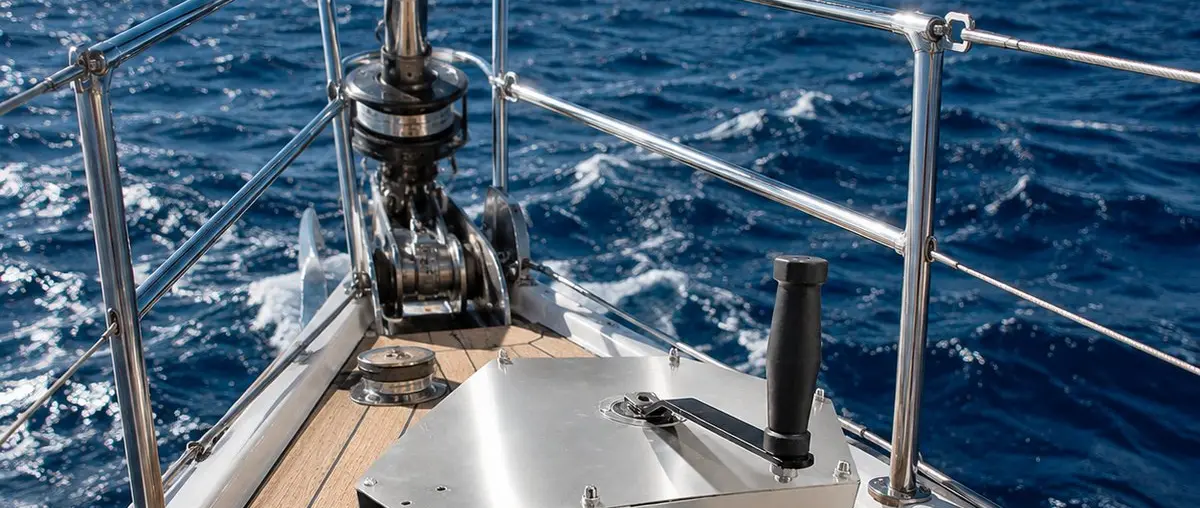
The official Elvalen website identifies the 12-volt wave-energy generator and its proposed manually powered capability. The METSTRADE organiser's 26 October 2026 start-up profile reports the company's explanation of the mechanism and quotes an output of roughly three watts in moderate waves. These are company-provided technical claims in primary sources, not results independently measured by Leisure Boat Guide. The pictured yacht is genuine imagery from the producer's website, used to illustrate the target environment; it does not prove the power obtained by the device on that vessel. No unsupported claim is made about certification, stock availability, long-term marine testing or guaranteed savings. The key editorial conclusion is that Elvalen proposes another means of maintaining small charging loads, with usefulness that remains highly dependent on the actual installation and conditions.
The owner's next questions
An interested skipper should request the current product specification, tested energy output in varied conditions, installation manual, battery compatibility details and verified maintenance schedule. The manufacturer should be able to explain the manual handle's sustained output and any warranty conditions for marine use. The owner can then compare expected charging against measured daily consumption and alternative solutions. If the figures support the intended use, wave-motion generation might add resilience to the electrical system of a regularly moored small cruiser. If the boat sits in calm water or is stored ashore for winter, other options may be more effective. Treating the proposal with this degree of practical scrutiny makes the news more valuable: the issue is not whether ocean motion contains energy, but how reliably, safely and economically a specific small boat can use the tiny amount that a portable onboard unit may collect.
Primary reporting and image credit
Primary manufacturer and organiser source(s): https://www.metstrade.com/news/innovation/clever-new-products-simplify-yachting. © Elvalen / Primum and original photographer. Actual company website sailing-boat photograph, illustrating the small-boat application, not a photograph of tested electrical output. Image is used only for correctly attributed factual editorial coverage and never represented as open-licence stock photography.