
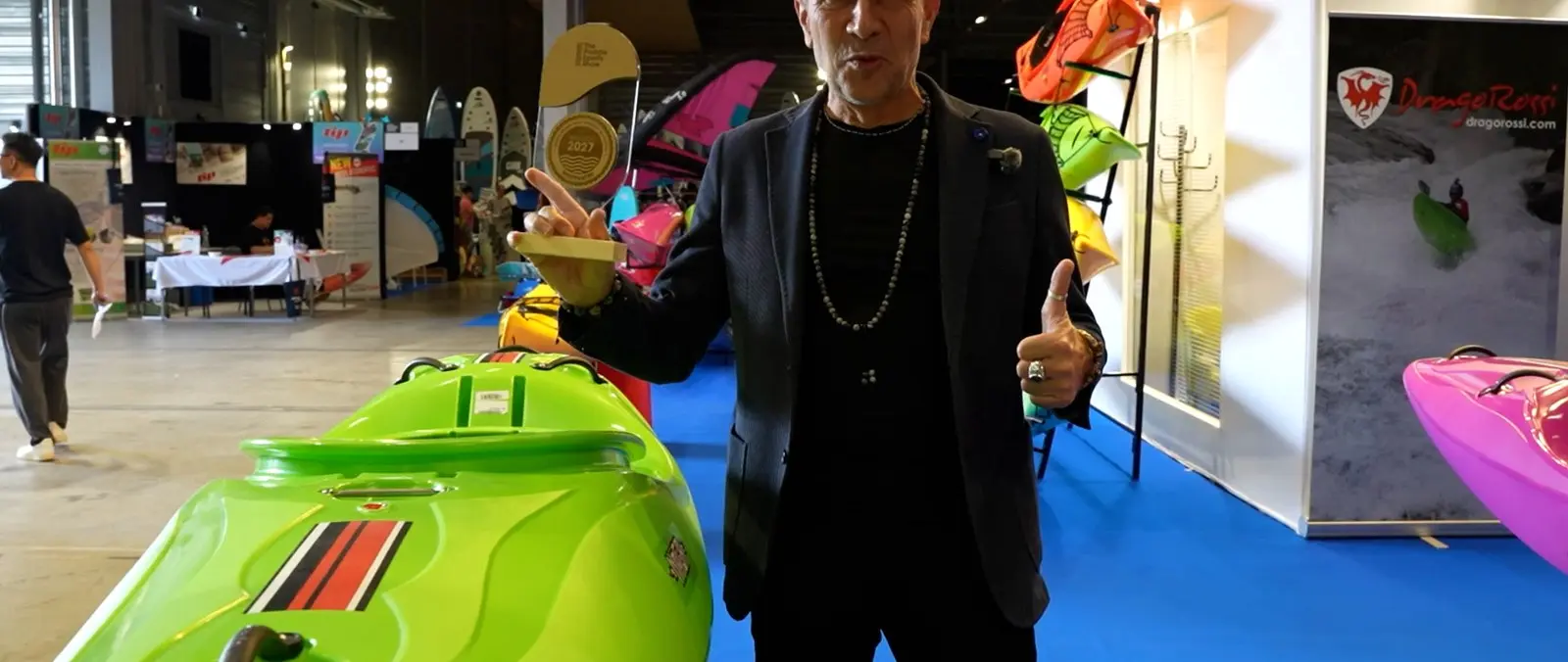
A new category winner from DragoRossi
The DragoRossi Naga has won the 2027 Whitewater Product of the Year award at the Paddle Sports Show in Strasbourg. The show organiser describes the Naga as a high-volume boat intended for both steep creeks and larger rivers, highlighting its combination of speed, turning ability and ease of lifting the bow over obstacles. The announcement gives the model specialist recognition in a demanding category of small craft.
A whitewater kayak is designed for conditions very different from those faced by a calm-water touring boat. Its shape and outfitting must support manoeuvres around currents, waves, rocks and drops, where an error can have immediate consequences. An award is a reason to study a design, not an endorsement of taking it into water beyond the paddler's training.
Speed and manoeuvrability are distinct attributes
A boat that holds its line through fast-moving water can help a skilled paddler maintain control, but quick response to steering is equally important when the chosen route changes. The Naga's design aims to balance those needs. Its high-volume hull also provides buoyancy that can influence how the bow rises and travels through turbulent water.
Boaters should understand the meaning of such claims in practical terms. A model may feel responsive in one river grade but less suitable for a different paddling style or body size. On-water demonstrations, qualified coaching and fit adjustments provide information that a product photograph cannot. Careful buyers compare multiple boats rather than relying on the language of an award citation alone.
Boofing and river features demand technique
The show notes that the Naga is intended to be easy to boof, the whitewater technique of lifting the bow to clear a drop or river feature. That manoeuvre depends on timing, paddle placement and an understanding of the water, not simply on the construction of the kayak. Beginners should learn progressively with experienced instructors before attempting more difficult features.
A high-volume boat may offer useful floatation but cannot remove the hazards of undercuts, sieves or powerful recirculating currents. Paddlers need suitable helmets, buoyancy aids and rescue equipment, along with people who understand how to help if something goes wrong. Conditions can change rapidly after rain, so local advice and current water-level information are vital.
Outfitting and size matter as much as the hull
A whitewater kayak needs to connect securely with the paddler's body so that edging and weight shifts affect the hull consistently. Seat position, foot support and thigh contact must fit the user without creating difficulties in a wet exit. The suitability of a Naga for a specific person will depend on the size offered and the adjustment range of its outfitting.
Transport and storage are also relevant when choosing a specialist kayak. A design may be well suited to the river but awkward to carry, lift onto a vehicle or manage during a portage. Repeated outdoor use puts demands on hull material and fittings, making repair options and local dealer support useful considerations.
What the award establishes for buyers
The Paddle Sports Show brings together specialists in kayaking and river equipment, and the whitewater category recognises designs that attract attention for performance-related ideas. DragoRossi's Naga joins a wider market in which manufacturers pursue differing combinations of speed, volume and manoeuvrability for experienced and developing paddlers.
The official result confirms the category winner, but buyers should verify dimensions, weight range and final specification from DragoRossi or its distributors. The right kayak is the one that suits the paddler's skills and intended rivers. No product announcement should persuade somebody to skip instruction or adopt a route that exceeds their current experience.