
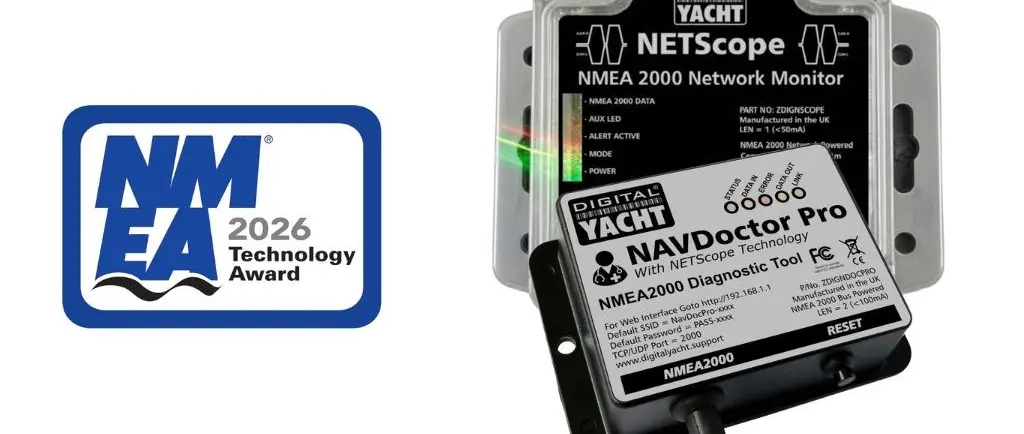
A diagnostic award for a new marine network tool
Small motorboats and sailing yachts now rely on connected plotters, transducers and engine instruments that can all be affected by a damaged NMEA 2000 network connection. The latest product announcement describes the available features, but suitability depends on the boat, its existing equipment and a correctly planned installation.
The company plans to give NAVDoctor Pro its full public presentation at METSTRADE in Amsterdam in November 2026, meaning the recent recognition concerns a product preview rather than an established installation record across the yacht market. Buyers will therefore need the final specifications and installation guidance before assessing the equipment for their own vessels.
For a recreational cruiser equipped with multiple navigation and monitoring devices, a shared network is convenient but can also make failures difficult to trace. Identifying whether a fault lies in one component, a connector or the powered backbone can save significant service time.
Why NMEA 2000 faults can be difficult to identify
NMEA 2000 provides a standardised data connection for compatible marine instruments, plotters, sensors and monitoring systems. Its backbone uses a powered network with five-pin device connectors and termination at each end, allowing equipment from different manufacturers to exchange supported information.
That arrangement introduces many individual electrical connections into a damp and vibration-prone environment. A corroded joint, intermittent component or voltage drop may generate symptoms far from the original problem, including apparently random loss of data on a helm display.
Digital Yacht explains that even a modest eight-device network can involve more than a hundred individual external wiring connections. The challenge is therefore not merely reading a fault message, but identifying the physical point where the network signal begins to deteriorate.
NETScope measures the network in real time
NAVDoctor Pro uses the company’s patented NETScope technology to assess voltage variations during network traffic at microsecond scale. It is intended to help installers pinpoint which connected device or connection is disturbing the physical network, while also decoding NMEA 2000 messages and identifying attached equipment.
The system comprises two network-connected units powered by the NMEA 2000 backbone, so the manufacturer says no separate electrical supply is required for normal operation. Owners or engineers access the readings through a built-in Wi-Fi connection using a browser on a phone, tablet or computer.
Available information includes live voltage traces, device traffic and network alerts, along with data about the parameter group numbers exchanged between instruments. Such detail is best used by somebody familiar with marine electrical systems rather than interpreted as a simple repair instruction for an untrained owner.
Remote fault investigation is also planned
NAVDoctor Pro is designed to connect with Digital Yacht’s Njord Cloud and NjordLINK+ gateway, potentially allowing authorised installers to inspect diagnostics while the vessel is elsewhere. That could be particularly valuable for a cruising yacht that develops an intermittent problem away from its regular service base.
Remote access introduces obligations around connectivity and information security, and professional diagnosis may still require a physical inspection. A sensor report cannot replace checking for water intrusion, damaged wiring or an incorrectly installed device.
The November presentation will allow owners and installers to ask about supported network configurations, pricing and the final product documentation. The NMEA award recognises the innovation, but each boat’s compatibility and any installation requirements must be assessed separately.
What a small-boat owner should check
Before fitting the system to a recreational boat, owners should confirm the exact model, supported hardware and any extra parts needed for their installation. It is also worth asking which functions remain available if the vessel loses internet service or a component fails.
The technical benefits must be balanced against installation expense, maintenance and crew familiarisation. A practical demonstration with the actual electronics or machinery configuration is more useful than assuming every capability described by the manufacturer will work on every boat.