
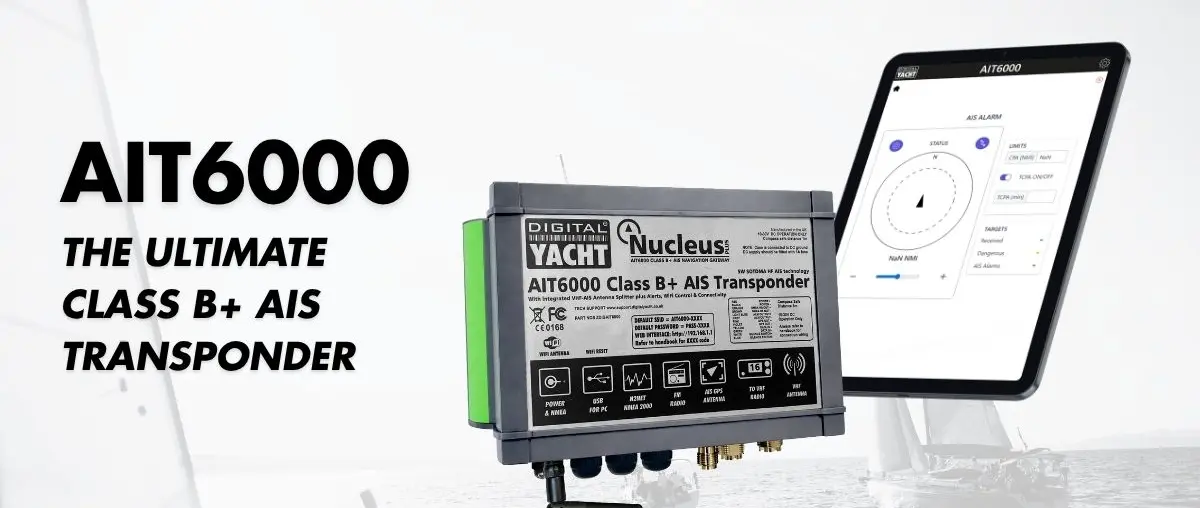
AIS equipment is increasingly part of a connected helm rather than an isolated box tucked away behind a panel. Digital Yacht has introduced the AIT6000 Nucleus, a 5W Class B+ transponder combining position broadcasts with onboard networking and alarms.
The supplier's SPAIS feature is intended to improve suitability for reception by AIS satellites, alongside ordinary ship-to-ship use. The actual installation and applicable rules must be assessed for the boat and its operating area.
A Class B+ transponder
The unit uses a 5W transmitter and adds GPS, NMEA 2000 and Wi-Fi connections for compatible equipment. Those functions provide more ways to integrate AIS information with a modern console.
A skipper should verify antenna placement, configuration and the identity information programmed into the device. AIS complements lookout and radar rather than replacing either.
Satellite-oriented operation
SPAIS is described as technology developed for the way AIS signals are received from space. This can matter to monitoring beyond the practical range of shore stations, but coverage and access are separate questions.
An owner should not assume that a satellite service will always display the boat's position in real time. Transmission and reception depend on network and operating conditions.
Alarms within the installation
Digital Yacht includes collision and anchor alarm features in its wider product description. Their usefulness depends on the chosen settings and other equipment.
LBG reports the official AIT6000 release and named-product photograph, without promising that a beacon or chartplotter guarantees safety. Consult the latest product manual before installation.