
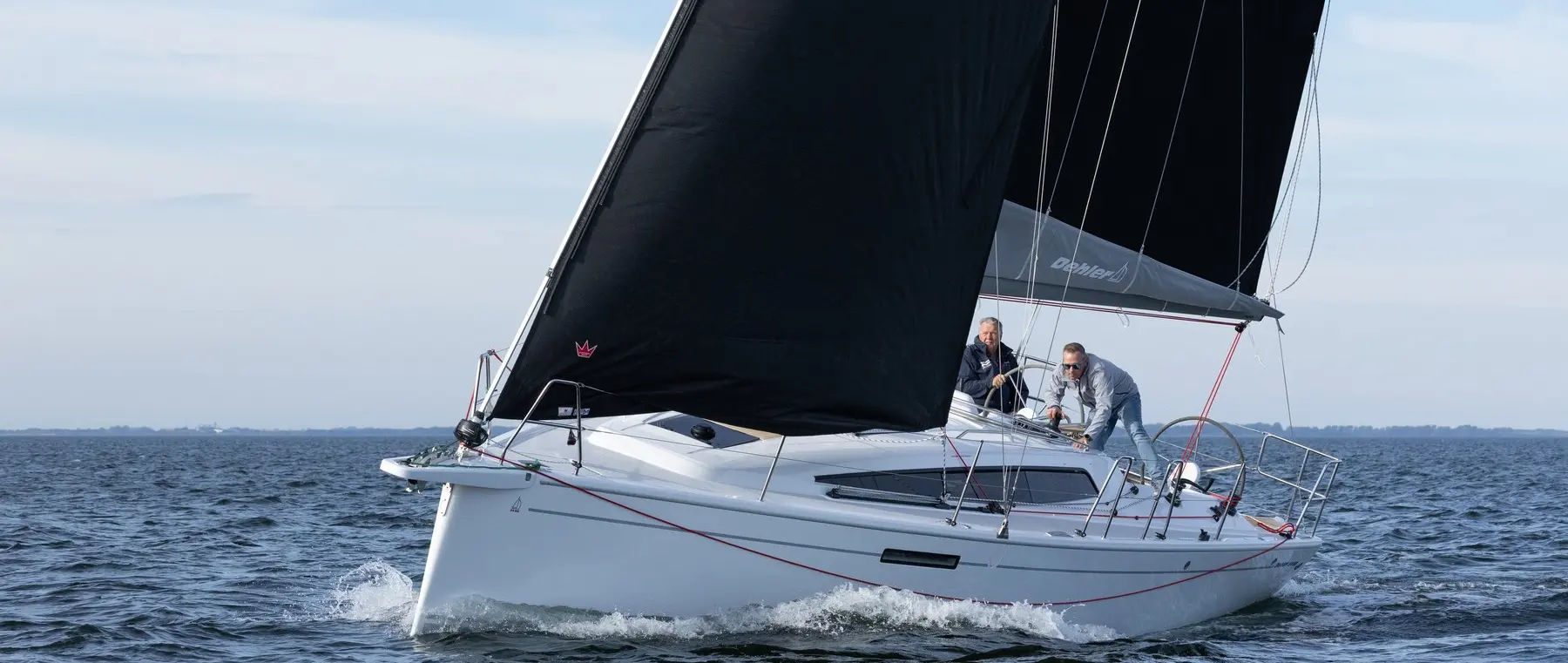
A compact performance cruiser receives a new programme
HanseYachts AG has introduced the updated Dehler 34 SQ with a sharper focus on the choices owners can make between club racing and comfortable recreational cruising. The company's announcement, dated 25 November 2026, identifies sail-handling improvements, an optional carbon rig, a dedicated FREERIDE headsail concept and three available keel configurations. The result is a useful case study in how a compact sailing yacht can be specified for very different styles of time on the water.
The Dehler 34 family is approximately 11 metres long, placing it squarely in the sub-12-metre leisure-boat sector. The manufacturer's earlier Dehler 34 technical specification lists 10.70 metres overall, but readers should confirm the final current SQ configuration with their dealer rather than assuming all historical dimensions remain unchanged. The development being reported here is the maker's current equipment and design announcement, not the first creation of the Dehler 34 class.
The design brief joins speed to everyday use
The yard says the 34 SQ has been developed for sailors wanting lively performance without sacrificing the practical features used on a weekend cruise. This positioning recognises that many owners sail in mixed conditions: informal club racing on one day, a family passage on another, and sometimes an overnight stop. The question is therefore not simply how to increase peak speed but how to keep controls manageable and accommodation useful.
A performance cruiser asks its owners to make choices rather than deliver every advantage in a single fixed configuration. Equipment that makes sense for dedicated competition may carry cost, maintenance or complexity implications in ordinary cruising. HanseYachts describes a number of alternatives rather than making the entire high-performance package mandatory. That gives prospective buyers specific points to discuss when deciding how frequently they expect to race.
Judel/vrolijk hull work remains central
The official announcement attributes the Dehler 34 SQ's hull design to judel/vrolijk & co. It describes the combination of the hull, light construction and generous sail area as contributing to an agile boat. These are manufacturer design statements, not independently established speed results. The news does not provide a controlled series of comparison tests between the latest SQ and earlier examples of the 34.
For owners, hull form and displacement are part of a larger system that includes the rig, keel, sail inventory and how weight is distributed. A light, responsive boat can reward good sail trim, but actual passage times vary with crew decisions and weather. Marketing language about speed should be read alongside the practical specification and, wherever possible, a sea trial in suitable conditions.
A high-modulus carbon rig is optional
One of the most prominent equipment choices is a high-modulus carbon rig. HanseYachts says the lighter option reduces mass high above the deck, with potential benefits for heel and stability, while a stiff spar helps transmit sail forces. The announcement does not publish a standardised measured improvement in knots or sailing angles for this individual option, so no numerical performance gain is asserted here.
A rig change also affects ownership considerations. Buyers should confirm how the option changes the rig's specification, inspection requirements, replacement costs and compatibility with their preferred sail plan. A highly effective racing package may be attractive, but owners who chiefly make short family trips may prefer simpler or less costly choices. These are questions for a detailed build proposal, not conclusions that can be drawn solely from publicity photographs.
Three keel choices change the conversation
HanseYachts offers three keel configurations, spanning a shallower-water option and a competition-oriented alternative with a lower centre of gravity. That choice matters to an owner planning contrasting activities, from visiting coastal harbours to entering events where upwind performance and righting characteristics play a larger role. The manufacturer presents the options as a way to adapt the yacht to the sailor's priorities.
The yard's November release does not provide the full approved draught table for every option or specify which local waterways are accessible. A buyer should therefore use current technical documents, marina depth information and professional advice before choosing a keel. A shallow option may broaden cruising possibilities, while a deeper performance choice can change berth and haul-out requirements.
The German Mainsheet System moves control toward the helm
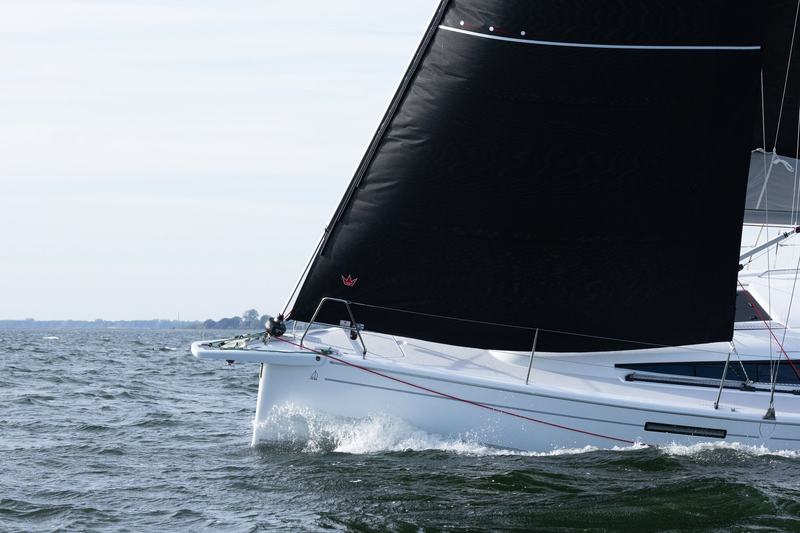
Official Dehler 34 SQ first-party sailing yacht photograph supplied with the November 2026 model announcement. © HanseYachts AG / Dehler and the original photographer.
The cockpit arrangement brings both ends of the mainsheet to separate winches, allowing the sailor at the helm direct access to trimming controls. The manufacturer calls this its German Mainsheet System and presents it as part of a wider commitment to easy handling. Alongside it is a recessed mainsheet traveller stretching across the beam, giving sailors another way to adjust the mainsail's shape and balance.
This is a practical design development rather than a promise that the yacht can be sailed without training. The location of winches, control lines and traveller adjustment can help a trained sailor work efficiently, but the arrangement still requires an understanding of sail loads and safe working areas. Owners should inspect the actual cockpit layout and test how controls feel under sail before deciding whether it suits their experience.
Twin wheels support visibility and movement
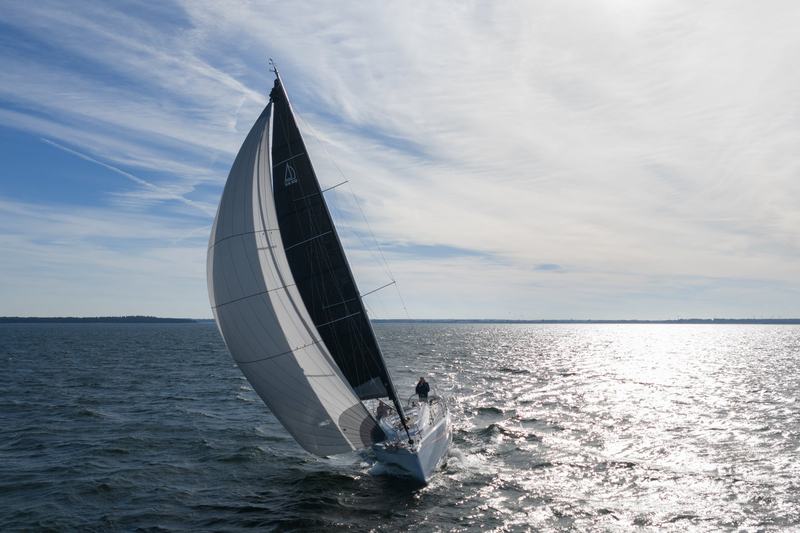
Dehler 34 SQ official shipyard photograph from the model press gallery; no independent race result is implied. © HanseYachts AG / Dehler and the original photographer.
HanseYachts describes two steering wheels and carefully positioned deck hardware as elements of a sailor-focused cockpit. Twin wheels can free a central route through the cockpit and provide different sightlines to the sails, though their value depends on the exact beam, seating and crew movements. The release makes a design argument rather than presenting quantified visibility or safety measurements.
For buyers, it is worth examining how crew members move from the helm to winches, and how the boat works when sailing with a small party. A spacious-looking deck photograph does not reveal the whole handling experience. Line leads, winch placement, access to the mainsheet and places to hold on should all be assessed with the intended cruising and racing programme in mind.
FREERIDE adds a distinctive headsail choice
The new Dehler FREERIDE is described as a sail positioned between a conventional genoa and a gennaker in its intended range of use. HanseYachts says it is designed to work across a variety of apparent-wind angles, giving owners another option between closer and broader reaching. The company emphasises ease of deployment, including a dedicated bag that keeps preparation at deck level.
This does not make every other headsail redundant. Sail inventory selection depends on wind strength, course, local rules and crew confidence. The Dehler description gives a rationale for the new option but does not present an independent polar diagram establishing superior performance against every genoa or gennaker. Readers considering the sail should request exact handling guidance and compatible rig details.
A second forestay arrangement when furled
According to the manufacturer, the FREERIDE can remain furled as a second forestay when the yacht is in the marina. The proposed arrangement aims to make a frequently used sail easier to prepare for the next outing. In practical terms, reducing setup steps can matter to owners who sail regularly but do not maintain a dedicated full-time racing crew.
Even an easy-to-handle sail needs proper rigging, inspection and secure stowage. The release's description should not be treated as a universal instruction for leaving sails exposed in all weather or storage conditions. Owners should follow the specific Dehler installation guidance and advise their insurer or marina where relevant. Ease of preparation and responsible maintenance belong in the same discussion.
The bowsprit accommodates several sailing styles
The builder describes a standard composite bowsprit supporting different headsail arrangements, including an overlapping genoa, the new FREERIDE and a gennaker carried at the forward end. This reflects the yacht's stated aim of being suitable for more than one sailing programme. It gives an owner an equipment decision rather than forcing a single sail plan on everyone.
The benefit is versatility, but options still require thoughtful integration. Different sails may need additional furlers, control lines or storage, and the details should be checked against a dealer's current specification. Prospective owners should not assume every configuration is included in the base price. The announcement identifies available choices but does not provide a complete price list.
A standard Carbon Cage under the floor
The Dehler Carbon Cage forms another key part of the manufacturer's design story. HanseYachts says carbon reinforcement is used at selected points in the floor structure to increase rigidity and help manage torsion under rig loads. It presents the arrangement as standard equipment on the 34 SQ. This statement concerns structural engineering, not a public certification of performance in a particular storm.
Rig forces travel through the boat's structure, so the relationship between mast support, keel and internal reinforcement deserves attention. The product's name should not be confused with a claim that the entire hull is made from carbon fibre. Buyers should distinguish carefully between the standard reinforcing elements described by the builder and optional equipment such as the carbon rig.
Interior space remains part of the design brief
Below deck, the manufacturer describes a forward cabin and a generous aft cabin, with a large portside storage space that can function as a sail locker. This is relevant to the Dehler's combined racing-and-cruising role. Racing equipment needs somewhere to be stored, while overnight accommodation must remain useful when the yacht is not competing.
The interior should be evaluated in person rather than through a single publicity photograph. Owners will want to inspect access, berth dimensions, galley usability and storage arrangements under their preferred configuration. The November statement confirms the broad concept but does not establish that every option can be combined without layout or weight compromises.
The Uni Door changes the way the bathroom functions
A named interior feature is the Dehler Uni Door Concept, which allows a single door to be positioned in two ways to alter the relationship between the bathroom and passageway. The yard describes this as a flexible solution for a relatively compact yacht. It is a practical example of seeking more value from limited interior volume without simply enlarging the hull.
Clever arrangements need to work in everyday use, including when occupants are wet, tired or moving through the boat. Buyers should test the two positions and consider privacy and access rather than rely on a schematic description. The design is notable because it addresses a common space-planning problem in smaller sailing cruisers, where every doorway competes with other functions.
Materials and natural light support cruising comfort
HanseYachts refers to a well-equipped galley, natural light and a selection of timber, flooring and upholstery finishes. These details are familiar within performance-cruiser marketing but remain important to actual ownership. A boat used for a family cruise must provide more than a lively helm; occupants need to cook, rest and store belongings while the yacht moves.
Finish options and equipment lists can change over a model year. For that reason, the official launch announcement is not a substitute for a signed build specification. The buyer should understand which galley appliances, lighting details and furniture choices are standard and which require additional cost. A photograph of one display boat cannot establish the configuration of every delivered yacht.
What the new model does not yet prove
The Dehler 34 SQ announcement provides a persuasive explanation of design intentions, but it does not publish an independently audited set of racing results or a comprehensive comparative sea-trial programme. No specific owner deliveries, confirmed regatta wins or guaranteed boat speeds are established by the release. Such information should be covered separately when reliable, dated evidence becomes available.
A model launch is strongest when its stated attributes can be checked against the physical boat. The latest sail plan, keel options, structural detailing and cockpit layout are concrete subjects for a prospective owner to investigate. Assertions of superiority over unnamed competitors would add little value without controlled data and are deliberately avoided here.
Why the Dehler 34 SQ fits the leisure-boat market
The yacht's approximately 11-metre scale places it in a segment where owner operation and club-level sailing remain central to many purchasing decisions. It is far removed from the professional-crew superyacht market, yet incorporates choices normally associated with performance sailing. That makes the November announcement especially relevant to Leisure Boat Guide rather than an attempt to force a larger-yacht story into a smaller category.
A buyer comparing compact cruisers needs to consider more than overall length. Rigging options, control arrangements, storage and living space can affect how often the boat is actually used. Dehler's announcement highlights these aspects of the ownership experience, allowing readers to identify useful questions before visiting a dealer or arranging a demonstration.
What prospective owners should verify
Before placing an order, buyers should ask for the current SQ-specific official dimensional table, precise keel draughts, sail inventory and option prices. The Dehler 34 family's historical published 10.70-metre overall length provides context, but a contemporary build document should govern the final contractual specification. The same applies to available structural and rigging packages, delivery commitments and warranty terms.
The most useful sea trial would assess the configuration a buyer actually intends to use. A stripped-out race-focused test boat may feel different from a cruising specification carrying extra equipment. For now, the dated manufacturer announcement supports a clear conclusion: Dehler is broadening the ways its compact 34 SQ can be set up, with new sail handling and optional performance equipment while retaining a cruising interior.
The 2026 announcement in perspective
HanseYachts' 25 November report adds detail to the evolution of a longstanding Dehler model family rather than claiming an entirely unfamiliar yacht type. The optional carbon rig, three keel choices, FREERIDE headsail, bowsprit arrangements, German mainsheet control and standard structural reinforcement are identifiable points of news. Together, they demonstrate how the company is presenting the updated boat to owners who want both lively sailing and practical accommodation.
The editorial significance is that these choices are tangible and testable, while their real-world consequences will depend on setup, crew and conditions. Official photographs show the Dehler 34 SQ and its deck arrangements, but do not replace measurements or an independent trial. For readers in the under-12-metre sector, this is an equipment and design update worth following as detailed specification and sailing evidence develop.
Verified shipyard source and visual credits
Official first-party sources: HanseYachts AG, Dehler 34 SQ release, 25 November 2026 and Dehler official model page. Original manufacturer photographs are supplied directly on the dated shipyard announcement and remain © HanseYachts AG / Dehler and original photographers.