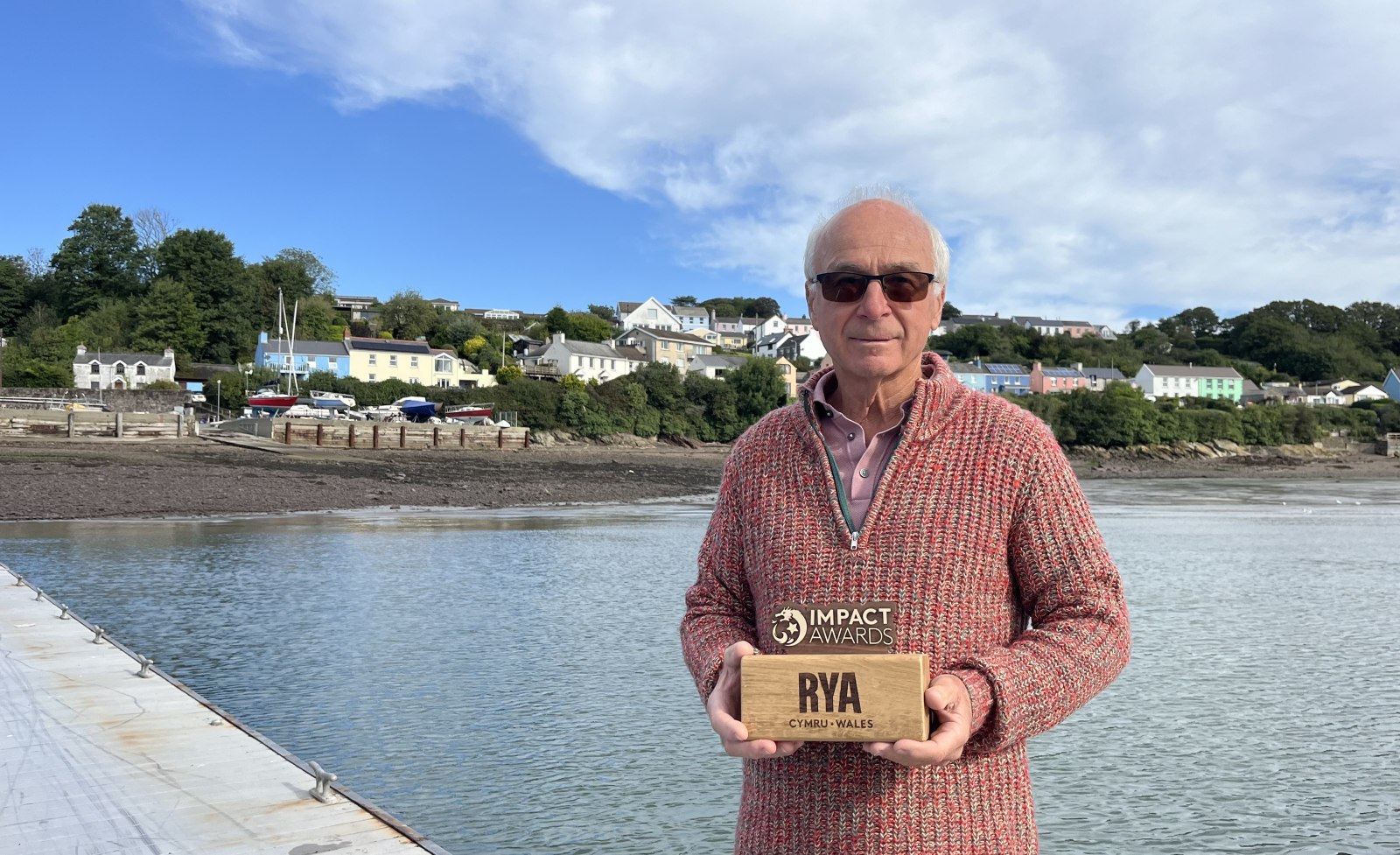
A volunteer whose work has helped generations of children discover sailing in Pembrokeshire has received a Welsh Sailing Impact Award. John Reynolds of Dale Yacht Club was recognised by RYA Cymru Wales in an announcement published on 17 November 2026, following a nomination that highlighted his steady encouragement of young people and his contribution to the local sailing community. The recognition is not a new boat launch or an equipment demonstration. It is news about the people who make recreational sailing possible for children, families and first-time sailors, particularly at clubs whose boats are small and whose activities rely on volunteers. The official RYA account describes a longstanding club member whose influence extends from his own family to many others who have benefited from time on the water.
An award rooted in practical participation
The Impact Award programme recognises individuals who contribute to activities afloat beyond what is normally expected. The central feature of the Dale story is not a single championship result but a sustained contribution to making sailing welcoming and accessible. RYA Cymru Wales says John has devoted time over many years to helping others experience the sport and build confidence. Such recognition gives a different view of what makes a sailing club successful. A club can be proud of trophies and racing results, yet the first experience of someone learning to handle a dinghy may owe more to a patient volunteer than to a celebrated competitive sailor. For a boating publication interested in smaller craft, that human infrastructure is an important part of the industry.
Dale Yacht Club and its location
Dale Yacht Club operates in Pembrokeshire on the Welsh coast, where sheltered opportunities and more challenging conditions can exist in close proximity. A sailing club in such a setting has to consider weather, tides, launching arrangements and the experience of the people going afloat. The official award article describes Dale as family-friendly and emphasises the encouragement offered to children. It does not present a complete guide to launching from Dale or certify the safety of a particular journey. Readers considering their first dinghy session should use current club information and qualified instruction. The significance here is the club's role as a place where people gain experience and develop lasting connections with boating.
The nomination behind the recognition
Local parent Rebecca Bell nominated John for the Impact Award, according to the RYA's release. Her account focuses on the calm, positive way he helps children approach sailing. That detail matters because the early stages of learning can be intimidating. A youngster who has never controlled a boat may have to become comfortable with a moving platform, unpredictable wind and new instructions all at once. Patient support can make it easier to ask questions, practise an unfamiliar manoeuvre and return for another session. The award announcement attributes this supportive environment to John's presence, rather than claiming that a particular teaching technique guarantees success for every pupil. It is a reflection of one local community's appreciation.
Sailing knowledge passed between generations
The RYA describes John as someone who has encouraged his own children and grandchildren to sail as well as helping other families. Sailing often becomes a lifelong activity through this kind of informal continuity. People who start in a training dinghy may later race, cruise or volunteer themselves, while others may simply enjoy returning to the water occasionally. Neither outcome needs to be treated as less valuable. The connection between generations also carries practical benefits: an experienced sailor may recognise when a new participant needs reassurance, more time or a simpler exercise. The official account celebrates that broad contribution, not a formal claim that the club has achieved a particular national membership target.
Why grassroots volunteers matter to boating
Small-boat clubs frequently rely on individuals who maintain equipment, help organise sessions, provide instruction and encourage people who are uncertain whether they belong. A new boat or new facility is useful, but it cannot on its own produce a welcoming atmosphere. RYA Cymru Wales highlights John's commitment as an example of the contribution such people make to keeping activities afloat available. The work may be invisible to people who visit only on race days. Helping a family understand club routines, getting a child into a dinghy for the first time or remaining calm when a lesson does not go to plan can determine whether the experience is enjoyable. Volunteer recognition helps ensure these everyday contributions are noticed.
The Hwylio Cymru impact programme
The award forms part of the Hwylio Cymru, or Welsh Sailing, framework within RYA Cymru Wales. The governing body uses the Impact Awards to celebrate people who go beyond the ordinary responsibilities of their role. This is separate from an award for winning a particular class event and separate from a grant of funding to buy new boats. The recognition is linked to the broader Welsh sailing and boating strategy, which aims to build a connected, inspired and inclusive community. The RYA's release associates John's work with helping people get on the water, remain involved and eventually give back to others. These are stated strategic aims; the award alone should not be interpreted as proof that participation has increased by a particular percentage.
The view from club development
Hester Walker, Club Development Officer for RYA Cymru Wales, presented the recognition and spoke about the contribution John has made over many decades at Dale. The official account notes that family members have been involved in Welsh squads and that he remains committed to supporting new generations. Those details show the overlap between local club activity and wider pathways through the sport. A dinghy sailor may begin by learning basic boat handling before deciding whether to pursue organised racing, coaching or leisurely sailing. Successful progression depends on suitable opportunities and support, rather than on the expectation that every newcomer becomes a competitive athlete. The award foregrounds the volunteer whose work helps make those opportunities available.
What makes a positive first experience
For new participants, especially younger sailors, the practical environment is important. A club needs suitable craft, buoyancy equipment, clear communication and competent supervision. It also needs people who can adapt explanations to a learner's confidence. Sailing involves responding to changing wind, maintaining balance and understanding the relationship between sail and rudder. Those skills take practice. The official Dale story is a reminder that technical competence and human encouragement belong together. A well-intentioned volunteer should still operate within the club's approved safety and training arrangements, and awards do not replace the need for established procedures. The best environment is one where enthusiasm is supported by careful preparation and responsible decisions.
Lessons for clubs beyond Pembrokeshire
The value of this news extends beyond one harbour. Clubs elsewhere may recognise the situation described by Rebecca Bell: a skilled local member who quietly keeps young people engaged. That does not mean every club should copy the same programme without considering its facilities and volunteer capacity. Instead, it suggests questions worth asking. Are beginners welcomed without pressure? Do volunteers receive the support they need? Can families see a clear route from an introductory session into regular participation? Are experienced sailors encouraged to share knowledge in a safe and organised way? The award does not provide a universal answer, but the experiences reported at Dale offer a practical example of the culture a club may wish to cultivate.
Small craft and a large social contribution
A dinghy or other small sailing boat is relatively modest in physical size, yet it can provide a significant experience for the person learning to handle it. A first successful tack, a short trip away from a launch or a return to shore after a challenging lesson can become a memorable achievement. Volunteers help turn those individual moments into sustained participation. The RYA release does not say that John designed a new boat, introduced a new technical standard or led a commercial enterprise. His recognised contribution is enabling others to enjoy the sport. That distinction is worth keeping clear. The news belongs in the recreational boating sector because clubs and volunteers form an essential part of its community and long-term future.
Recognition without exaggerated claims
A report about a community award should be precise about what has been verified. The official RYA Cymru Wales story establishes the award, the location, the nominee, the club's relationship with John and the governing body's recognition. It does not publish independently audited figures for the number of pupils he has taught or the membership growth specifically attributable to his work. Readers should not be given invented totals, dates or programme outcomes. Similarly, the existence of an award should not be turned into a claim about the conditions at sea on any particular day. The evidence supports an account of sustained volunteer contribution and the gratitude expressed by the local sailing community.
Photograph and source attribution
The lead photograph is an authentic image supplied with RYA Cymru Wales's official Impact Award announcement, credited by the organisation to Hester Walker. It documents the recognition rather than illustrating a fictional competition or a boat that was not involved. The accompanying factual information is drawn from the governing body's article published on 17 November 2026, including the nomination by Rebecca Bell and Hester Walker's description of John's contribution. Original photographic rights remain with the originating rights holder. This account does not claim to have independently interviewed the people named in the release; their roles and statements are attributed to the official source.
A measure of a healthy sailing community
The Dale Yacht Club award tells a story that differs from the familiar sequence of new products and race results. A healthy recreational boating community depends on boats and safe facilities, but also on people who make others feel able to participate. John Reynolds's recognition highlights sustained effort across generations and shows why the governing body values everyday club leadership. For young sailors, a calm introduction can make the difference between viewing the water as intimidating and wanting to return. For clubs, the challenge is to support the volunteers who provide those introductions. The confirmed news is a well-earned Impact Award; the wider significance is the continuing role of grassroots sailing in the future of small-boat recreation.
Sources and image attribution
Primary reported announcement: https://www.rya.org.uk/news/cw-impact-award-john-reynolds/.
Official photographic provenance: https://www.rya.org.uk/news/cw-impact-award-john-reynolds/. Image supplied by the originating organisation, credited in the photograph title; original copyright remains with the rights holder. Official image file. The photographs are documentary or clearly labelled archival illustrations, not evidence of events that have yet to happen.