
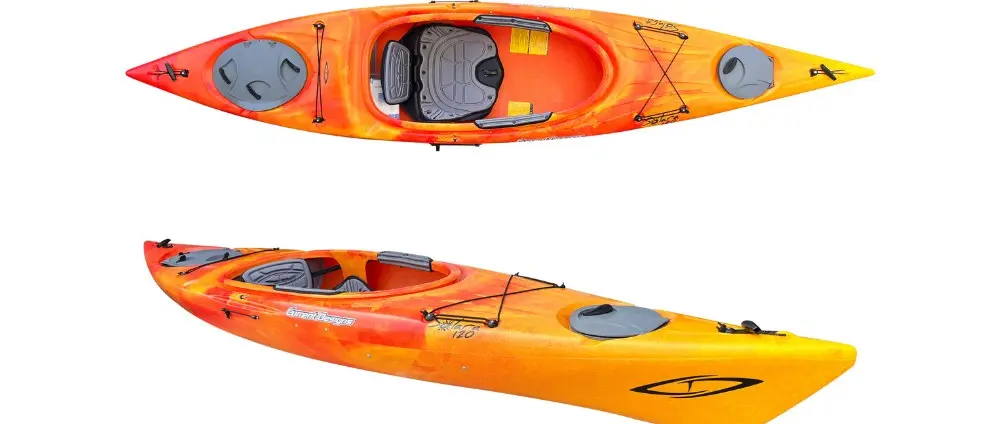
An accessible kayak without unnecessary complexity
Current Designs has presented its Solara 120 in the Paddle Sports Show's 2027 recreational product selection as an uncomplicated option for families and newer paddlers. Instead of focusing on extreme speed or expedition equipment, the manufacturer describes a broad and stable hull with a large cockpit that is easy to enter and exit. That approach is relevant to people who want to enjoy a local lake or calm stretch of river without a steep learning curve.
The official entry recognises that many recreational kayaks spend most of their time on familiar waterways close to home. A vessel used regularly for short paddles needs to be comfortable, practical to store and straightforward to launch. Features that look dramatic in a catalogue may matter less to such owners than easy seating and reliable handling.
Twelve feet long with a broad beam
The Solara 120 measures twelve feet, or approximately 366 centimetres, in length and 28 inches, around 71 centimetres, in width. Current Designs specifies a hull height of 33 centimetres and a weight of about 24.9 kilograms. These dimensions place it in the range of medium-sized recreational kayaks that can fit into a variety of small-boat storage and transport arrangements.
The manufacturer lists a carrying capacity of 350 pounds, approximately 158.7 kilograms. Owners must include their own body weight, clothing, food and equipment within that figure. The boat's stability and steering response may change when heavily loaded, so the stated maximum should not be treated as a recommended load for every trip.
Cockpit dimensions make entry easier
One of the model's notable specifications is a cockpit measuring approximately 115 by 50 centimetres. That relatively generous opening may appeal to paddlers who find narrower touring cockpits awkward when getting aboard or climbing out at a beach. It also gives the owner more room to find a comfortable seated position without feeling confined.
A large opening is not the same as a promise of easy re-entry after a capsize. The ability to get back into a kayak depends on conditions, the design and the paddler's experience. A beginner should learn appropriate recovery techniques in a supervised setting and not assume that a wide hull eliminates the possibility of overturning.
Rotomoulded polyethylene for ordinary use
The Solara 120 is made from rotomoulded high-density polyethylene, a familiar construction method for recreational craft. Polyethylene hulls are often valued for their resilience during routine beach launches and their relatively straightforward care requirements. They still need sensible treatment when moved over abrasive ground or stored outdoors for a long period.
Boat owners should inspect the underside, fittings and seat attachments, particularly after a kayak has been dragged across a rough surface. Excessive heat and unsupported storage may allow deformation, even in a material regarded as robust. The manufacturer's instructions are the appropriate reference for how the boat should be carried, cleaned and supported between outings.
Comfortable seating encourages longer use
Current Designs describes an open seating system intended to be welcoming to paddlers who may not have spent much time in a kayak. A comfortable seat can improve enjoyment because a person may remain in the same position for an hour or more while paddling and exploring. Foot position, back support and room for the stroke also influence whether the craft feels natural.
Some customers assess a boat while it is resting on a stand, but a trial on sheltered water is more informative. It can reveal how easily the paddler moves the paddle along the sides, whether knees and feet remain comfortable and how the boat responds to small shifts in weight. A model that fits one person perfectly may be less suitable for another of different height.
Weight and transport in the real world
At approximately 25 kilograms, the Solara is not exceptionally heavy by recreational kayak standards, but it still requires a safe loading technique. An individual may be able to transport it using appropriate roof equipment, while others will need assistance or a loading aid. The right solution depends on the vehicle, rack rating and the owner's physical ability.
A family that stores the craft near a lake may be able to use it frequently with minimal preparation. By contrast, a boat kept at home requires space for the entire hull and a plan for moving it each time. The convenience of ownership is therefore partly determined before the buyer enters the water.
The right water matters as much as the hull
A stable recreational kayak may be suitable for relaxed outings in protected lakes and slow-moving rivers, but it is not automatically appropriate for surf, exposed coastlines or difficult whitewater. Wind and wakes can still create problems, and a broader recreational hull is not a substitute for preparation. People new to paddling should begin with a manageable route and a reliable return plan.
Personal flotation equipment, awareness of the local rules and an understanding of cold water should be part of every outing. The skipper should also tell somebody ashore where they intend to go and when they expect to return. A gentle family trip becomes more enjoyable when safety routines feel natural rather than burdensome.
What the 2027 selection tells buyers
The Solara 120's inclusion among the 2027 recreational products reflects an enduring market for accessible, practical kayaking equipment. The manufacturer emphasises the combination of open cockpit, stable hull, manageable weight and an uncomplicated layout. It has not been identified here as the winner of the final category award, and a product entry should not be mistaken for an independent test result.
For Leisure Boat Guide readers, the model deserves consideration as part of a comparison with other recreational kayaks offering similar capacity and transport requirements. The official product photograph shows the actual craft, making it possible to understand the hull and seating arrangement. The decisive choice remains whether it feels comfortable on the local waterways its owner will use most often.