
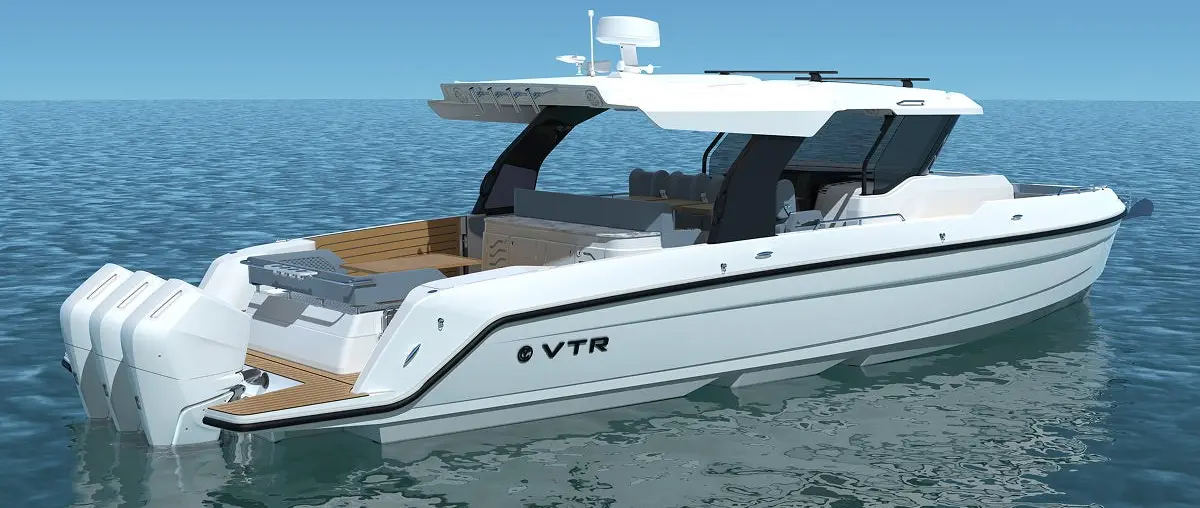
Two larger VTR models reach Fort Lauderdale
Cruisers Yachts introduced the 45 VTR and 45 VTR EC at the Fort Lauderdale International Boat Show, held from 28 October to 1 November 2026. The two 45-foot boats extend a series that began with the 38 VTR, shifting the emphasis towards more usable deck space, flexible social arrangements and short-stay capability. The builder positioned both at the GH Dock in Bahia Mar, inviting visitors to see the vessels rather than judge them solely from advance renderings. The launch is therefore a model debut, not a claim about independently measured performance at sea.
The manufacturer describes the pair as an evolution informed by dealer and owner feedback on the earlier 38-foot models. Both are built around triple Mercury Verado outboard propulsion, joystick-assisted handling and a purpose-engineered hybrid stepped hull. They are aimed at boaters who want an outdoor social platform but still require shelter, washroom facilities and an overnight option. These are practical priorities in the leisure-boat market, where deck ergonomics and ease of docking can matter more in daily use than a long list of headline features.
A generous beam and adaptable main deck
The published 45 VTR specifications give a length overall of 45 feet 4 inches, or 13.8 metres, with the outboards lowered, and a beam of 13 feet 10 inches, approximately 4.2 metres. The outboard-up overall measurement rises to 47 feet 3 inches, an important figure for storage and berthing calculations. The builder's single-level cockpit and generous walkways are intended to reduce interruptions between seating, helm and waterside activities. Owners should measure their actual mooring and storage spaces against the relevant engine position rather than relying on the model's nominal 45-foot name.
The open VTR offers U-shaped aft seating that the builder says accommodates six adults, while the helm and central social area can be arranged for up to eight. Removable tables and reversible helm seats let the same space serve lunch, conversation or a shaded lounge. A starboard summer kitchen includes a sink and storage, with an electric grill offered as an option. Features like these are meaningful because a dayboat's flexibility depends on circulation and furniture placement once every seat is occupied, not just the number of chairs shown in a brochure.
A waterside platform and gear for active days
One distinctive element is the portside retractable beach door. Cruisers says lowering it expands the waterside platform to 14 feet 10 inches across, giving swimmers, divers and those handling water toys more room. Its practical value will depend on local conditions, passenger movement and the skipper's judgement at anchor. The door is a social amenity, not a substitute for proper boarding procedures or a reason to use it where wave action makes the opening unsafe. The boat also incorporates substantial storage intended for equipment carried on longer days afloat.
Customers can specify rod holders, a Thule roof rack for paddleboards or bikes, and an aft-facing sun lounge, among other arrangements. These choices point to different use cases: a family seeking an uncluttered swim platform will configure the boat differently from an owner regularly carrying fishing tackle or bulky watersports equipment. The manufacturer's published layout options also include transom storage and an optional aft berth beneath the sun lounge. Prospective buyers should evaluate each selected arrangement in person because optional equipment can affect access, stowage and the number of usable seating positions.
Cabin comfort without abandoning dayboat character
Below deck, the standard forward cabin includes a convertible dinette that becomes a berth, together with a private head and separate shower stall. Premium upholstery, stitched finishes and integrated storage are part of the vessel's more refined positioning. Cruisers also lists an optional aft berth and, in one layout, an additional electric head. These details make an overnight stop more credible than on a purely open bowrider, while the main deck remains the focal point. Buyers planning regular multi-night passages should assess sleeping privacy, ventilation and usable storage instead of assuming yacht-sized accommodation.
The 45 VTR EC broadens the range with a second configuration alongside the open model, but specification and equipment choices must be checked for the particular hull being ordered. Both new VTRs were presented as premium, adaptable boats rather than long-distance passage-making motor yachts. For someone deciding between an open dayboat and an enclosed cruiser, the crucial questions include protection from weather, how many people can remain comfortably aboard after sunset and which amenities remain accessible with the cabin set up for sleeping.
Triple outboards and the engineered hull
Cruisers lists two power packages for the 45 VTR: three Mercury Verado outboards rated at 300 horsepower each or three rated at 400 horsepower each. That gives a specified combined rating of 900 or 1,200 horsepower, although the company does not provide a verified top speed or fuel-consumption curve in the source material reviewed here. Joystick piloting is promoted for close-quarters manoeuvring, and the optional Seakeeper 5 gyroscopic stabilizer is intended to improve comfort underway and at rest. The exact installation, load and optional systems should be included in any sea-trial comparison.
Developed with DLBA Naval Architects, the hybrid stepped hull carries features intended to influence spray, drag and running attitude. The builder refers to a fine bow entry, carefully placed strakes, ventilating steps and a comparatively low centre of gravity. Those are design intentions rather than independently tested results; wind, load, engine selection and water conditions will determine real performance. Published capacity figures include a 362-US-gallon fuel tank, roughly 1,370 litres, and 50 US gallons of fresh water. Owners should seek measured range and consumption at their intended cruising speed before treating theoretical tank size as a passage plan.
What buyers should verify after the debut
The model sheet specifies a bridge clearance of 11 feet 9 inches to the mast light, a draft of approximately 42 inches with engines down and about 25.9 inches with engines raised, plus a listed dry weight of 21,760 pounds. Such numbers help narrow berth, lift and trailer questions, but a loaded boat with chosen options can differ. Cruisers describes the range as NMMA Certified and Yacht Certified. It also cautions that renderings, specifications and performance details may change as model development continues, so written contract specifications should take precedence over early publicity.
The two debuts expand a product family already familiar through the 38 VTR and 38 VTR EC, while Cruisers displayed other FLY, GLS and Cantius models during the Florida show. For a prospective 45 VTR customer the useful next step is to compare the open and EC arrangements aboard real examples, confirm the price and delivery configuration, and undertake a properly loaded demonstration. The proposition is clear: more social room and overnight flexibility in an outboard-powered leisure yacht. Whether it meets that promise for a particular owner will depend on the chosen layout, genuine handling and total ownership requirements.