
Two marine awards recognise connected-vessel technology
CRMR Technology has received two industry awards for tools designed to bring information from individual boats into a shared, more useful picture of marine conditions. A 20 October 2026 announcement from its technology partner Viam says the company's Inlet Map & Fleet Analyzer won the National Marine Electronics Association's Best New Product award, while its Connected Vessel Intelligence system received an IBEX Innovation Award in the safety equipment category.
The distinction is relevant to owners of smaller powerboats as well as commercial operators. Inlets change, conditions deteriorate quickly and many recreational craft now carry several electronic systems that do not naturally share the information each generates. CRMR's products try to connect that data, but the company describes assistance to decisions at the helm rather than a replacement for charts, soundings or prudent seamanship.
A shared map of changing inlet routes
The Inlet Map applies live tracks submitted by members of CRMR's connected fleet to show recent passages through inlets. The intention is to provide a continuously refreshed view of where boats have travelled as sandbanks, currents and navigable channels change. The accompanying Fleet Analyzer draws on vessel telemetry, environmental information and reports from participating boats to help offshore fishing crews understand current operating conditions.
Such a system offers a different source of intelligence from a chart updated on a fixed publication schedule. Recent tracks may help a skipper identify areas that deserve closer investigation, but the passage of another vessel does not establish adequate water depth for a different draft or guarantee safe conditions later in the day. Electronic observations need to be judged against tide, weather, published notices and the skipper's own sounder.
CRMR says the network has expanded to more than 1,000 participating boats within approximately 18 months. The figure describes the scale claimed by the company in its announcement, not a verified count of simultaneously connected vessels in any particular inlet. Data quality will depend on how active those boats are, where they operate and whether their instruments and connections are functioning correctly.
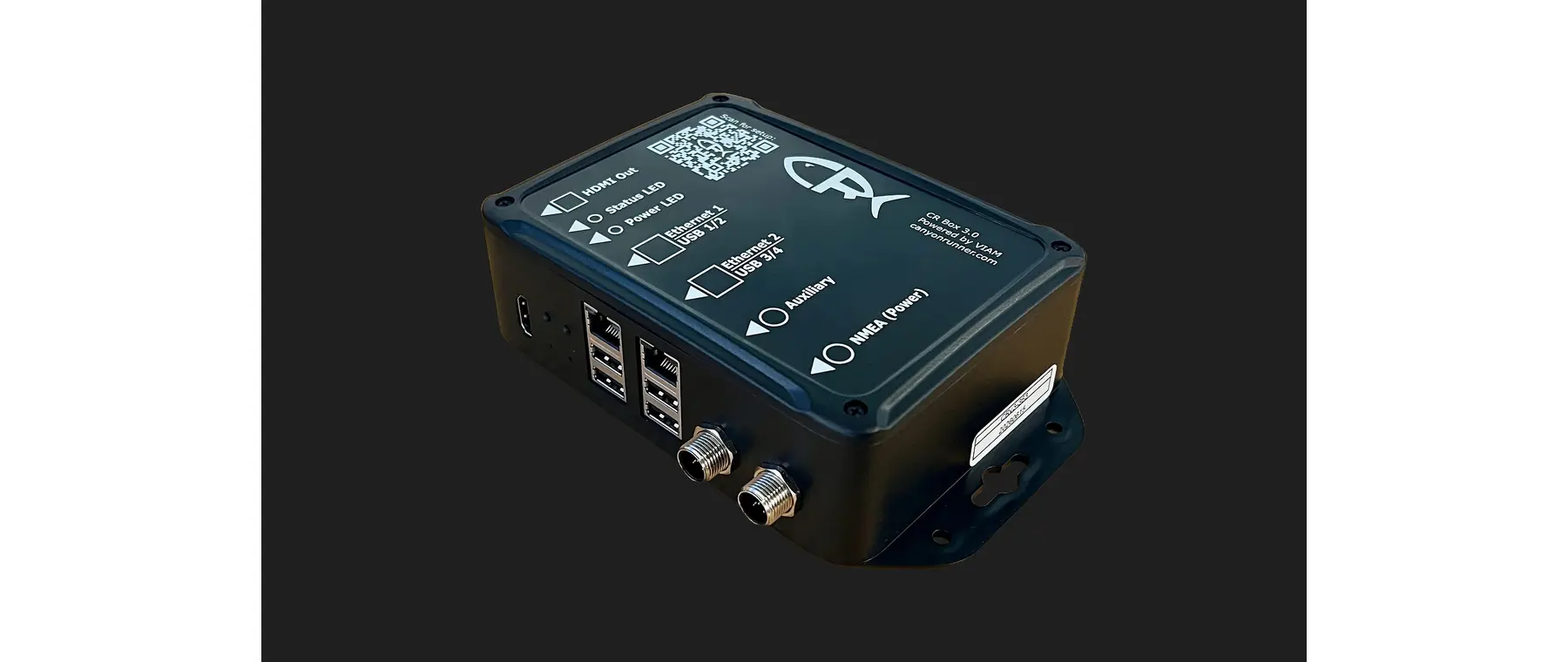
The CR Box links equipment already aboard
The hardware at the centre of the system is called the CR Box. According to Viam, it connects to a vessel's NMEA 2000 network and Starlink communications, and runs Viam's open-source software locally at the edge of the network. That arrangement allows the system to collect information from instruments aboard and make selected data available to software services.
NMEA 2000 is widely used to exchange marine instrument data such as position, heading and engine information across supported equipment. A network connection can make those readings easier to combine, but it does not mean every sensor or display on every boat is automatically compatible. Installation, device identification, permissions and the quality of the original sensor readings still determine how useful the resulting feed can be.
Viam says CRMR combines its vessel data with weather, AIS, satellite information and observations contributed by the fleet. The goal is to show captains a unified operating view rather than forcing them to compare unrelated displays. That integration may reduce the time spent interpreting several sources of information, although it cannot eliminate uncertain weather forecasts or errors in a contributing vessel's data.
IBEX judges recognise its safety application
The IBEX award was selected by Boating Writers International judges at the International BoatBuilders' Exhibition and Conference in Tampa. CRMR's Connected Vessel Intelligence was named among twelve innovation award recipients, with the safety equipment category recognising the potential for aggregated vessel and environmental information to assist a captain.
The platform combines live monitoring, mapping, alerts and analysis for recreational and professional users. It is intended to help identify meaningful changes in conditions and operating patterns, especially when a group of vessels is working in the same broader area. Precisely how alerts are set and presented should be checked for a particular subscription and installation rather than assumed from the award announcement.
The safety value of any such system depends on how a helm team uses it. Automated warnings should draw attention to information needing a human response, not encourage navigation by following other people's tracks without checking the situation. A conventional lookout, verified position, appropriate speed and a safe passage plan remain essential irrespective of the sophistication of the electronic display.
Connected fleet data has commercial applications too
Although the awards recognise marine navigation and safety use cases, CRMR's stated ambitions also include fleet-level analysis. A business operating several boats could use appropriately configured monitoring to review utilisation, operating conditions and issues reported from its vessels. Boat owners may gain more immediate visibility of systems and environmental conditions during a trip.
Those benefits require sensible handling of personal and operational data. A location history can be commercially sensitive, particularly for professional fishing crews, and any shared reporting service needs clear rules about collection, access and retention. The press announcement does not specify every privacy setting, service fee or contractual condition of the CRMR platform, so operators should review those details directly.
Connected hardware also creates dependencies that familiar standalone instruments do not have. Satellite access, mobile connectivity, power supply, software updates and account security can all affect the service. A prudent installation should allow essential navigation and engine functions to operate safely even when the reporting platform or an external communications link becomes unavailable.
Viam supplies the software infrastructure
Viam describes itself as the software infrastructure supporting CRMR's products, allowing the marine company to concentrate on its own mapping and fleet applications. It says the underlying platform supports integration with instruments, remote software updates, data storage and analysis performed either aboard or in connected cloud services.
The supplier lists other marine partners including GOST, Kongsberg and Digital Yacht, but their products and applications remain distinct from the specific CRMR award-winning tools. A relationship with the same infrastructure provider does not establish interoperability between all products by default. Boat owners should ask how a chosen installation connects to the electronics they already use.
Viam has also described projects outside the connected-boat domain, including support for manufacturing tasks at Viking Yachts. That illustrates the breadth of the supplier's business but is separate from the NMEA and IBEX honours awarded to CRMR. The reported awards concern the marine mapping, monitoring and intelligence applications announced this October.
What boat owners should check before adopting the system
For a recreational owner, the first questions are practical: which instruments can the CR Box read, what internet connection is required, and which functions remain useful when the boat loses coverage? A buyer should also examine how often inlet information is refreshed in their usual cruising area, because a broad fleet count is not a promise of frequent observations at every harbour entrance.
Owners who fish offshore may be more interested in the Fleet Analyzer's environmental and crowdsourced reporting functions. Marina operators and fleet managers may focus on alerts, usage information and the ability to review data across several boats. Each application has different requirements, and detailed pricing, installation arrangements and supported use cases should be established with the provider.
The award results and product claims are set out in Viam's announcement of 20 October 2026. The two awards recognise an approach to connected-vessel information that could develop further as more boats contribute useful observations, but they are not a certificate guaranteeing the accuracy of any individual navigation decision.