
A new Canadian partner for diesel outboards
Cox Marine has appointed Diesel-Bec Power Solutions as its distribution partner for Canada, according to industry reporting published on 5 November 2026. The development concerns an established diesel-outboard manufacturer and an engine-sales and service business that can support buyers in a large and geographically varied marine market. Although Cox is active in commercial and government vessels as well as leisure craft, the availability of specialist outboard servicing can also matter to owners of smaller recreational RIBs and powered work-and-leisure boats.
The public report describes a new distribution relationship rather than the introduction of a new outboard model. It should not be interpreted as evidence that every Canadian marine dealer now sells or repairs Cox equipment. Distribution agreements require practical arrangements for parts, training, technical support and customer communication. A boater considering a specialist diesel engine needs to know where qualified assistance is actually available, not just the country named in a headline.
What the partnership is intended to provide
International Boat Industry reports that Diesel-Bec will strengthen Cox Marine's Canadian sales, service and customer-support capability. The appointment combines Cox's diesel-outboard technology with a local partner's experience in engine sales and servicing. For an owner, this is important because propulsion is not a stand-alone purchase: correct specification, installation and maintenance determine whether a powerful outboard remains reliable over many seasons. Local expertise can reduce uncertainty compared with sending every question to a manufacturer in another country.
The terms made public do not provide a detailed list of authorised service locations, guaranteed response times or exact spare-parts stock. Customers should therefore contact the named distributor and confirm who will perform any installation, inspection or repair. A regional partnership can improve the availability of expertise, but the value becomes clear only when there are trained technicians and the required parts close enough to the vessel's normal operating area.
The CXO300 remains the technical backdrop
Cox Marine is known for its high-output diesel outboard programme, including the CXO300 class of engine. It has promoted diesel propulsion for operators seeking a particular combination of torque, fuel logistics and endurance. These characteristics can be relevant in specialised applications, such as professional RIBs, patrol boats or other vessels with substantial daily running. They do not automatically make diesel the best choice for a family runabout used for a handful of weekends each summer.
The new Canadian distribution report is not an independent fuel-consumption test and does not publish a new performance curve. Comparisons with petrol outboards must use engines of appropriate output on similar hulls, with comparable loads, speeds and operating conditions. A manufacturer's claim of efficiency under one type of duty should not be transferred to every recreational boat. Owners should ask for realistic figures from a properly matched installation before making a major propulsion decision.
Small RIBs can have demanding duties
Cox Marine's own published material includes an example of repowering a 7.8-metre RIB, illustrating that diesel outboards are not confined to large vessels. A RIB of that length is comfortably inside Leisure Boat Guide's reporting scope, although its use and specification can differ radically between a professional rescue craft, a charter boat and a private leisure boat. A compact hull may also have weight, balance and transom limitations that make an engine suitable on one vessel inappropriate on another.
Repowering is a system-level engineering decision. Engine mass, mounting, steering, propeller selection, fuel arrangements and certification need professional assessment. A diesel outboard cannot be treated as a drop-in substitute simply because its headline horsepower looks similar to that of an existing petrol motor. The cost of changing the installation may include controls, instrumentation, structural work and new service procedures. Prospective buyers should establish whether the manufacturer and installer have approved the complete combination.
Canada adds climate and geography challenges
Canadian recreational boating spans freshwater lakes, river systems, sheltered coastal waters and more demanding operating environments. A distributor working across this market must account for differences in season length, storage conditions and customer access to workshops. A boater based close to an established service centre may have different practical support from someone whose craft is kept far away. The public appointment is an indication of expanded market coverage, not a promise of identical support in every region.
Cold-weather preparation is especially relevant for engines stored during winter. The correct preservation procedure depends on the specific engine, fuel system, cooling circuit and manufacturer's instructions. Owners must avoid general advice that is suitable for one type of outboard but damaging to another. Local service arrangements can be valuable if technicians understand the product and can recommend a proper maintenance schedule. That is one of the tests of whether a distribution partnership genuinely improves ownership.
Fuel choice can affect the economics
Diesel outboards have attracted attention from commercial operators who already manage diesel fuel across several vessel and vehicle types. A recreational owner may have different priorities, including lower initial cost, simpler local service or compatibility with existing marina fuel supplies. Comparing overall ownership cost requires more than measuring litres per hour. It should include purchase and installation, servicing, fuel prices, expected annual use and the effect of engine weight on performance.
Some boaters may find the logistics attractive, especially where their craft carries out long, regular journeys. Others may be better served by a conventional petrol outboard or electric solution appropriate to the hull. The current announcement does not include a new Canadian price list or a standardised savings calculation. Claims that the appointment makes diesel power universally cheaper would therefore go beyond the evidence. The right assessment is individual and grounded in a real operating profile.
Dealer networks are not only about sales
Once an engine is fitted, its support network becomes part of the boat's utility. Owners may need diagnostic work, software updates where applicable, spare components or technical help after a breakdown. A distributor can connect manufacturer information with local technicians and dealers, potentially creating a clearer route for assistance. However, a new agreement does not itself prove that every required service has already been established. Operators should verify authorisation and current contact arrangements.
For small leisure boats that travel between regions on a trailer, service availability can be particularly important. The owner may launch at a different lake or coast each season and may not want to transport a heavy outboard long distances for routine work. Before selecting a specialised propulsion system, ask how warranty claims are handled away from the original selling dealer and whether routine service can be performed by a local authorised workshop. Those questions are as important as rated engine power.
No announced change in engine specification
The November news concerns a Canadian partner appointment. It is not a notice that Cox has changed the output, emissions certification or installation requirements of its existing engines. Buyers should refer to the latest official product documents and regional dealer information rather than assume a new distributor brings a new engine version. Details such as approved shaft length, electrical integration, engine mass and required fuel arrangements must be confirmed for the specific product under consideration.
Availability can also differ between commercial and recreational sales channels. A dealer may promote an engine for professional operators while being unable to offer the same package for a particular private boat. A prospective customer should ask for written confirmation of the model and intended use, installation responsibilities and warranty terms. That prevents a general industry announcement from being mistaken for an offer that has already been priced and approved for an individual vessel.
What Canadian boat owners should ask
A skipper considering a diesel repower should begin by identifying the existing hull, loaded operating weight, regular speed, annual engine hours and available fuel supply. These factors can shape the suitability of the proposed engine. The next questions concern the named distributor: which dealers handle sales, which technicians are trained, what maintenance schedule applies and how quickly common components can be obtained. A published corporate appointment is only the first step towards answering those practical questions.
The owner should also seek an installation proposal based on real hull data, including propeller choice and the operating range at expected loads. Safety equipment, transom capacity and steering compatibility must be considered alongside performance. Where the boat is used primarily on short, seasonal leisure trips, a calculation using real annual hours may give a different result from one based on intensive commercial service. Comparing similar engines under similar conditions is the most useful approach.
Why this development matters
The verified news is that Cox Marine has chosen Diesel-Bec Power Solutions as its distribution partner in Canada, with the stated objective of expanding sales, servicing and support. It is a commercial development rather than a new technical certification or a new production boat. Its relevance for smaller craft is the possibility of more accessible specialist propulsion support where the engine has been judged appropriate for the hull and operating use.
Leisure Boat Guide will treat the partnership as a distribution announcement until specific dealer facilities, service arrangements and product availability are confirmed. Buyers should contact the companies for current information and avoid basing a repower on broad claims about fuel savings or availability. For a specialised engine, reliable support can be decisive. The Canadian appointment is worth watching because it could make that support easier to obtain for operators whose needs genuinely suit a diesel outboard.
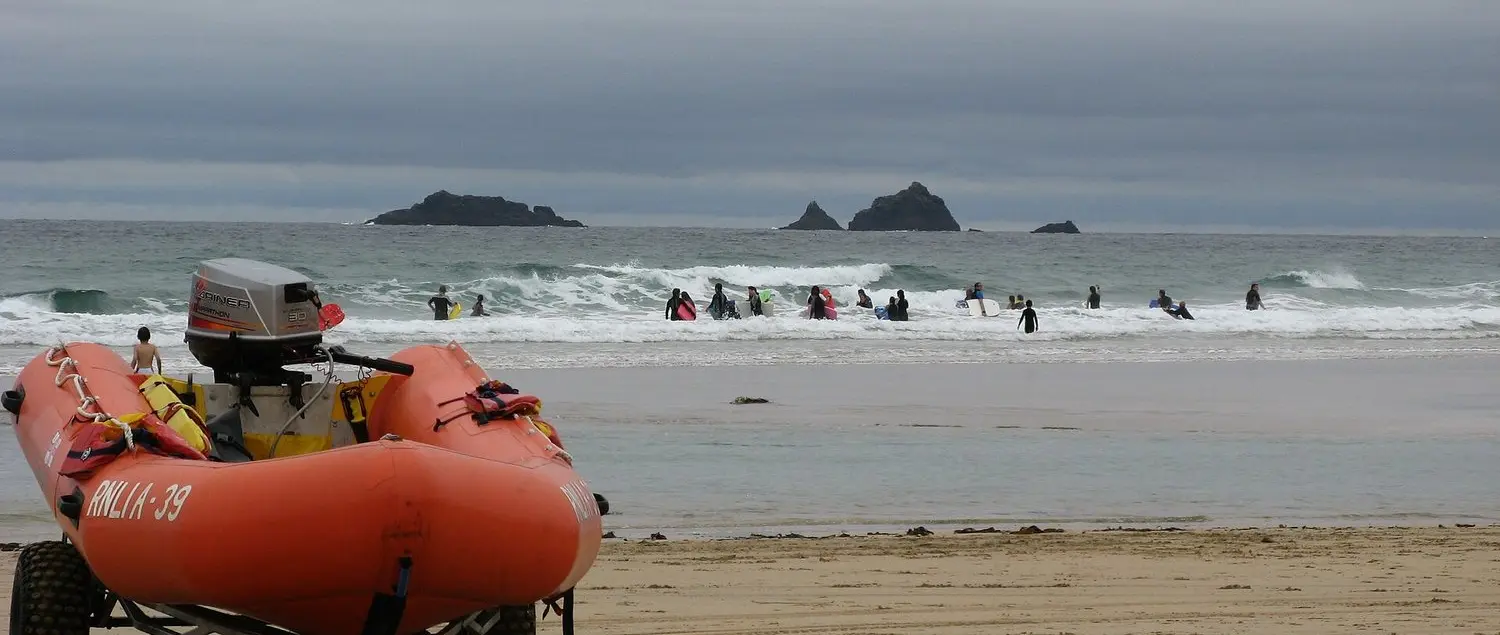
Sources: International Boat Industry, 5 November 2026 and Cox Marine's official technical and company information. Photograph: an RNLI lifeguard RIB at Treyarnon Bay, by Rwendland, Wikimedia Commons, CC BY-SA 3.0; resized. Illustrative RIB photograph, not evidence of a Cox installation.
