
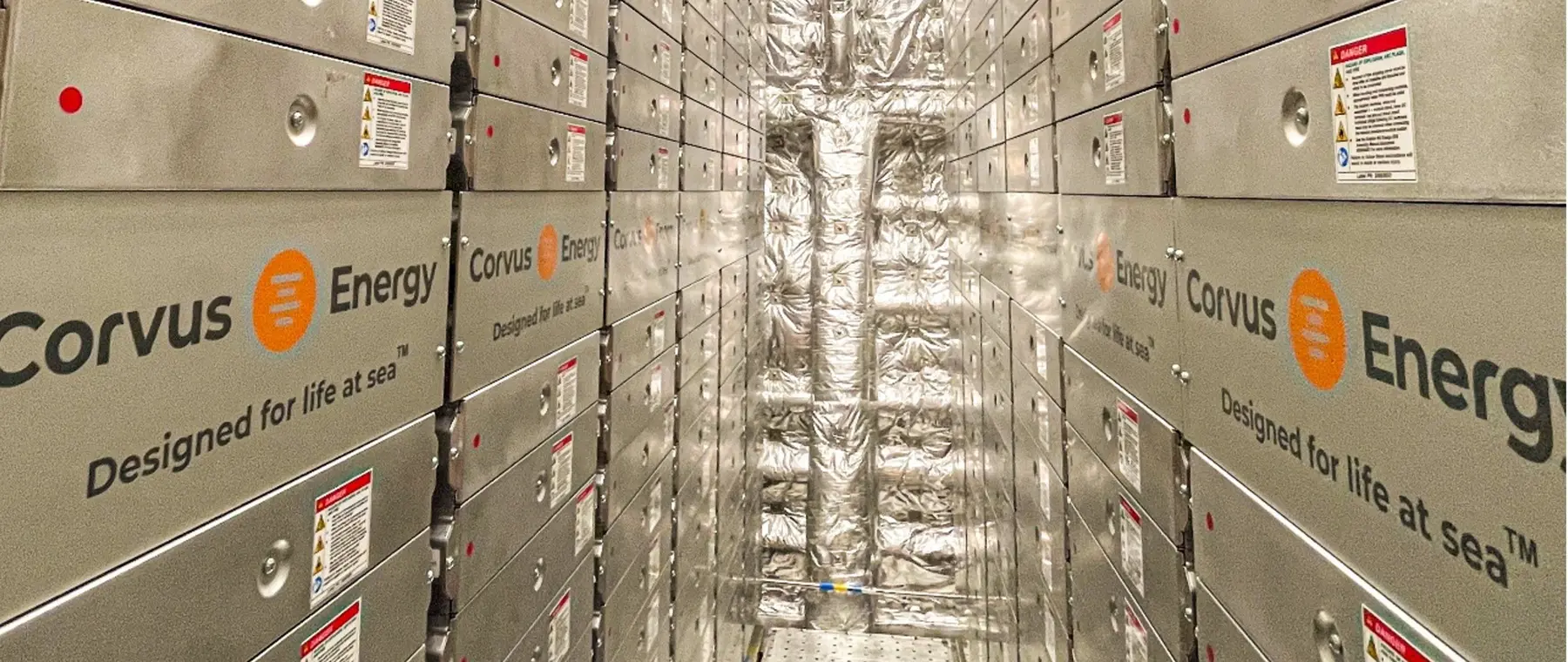
Corvus Energy has reported DNV cybersecurity type approval for its Dolphin NxtGen battery system and Gen 4 battery-management controller, adding software security to the list of checks around marine energy storage. The approval concerns named products and versions rather than every electrical system connected to them.
Large commercial and yacht installations are the immediate context, but the principle is increasingly relevant to leisure boats as batteries, inverters, chargers and monitoring systems become more connected. Electrical safety and digital access can no longer be treated as completely separate subjects.
Battery management software is part of the system
A modern lithium installation depends on a battery-management system to monitor cells, temperatures and operating limits. When that controller communicates with other onboard networks, access rules and software integrity become part of the installation risk.
Type approval provides product-specific evidence, but it does not automatically certify a complete boat. Builders and installers still need to document the network, protection devices and configuration used on the individual vessel.
Smaller boats need proportionate checks
Most under-12-metre leisure boats do not carry the scale of battery bank used by a large hybrid yacht. Even so, owners are increasingly fitting networked chargers, inverter systems and remote monitoring that can exchange data over wireless or internet connections.
The sensible response is not to treat every connected device as dangerous. It is to know which systems can be accessed remotely, keep software current and use competent installers when high-current battery work is involved.
Approval is one piece of the evidence
Owners comparing battery products should distinguish between component approval, installation compliance and the performance of the completed electrical system. Fire protection, ventilation, cable sizing and service access remain important alongside cybersecurity.
Leisure Boat Guide reports Corvus Energy's DNV approval as a technology development rather than a blanket recommendation for one battery brand. Any installation should follow the requirements relevant to the boat, battery chemistry and intended use.