
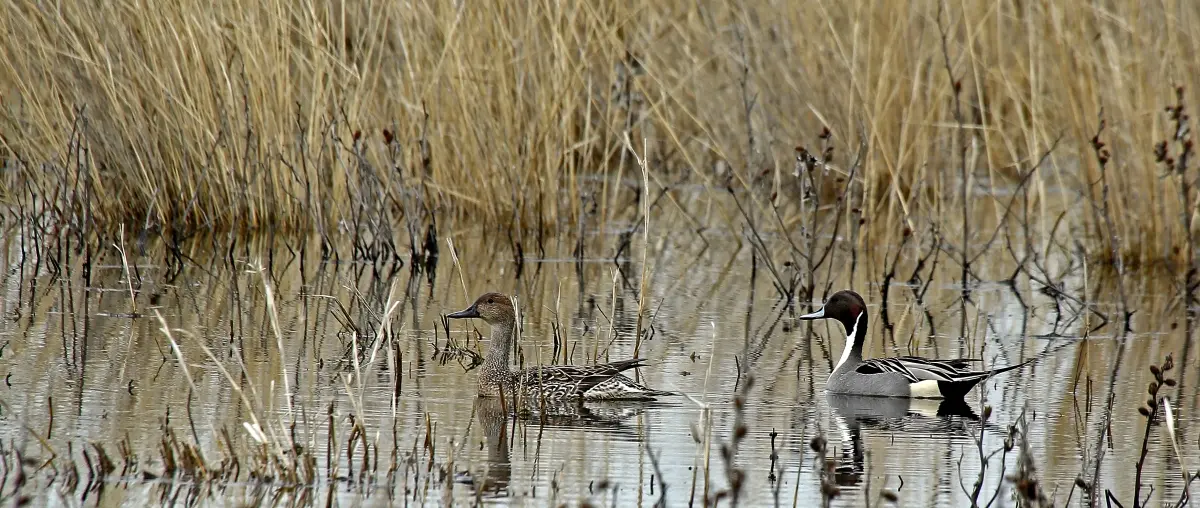
Cold Springs boating is closed through winter
Boating is closed on Oregon's Cold Springs Reservoir from 1 October through the end of February, according to the U.S. Fish and Wildlife Service and the Oregon State Marine Board. The restriction is in force on Sunday 25 October 2026, so visitors should not plan to launch a powerboat, kayak or other flotation device at the reservoir. The seasonal closure protects waterfowl using this National Wildlife Refuge.
The state Marine Board's 21 October access report also puts Cold Springs Reservoir at 9% capacity and identifies its primitive boating access as closed. The low-water report and the refuge's seasonal prohibition are separate reasons not to plan a vessel trip. Even if water levels improved unexpectedly, that would not cancel the federal seasonal no-boating rule.
A wildlife refuge rather than a year-round boating lake
Cold Springs National Wildlife Refuge was established in 1909 and was created primarily for the benefit of waterfowl and other native birds. Federal information describes its mix of open water, managed wetlands, riparian habitat, grassland and shrub-steppe north of the Umatilla River area. Visiting rules are therefore designed around habitat protection as well as recreation.
Autumn and winter are particularly important periods for many migratory waterbirds, which need places to rest and feed without repeated disturbance. The agency describes Cold Springs as somewhere to watch wildlife, walk approved access routes and enjoy quieter activities. The seasonal boat closure is part of that management approach, not merely a warning that a launch ramp has become inconvenient.
The exact boating dates and permitted craft in spring
Federal visitor guidance says no boats are allowed on the reservoir from 1 October to the end of February. During the normal boating season, 1 March through 30 September, use is restricted to non-motorised craft and boats propelled by electric motors. Gasoline and other internal-combustion engines are prohibited in the permitted season. These restrictions differ from the rules at many general-purpose public lakes.
That distinction is critical when planning a boat purchase, a fishing outing or a trailer trip. A skipper cannot assume that fitting a small outboard makes a boat acceptable at Cold Springs, and a paddler is not exempt from the winter closure just because no engine is carried. Equipment should match refuge rules before travel, with any additional state registration, safety and fishing requirements checked separately.
Bank fishing has a different status
The refuge's official guidance distinguishes bank fishing from boat fishing. Fishing from the shore is allowed during the October-through-February boat-closure period in areas of the refuge open to public access. That does not mean every bank, island or wildlife area is freely accessible. Visitors must follow signed boundaries and the published refuge map, along with Oregon fishing regulations.
The Fish and Wildlife Service names crappie and bass among the angling interests at Cold Springs. Shore fishers should check current species seasons, licences and any closures that apply to the precise place they intend to use. A legal rod and tackle set-up does not create permission to enter a closed sanctuary area or to float across the reservoir in order to reach a preferred spot.
Why the 9% water-capacity figure matters
The Marine Board's 21 October report gives a reservoir water capacity of 9%, a particularly low reading for someone hoping to reach shallow margins. That figure is a storage-capacity measure, not a survey of safe depth at a fishing position, nor proof that exposed ground can be crossed. A low shoreline can introduce soft sediment, obstacles and difficult approaches.
Visitors should avoid using a closed primitive boat access as an informal route to the water. Even a short carry to the shore can cross habitat managed for bird protection or unstable ground exposed by drawdown. Conditions vary around the basin, and a previously familiar view may look very different. Respecting marked access points and retreating from unsafe footing are more important than reaching the water at any cost.
The refuge remains open for other activities
Cold Springs National Wildlife Refuge advertises wildlife observation and photography and offers permitted access for walking on designated routes. The agency's main page describes daytime public access, with its own provisions for hunting seasons and particular closed areas. That means a boat closure should not be interpreted as closure of the entire refuge, but neither should public opening hours be taken as unrestricted access to every part of it.
Binoculars and a long lens can help visitors observe waterfowl while keeping a respectful distance from flocks. Bird-watchers should stay on authorised routes, avoid entering fenced habitat and keep disturbance low. Hunters and anglers must consult the refuge's separate activity-specific rules. A quiet visit from established viewpoints can be worthwhile without attempting any contact with the water.
Where to confirm the rules
The U.S. Fish and Wildlife Service refuge page directly states the October-through-February boat ban and the March-to-September electric-only or non-motorised requirement. Its fishing activity information distinguishes shore access from use of a vessel. The federal refuge information is the clearest source for what is legally allowed on this protected water.
The Oregon State Marine Board report adds the 21 October site condition: 9% reservoir capacity and closed primitive boating access. Boaters considering other Oregon waters should use the same dated access resource rather than general visitor descriptions alone. Rules and facility status are complementary checks, not substitutes for each other.
Plan for a return after 1 March, not a guaranteed launch
The end of the winter prohibition does not guarantee that every access point will be fit for immediate use on 1 March. Reservoir levels, maintenance and the physical condition of a primitive launch may still limit practical boating. Any future visit needs a new check with refuge staff and state access information rather than relying on the calendar alone.
When boating is legally allowed, the electric-motor or human-powered restriction remains important. Skippers should also check flotation equipment, weather, battery endurance and recovery options appropriate to a small inland reservoir. Cold Springs serves wildlife first; preparing to use the lake within its limits makes a better outing than assuming ordinary powerboat arrangements will work.
The message for October 2026 visitors
On the currently published rules, there is no recreational boat access to Cold Springs Reservoir during the remainder of October or the following winter months. Federal guidance sets the closure through February, and the state bulletin records unusually low water as of 21 October. Neither source says that a kayak or electric boat may be used during that period.
The sensible choices are to fish only from authorised bank areas where allowed, enjoy permitted wildlife watching or choose another lake with confirmed access and suitable rules. People travelling long distances should check both agencies close to departure, particularly for safety notices and temporary refuge restrictions. Observing the seasonal limits protects the waterfowl the refuge was established to serve.