
Thirty years of Cornish boatbuilding
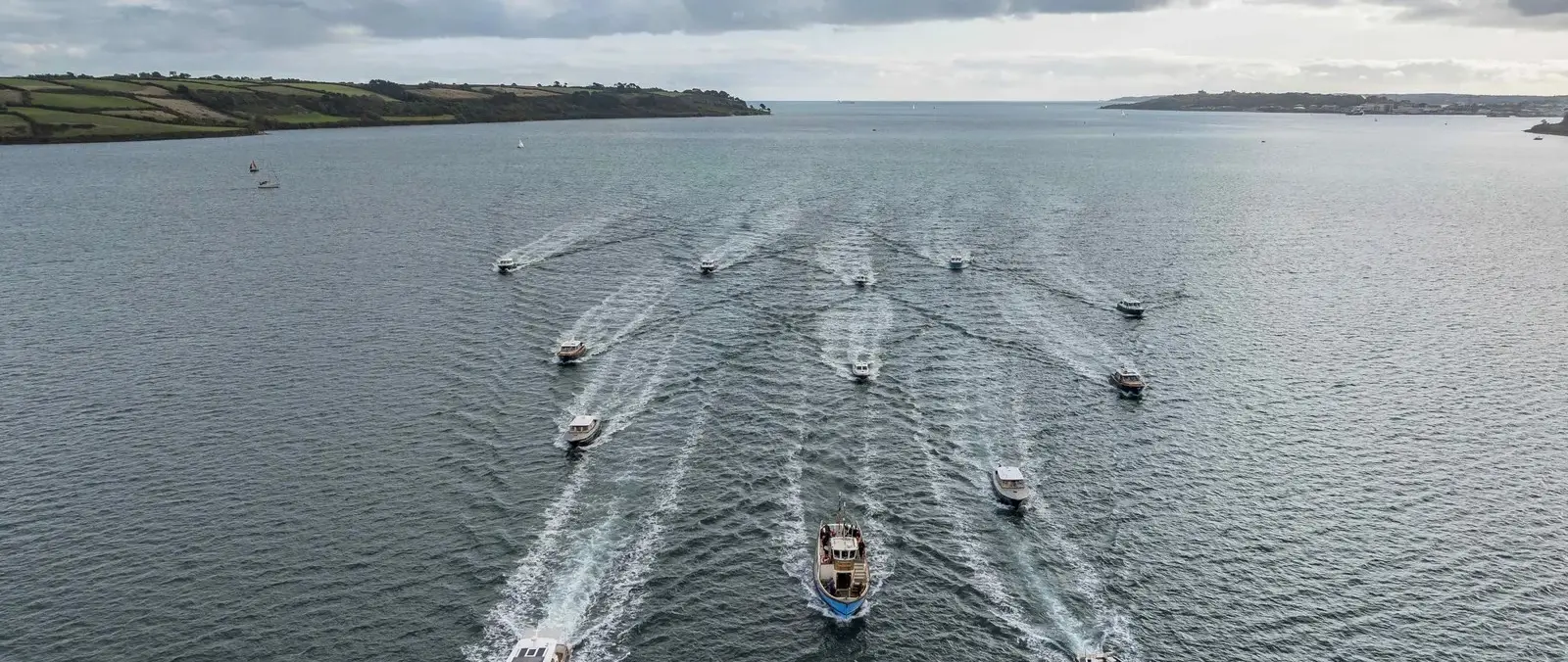
Cockwells Modern & Classic Boatbuilding has marked its thirtieth anniversary with a flotilla on the Carrick Roads near Falmouth. The parade took place on 10 October 2026, bringing together craft associated with the Cornish yard's long history.
The celebration was a chance for owners and workers to see several of the builder's designs afloat together. Cockwells is particularly known for combining traditional styling with practical motorboat layouts.
Duchy motor launches take centre stage
The flotilla included two Duchy 27 launches and five Duchy 35s, representing well-established members of the builder's range. Keeper, a recently introduced Duchy 45, also joined the procession.
Viewing several boats together makes it possible to appreciate how a builder develops related designs for different needs. A compact coastal launch and a larger cruising boat may share a style while offering substantially different accommodation.
Custom commissions join the gathering
Not every boat in the parade belonged to the standard Duchy range. The programme included one-off launches and a limousine tender, demonstrating another side of the yard's activity.
Custom tenders are designed around particular boarding and passenger requirements, which can differ from the priorities of a privately operated motorboat. Both types of project draw on specialist construction skills.
Management responsibilities are changing
The anniversary announcement also confirmed that founder Dave Cockwell is stepping back from day-to-day involvement. Cockwells named Henry Ward, Jack Carr and Tim Tregear to oversee areas including sales, motor-yacht ranges and custom projects.
The transition is intended to preserve continuity as the business develops. It does not itself establish any immediate change to the specifications of boats already on order.
Why boat owners follow builder changes
Owners may depend on a yard for maintenance advice, spare parts and knowledge of older hulls long after delivery. Management continuity and technical support are therefore legitimate considerations in choosing a specialist boatbuilder.
Cockwells' thirtieth anniversary offered a visible reminder of its output on the water. Further commercial developments should be confirmed through the yard rather than inferred from the celebrations.
Thirty years of changing small-boat expectations
Cockwells has built its reputation around traditional craftsmanship and bespoke motorboats, including the Duchy range. Over several decades, customer expectations have changed as owners look for comfortable day cruising, practical access and reliable systems alongside classic exterior design. A celebration involving boats already delivered offers a useful perspective on how those requirements develop over time.
An owner's experience after several seasons is often more revealing than a showroom appearance. Access to engines, upholstery durability, handling at low speed and the ease of routine maintenance can become decisive features. Seeing a group of boats in use helps prospective buyers recognise that each individual specification may reflect different priorities.
Why a parade matters beyond publicity
A gathering of owners can create a sense of community around a builder, while also giving staff direct opportunities to hear feedback from people who use the vessels regularly. Owners may compare maintenance methods or discuss upgrades, although a celebratory event should not be confused with a formal product evaluation.
A parade near working water also requires coordination and responsible navigation. Spectators should keep clear of vessels manoeuvring in close proximity, and participants must follow harbour directions. The event's visual impact is part of the celebration, but safe handling and consideration for other water users remain important.
Understanding a custom motor launch
A bespoke boat can be tailored through choices of seating, cabin layout, joinery, engines and onboard equipment. The extra flexibility can make a small launch better suited to a family's particular cruising routine, but it also creates responsibility to document what has been specified. Unusual features may require specialist maintenance or replacement parts later.
Buyers should ask for accurate drawings and records of important systems, including electrical and plumbing installations. A modification that makes sense for one owner may not suit a later purchaser. Thorough documentation can help protect the boat's long-term usability and make surveys easier when ownership changes.
Management transitions and customer confidence
Changes in leadership are normal as established marine companies evolve. Customers are entitled to ask whether their existing warranties, service contacts and project commitments will remain supported. A reassuring announcement should be followed by clear operational information, particularly for owners who have boats under construction or major refits in progress.
Technical knowledge can be spread across designers, craftspeople and after-sales staff, rather than resting entirely with a founder or senior executive. Continuity depends on preserving that knowledge and maintaining reliable supplier relationships. Prospective buyers should assess the actual organisation available to support the boat after delivery.
Servicing handmade details over time
Traditional finishes and carefully executed joinery contribute to the appeal of a classic-style launch. They also need appropriate care against moisture, ultraviolet exposure and physical wear. An owner should understand how teak, varnish, paint and interior materials are expected to age in the chosen cruising environment.
Regular inspection can prevent small areas of deterioration from becoming expensive restoration projects. Professional advice is appropriate when a repair affects structural elements or machinery. The goal is to preserve the craftsmanship while keeping the boat practical to operate, rather than treating it as a display object that is never used.
Choosing a builder for long-term enjoyment
A prospective owner can learn from speaking with existing customers about delivery communication, real running costs and the response to problems. The builder's designs and attention to detail are important, but so is the ability to provide technical support several years later. Independent surveys and detailed written contracts remain sensible even for respected names.
Cockwells' anniversary celebrates its heritage and the owners who have chosen its boats. Its next chapter will be judged through future deliveries and continued service, not simply the ceremony. For Leisure Boat Guide readers, the enduring interest is the combination of distinctive design and dependable everyday ownership.
Boaters considering classic-style motor launches should compare actual cockpit shelter and boarding arrangements, not just the exterior lines. Some owners will operate primarily in warm, settled weather while others want protection from spray and cool winds. A thoughtful specification can make the difference between a boat used frequently and one that remains in its berth.
An anniversary gathering can encourage owners to share practical solutions for cleaning, storage and small repairs. Such conversations may be helpful, but advice should still be checked against the builder’s current technical recommendations. A modification that works on one boat may be unsuitable for another fitted with different engines or electrical equipment.