
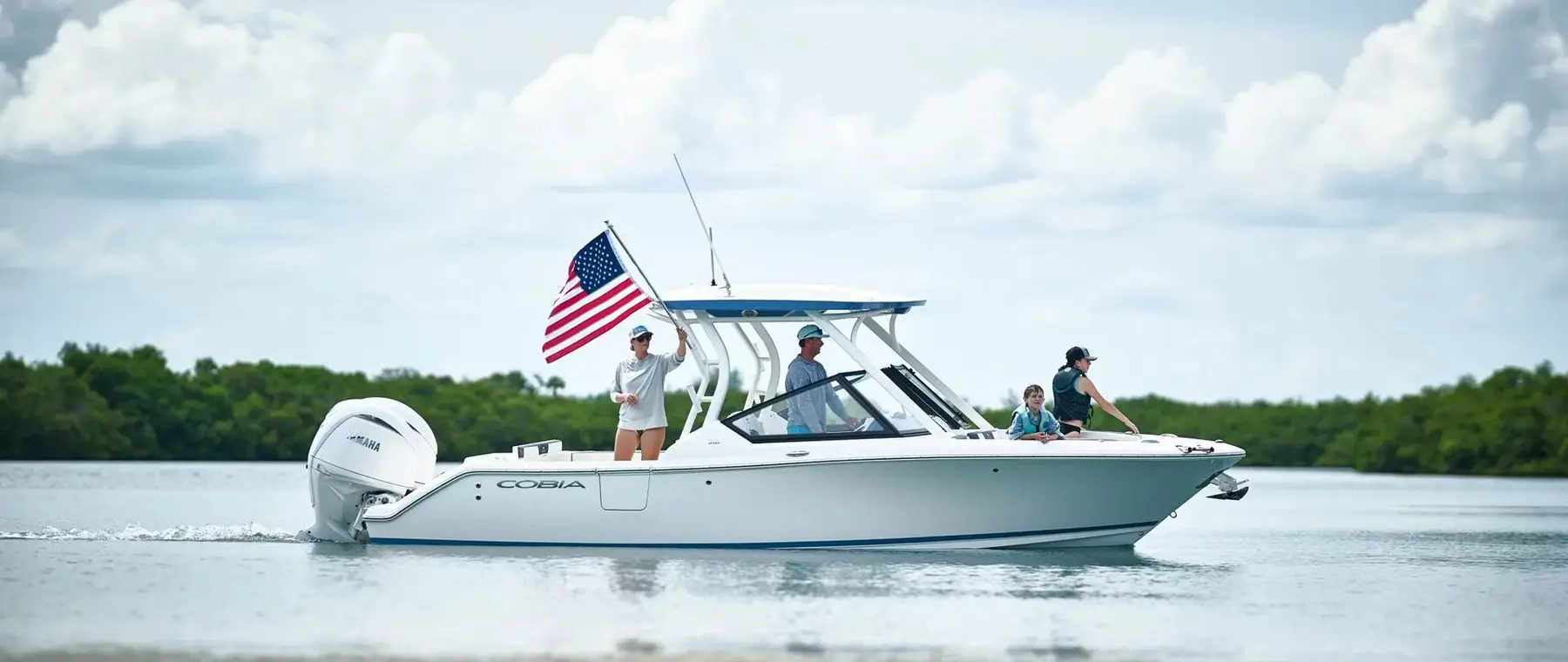
Cobia confirms a Florida show introduction
Cobia Boats is bringing its all-new 250 DC to the Fort Lauderdale International Boat Show from 28 October to 1 November 2026. The manufacturer has specifically identified the model as a first-look attraction at the Broward County Convention Center, where it plans to display the full Cobia range. The 250 DC is a dual-console leisure boat intended to serve families, recreational anglers and guests who enjoy watersports from the same platform.
The brand's show announcement gives visitors a precise location, Booth 2045, and encourages advance appointments. That makes this a confirmed event story rather than a speculative model sighting. Owners considering a new boat in the 25-foot class will be able to compare the Cobia's passenger layout and fishing arrangements against other models during the five-day exhibition.
A 24-foot-6-inch hull with a broad beam
The official model page lists a length of 24 feet 6 inches and a beam of 9 feet 5 inches, putting meaningful deck width into a relatively compact coastal boat. The builder publishes an approximate draft of 18 inches and a weight of 6,330 pounds with engines, though the exact running configuration will alter the total. These measurements should be used with caution for shallow-water routing and berth selection.
Cobia gives maximum capacity as ten people or 1,700 pounds according to its technical information. That headline number requires sensible judgement about how many people can actually enjoy a particular outing with their luggage, tackle and safety equipment. The best test is to see the boat with seating positions occupied and imagine walking from bow to stern while normal gear is aboard.
The dual-console arrangement puts passengers first
A full glass wraparound windscreen separates the forward passenger zone from the helm and aft cockpit. The boat's broad seating arrangement and convertible helm furniture are intended to make passengers comfortable during a passage and while socialising at anchor. Unlike an open centre console dominated by a standing helm, the dual-console format offers a closer relationship between the helmsman and the main seating area.
The maker lists a hidden aft bench and other configurable seating elements, a reminder that changing the way a seat is used can change the character of the cockpit. Buyers should sit in all of the principal positions during a visit and examine foot support, handholds and lines of sight. Seat count is less informative than how safely and comfortably the intended group can remain aboard in moving conditions.
Fishing space remains a genuine priority
The 250 DC carries equipment intended for recreational fishing as well as casual social use. The builder lists insulated cockpit fish boxes, under-gunwale rod storage and stainless rod holders, alongside a livewell located aft. Its marketing describes the livewell as being designed for bait care, with an interior shaped to support circulation. These are useful additions for owners who regularly fish while keeping a family-oriented deck.
A practical review should focus on working room rather than equipment counts alone. There must be clear space to handle a rod, move a cooler, secure a catch and clean the deck afterwards. The location of seats and reboarding points can either help or interrupt those movements. If serious fishing is the primary purpose of ownership, an on-water demonstration with actual tackle is far more informative than a pristine show cockpit.
Several ways to enter and leave the water
Cobia lists an inward-opening side boarding door, along with provision for bow and stern ladders. The approach recognises that marina boarding, swimming and handling equipment often need different entrances. The side opening could be particularly helpful beside a floating pontoon, while a stern ladder supports the routine of returning from the water after swimming.
Such features deserve careful safety assessment. Boarding geometry changes with tides and docking conditions, and a ladder that is stowed away must be easy to deploy when it is needed. Operators should learn how the side opening is secured before departure and should explain safe movement to every guest, especially younger passengers or those with limited mobility.
Single-outboard power and its implications
The builder publishes a maximum engine rating of 350 horsepower and identifies a Yamaha 300-horsepower package in its standard model information. That power range suits a substantial family day boat, but the maximum figure is not an assurance of a specific speed. Hull cleanliness, propeller choice, load and sea conditions all influence performance.
The fuel capacity is listed at 135 US gallons, a useful amount for coastal trips and sustained fishing days. Responsible passage planning requires measured consumption and an appropriate return reserve rather than optimistic multiplication of tank volume by an advertised economy figure. Buyers should also assess local engine-service availability and the specific controls installed with the chosen power package.
An enclosed head extends the day's possibilities
An enclosed marine-head arrangement is part of the 250 DC's family facilities, alongside a freshwater washdown system and a preparation station. For a boat that may carry children or several adults all day, a private facility can be a major practical advantage. The builder's equipment list also includes charging points and cupholders distributed around the main passenger areas.
Maintenance and usability are as important as the presence of these features. A person should be able to enter the head comfortably, reach serviceable plumbing and understand where waste is stored and pumped out. Owners should confirm which equipment is supplied on the particular order, since listed options and packages can vary with dealer and market.
Swimming, towing and time at anchor
Cobia's product presentation emphasises the model's ability to change from fishing to watersports. A tow pylon and rear-facing seating feature among relevant equipment, allowing passengers to watch activity behind the boat under appropriate conditions. The forward seating, meanwhile, is arranged as a social zone for refreshments or relaxation while stationary.
Towing and swimming around powered boats require careful procedures regardless of how inviting the cockpit looks. The operator should understand local rules, keep clear of the propeller danger area and maintain a lookout whenever people are in the water. Seating placement is relevant to supervision, but responsible boating depends on trained operation and a crew that knows how the boat will be used.
What to look for at the show
The 2026 Fort Lauderdale International Boat Show is an ideal setting for a practical comparison of the 250 DC against alternative dual-console designs. Cobia states that the new model will be at Booth 2045 in the convention centre, alongside the rest of its current lineup. Visitors can arrange a closer inspection with the manufacturer's participating dealers during the exhibition.
The questions worth asking are straightforward: how readily can the seats be reconfigured, how does the helm feel when standing or seated, and are the ladders, head and fishing storage useful to the actual family? Check the equipment list and have the dealer clarify the difference between base and optional features. The display gives a first impression; a sea trial should follow for serious buyers.
A flexible boat for real coastal use
The Cobia 250 DC is designed to help owners make one boat serve several activities rather than maintaining separate craft for fishing and family cruising. Its substantial beam, protected helm area, fishing storage, side boarding door and comfortable seating collectively support that brief. The best purchase case will come from how seamlessly those functions can be used together without creating a cluttered cockpit.
Further information is available from Cobia's official model page and its Fort Lauderdale exhibition announcement. The published specifications provide a sound starting point, but prospective owners should still obtain a current written configuration and test the boat with a typical load. The Florida introduction is a useful opportunity to start that evaluation in person.