
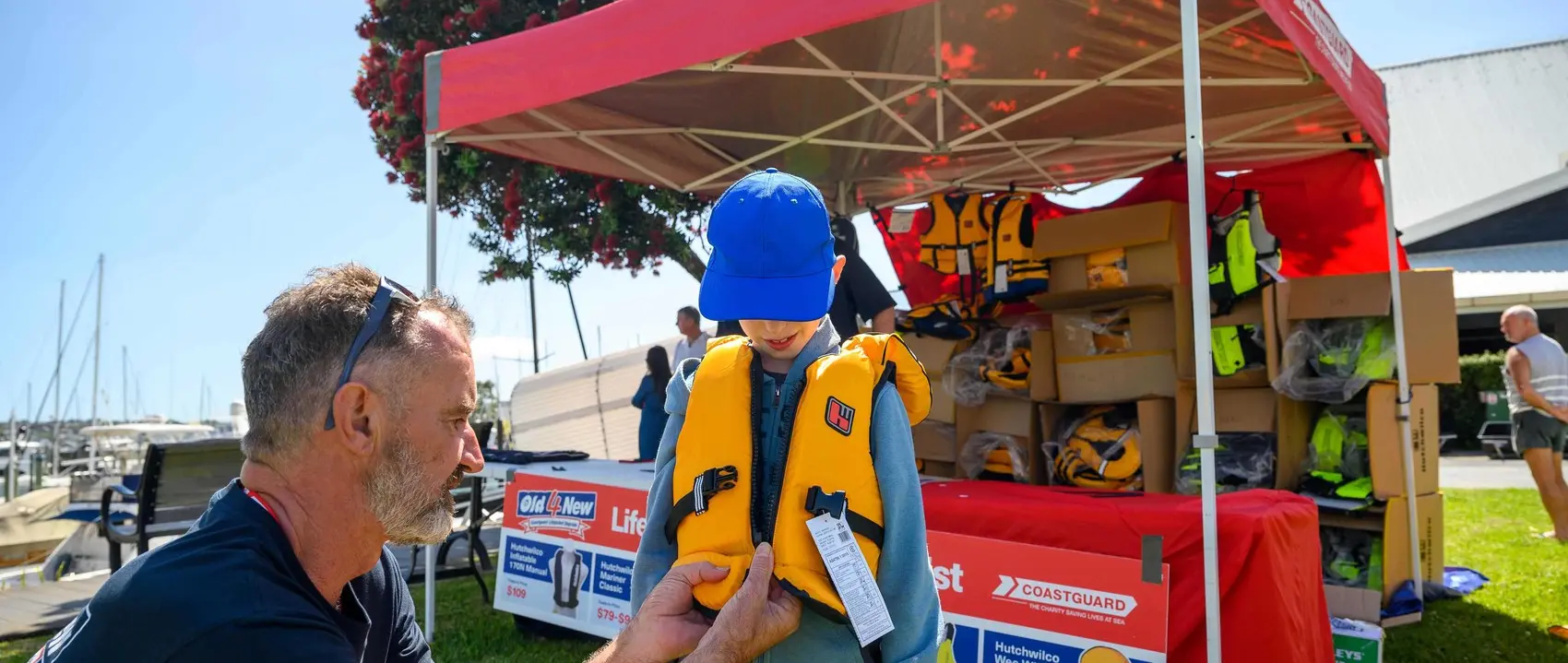
New Zealand's leisure boating season is approaching with a practical opportunity for skippers to review one of the most important items they carry. Coastguard's Old4New lifejacket upgrade campaign returns on 16 November 2026 and runs until 1 February 2027. Supported by Hunting & Fishing New Zealand and Hutchwilco, the initiative provides a seasonal route to replacing ageing or unsuitable equipment before owners head out in dinghies, trailer boats, tenders and other recreational craft. The announcement is distinct from the country's recently changed lifejacket wearing rule.
The campaign returning this month
Coastguard New Zealand has confirmed that its Old4New lifejacket upgrade campaign will return on 16 November 2026. The initiative is being run with Hunting & Fishing New Zealand and Hutchwilco, and is scheduled to continue until 1 February 2027 at participating Hunting & Fishing stores nationwide. That creates a practical, time-limited opportunity for recreational boat owners to review their personal flotation equipment before the main summer cruising and fishing season. The announcement is about exchanging unsuitable jackets, rather than introducing a new brand of boat.
The organisation reports that New Zealand boaters traded in 1,930 old lifejackets during the previous summer campaign, and its programme has supplied more than 25,900 replacements since 2014. It says the 2026/27 programme begins earlier and lasts longer than last season. Those details are useful because an owner planning a family holiday, club sailing season or several short fishing trips can assess equipment in advance, without waiting until the day of launch. Coastguard lists savings of NZ$20–30 on selected Hutchwilco jackets through 40 Hunting & Fishing stores. One old lifejacket must be surrendered for each discounted replacement, and the offer is in-store only.
Why small-boat owners should pay attention
Lifejackets can spend months compressed beneath seats, exposed to salt, damp air and fluctuating temperatures. A jacket still looking bright on the outside may have damaged fastenings, degraded material, incorrect sizing or a worn buoyancy component. Some owners also inherit equipment with a second-hand boat and never verify its age or intended use. An exchange campaign offers a useful prompt to take each jacket out, inspect it carefully and ask whether it remains suitable for the people and activities actually carried aboard.
That matters particularly aboard dinghies, open runabouts, small fishing craft, kayaks and tenders, where people are close to the water and may have little protection from spray or abrupt motion. A short passage is not automatically a low-risk passage. Engine trouble, a change in weather or an unexpected movement can occur before anyone has time to reach into a locker. The objective is to have dependable, correctly fitted equipment immediately available and, where required, already worn.
What the offer does and does not promise
Coastguard describes Old4New as a lifejacket upgrade campaign, with savings of NZ$20–30 applying to selected Hutchwilco lifejackets when an old jacket is traded in. The relevant dates on its current safety page run from 16 November to 1 February. Owners should confirm eligibility, available sizes, participating shop arrangements and the value of the applicable offer at the time they visit. A previous year's promotional leaflet or a social-media graphic cannot reliably establish the terms of the 2026/27 campaign, particularly if product availability or participating locations have changed.
The sensible decision starts with the wearer's requirements, not a headline saving. A jacket designed for an adult in sheltered conditions is not an adequate substitute for a properly fitted child's jacket; nor should a buoyancy aid intended for an active watersport be treated as interchangeable with every other category of lifesaving equipment. Read the manufacturer's purpose and sizing guidance, consider the type of boat and the likely operating conditions, and obtain assistance with fit where needed. An inexpensive mismatch is not a successful upgrade.
The regulatory backdrop in New Zealand
The trade-in campaign follows an important national change in New Zealand's lifejacket requirements, but the two developments are distinct. Coastguard's separate guidance states that since 9 October 2026 everyone aboard a recreational craft of six metres overall length or less must wear a lifejacket while the craft is underway, subject to the specified exceptions. The rule covers powered and paddle craft, including dinghies, kayaks, stand-up paddleboards and personal watercraft. Owners must consult the current national guidance rather than assuming their former regional practice remains sufficient.
Coastguard explains that underway does not merely mean the motor is turning or the sail is drawing: a craft that is not anchored, aground or secured to shore may count as underway even when drifting. For craft over six metres, the existing carriage and higher-risk wearing provisions continue to apply. This article is not a substitute for Maritime New Zealand's rules or professional safety instruction. Its practical point is that a national wearing requirement makes the condition and fit of personal equipment more immediately relevant to many owners of small recreational boats.
Fit, size and freedom of movement
A useful jacket must suit the individual as well as the activity. When checking an existing jacket, inspect the label for its specified size and weight range, verify that straps and closures hold as intended, and assess whether the jacket can ride upward excessively when worn. Families should check growing children again even if a jacket fitted last summer. An adult size is no replacement for a child's design, and an old jacket of uncertain origin should not be relied upon simply because it remains in the boat's safety locker.
Comfort is a safety consideration, not just a purchasing preference. A jacket that restricts normal steering, paddling, sailing or moving around a cockpit may be worn reluctantly or adjusted incorrectly. Conversely, a very loose jacket can behave unpredictably in the water. Try the intended garment over the clothing usually worn afloat, review any crotch-strap provision and practise securing it properly. The final selection should follow the maker's fitting instructions and the operating requirements; a shop demonstration is more useful than choosing solely by colour.
Inflatable and foam equipment need different checks
Recreational boat crews use several styles of flotation equipment. Some include fixed foam buoyancy, while others use inflation mechanisms and components that require particular inspection and servicing. A worn inflatable jacket may need more than a replacement outer cover, and owners should not assume that a green-looking indicator guarantees an entire system is ready. Service intervals, approved replacement cartridges and activation checks must come from the actual manufacturer's instructions, with professional attention where appropriate.
Traditional foam jackets should also be examined for torn seams, compressed or damaged buoyancy sections, hardened straps and broken buckles. Salt residue and damp storage can obscure defects. No amount of surface cleaning can establish that an unknown or seriously deteriorated jacket performs to its specification. Where an item fails inspection, an orderly replacement programme is more sensible than returning it to the locker and hoping it will be adequate for one more outing.
Preparing the rest of the safety kit
Coastguard's safety guidance treats the lifejacket as one element of a broader small-boat system. The organisation encourages boaters to take two waterproof methods of communication, check marine weather, carry a suitable beacon and tell someone their plans. Those measures address a different problem from flotation: if a boat breaks down, capsizes or cannot return to port, someone ashore or a rescue organisation needs enough information to locate the occupants promptly. The best jacket is not a communications device.
Before the first summer outing, lay out the required items in the cockpit and check that everyone knows where to find them. Confirm that batteries are charged, the radio is usable, a waterproof phone case is serviceable and any emergency beacon is correctly registered and in date. The equipment list changes with the vessel, location and activity, so owners should use official guidance rather than relying on a generic bag sold for all boats. A short rehearsal of what happens if someone enters the water can reveal gaps.
Special attention for tenders and short journeys
The tender deserves particular scrutiny because its journey may appear routine. A row to a mooring, a brief transfer to shore or a trip across a sheltered bay can still expose passengers to water and cold, especially when wind opposes tide or visibility changes. Coastguard's explanation of New Zealand's new six-metre rule specifically includes tenders and dinghies as recreational craft in their own right. The length of the transfer does not turn the tender into an exemption from sensible preparation or applicable wearing rules.
Operators of a small inflatable or aluminium tender should plan where lifejackets will be worn, how the craft will be loaded and who is responsible for passengers unfamiliar with boarding. Loading too much weight into a light tender, letting gear block access to safety items or carrying only adult-sized jackets for a mixed group are avoidable errors. A lifejacket exchange campaign can be a timely reason to reassess the entire tender kit, even if the parent cruising boat carries a more comprehensive inventory.
A useful purchasing checklist
Take an inventory before heading to the shop: the number of regular occupants, their current sizes, the types and labels of the jackets already aboard, and the condition of fastenings or inflation systems. Check the craft's normal operating area and whether equipment must accommodate occasional visitors. Bring a questionable jacket for assessment rather than discarding it prematurely, and ask the retailer what the current Old4New scheme accepts. Availability and individual store arrangements should be verified directly before travelling.
At the counter, compare the manufacturer's use category, fit, care instructions and any required accessories. Check the replacement jacket can be adjusted by its actual wearer and can be stored where it will not be crushed, wet or forgotten. Keep the purchase documentation and note future inspection or service dates. It may be better to replace one badly mismatched jacket with the right equipment than to buy several unsuitable items because a temporary promotion makes them appear attractive.
What to watch between now and January
The scheduled Old4New window gives New Zealand skippers nearly eleven weeks to act, spanning the early and peak summer season. Coastguard's current information names Hunting & Fishing NZ and Hutchwilco as programme partners and directs boaters to the current Old4New information. The discount is one-for-one and in-store, with product choice and stock dependent on the retailer; readers should rely on the current official terms. It would be misleading to repeat last season's promotional prices or imply that every old jacket qualifies for exactly the same reduction.
For leisure boaters beyond New Zealand, the campaign's wider lesson is practical rather than legal: a flotation device deserves the same deliberate maintenance as an outboard, trailer coupling or navigation light. The local rules and product standards will differ by country, but the principles of correct sizing, careful inspection, wearing equipment when needed and maintaining reliable communications travel well. The event opens on 16 November. Coastguard's dedicated promotion terms specify 1 February 2027 as the final day, whereas its general safety guidance still says 31 January; check the dedicated offer page before travelling close to the deadline.