
Coastguard Nelson wins New Zealand's top unit honour
Coastguard Nelson has been named Unit of the Year at Coastguard Tautiaki Moana's 2026 Volunteer Excellence Awards, held in Auckland at the start of November. The unit also secured two individual national awards: Geoff Eban was named Crew Member of the Year and unit president Annette Nistor received the Outstanding Leadership Award. The formal Coastguard announcement is dated 1 November, and a further account on 7 November highlighted the team's contribution to boating safety around Tasman Bay.
The awards celebrate volunteer emergency response and the capacity that supports recreational boating. A coastguard unit may assist craft of many sizes, but smaller powerboats and sailing dinghies are among the people who rely on local search-and-rescue capabilities when weather, mechanical trouble or an injury interrupts a trip. This is not a report of a single incident today; it is recognition of work recorded over the award's nomination period.
Seven lives saved across three difficult rescues
Coastguard's published citation states that Nelson responded to seventy-four requests for assistance and fifty-eight operational incidents during the award period. It credits the unit with saving seven lives during three complex rescues and assisting a further one hundred and twenty-six people. Those numbers show different kinds of workload: a request for assistance need not be counted as a separate operational incident, and the people assisted figure is not the same as the number of lives saved.
The unit's crews contributed more than 870 volunteer hours at sea. Such figures are valuable because they reveal the scale of activity behind an award, but should not be interpreted as a complete tally for all Coastguard units or a comparison of one district's safety with another. Search-and-rescue demands depend on geography, weather, local boating activity and the availability of other emergency services.
Tasman Bay presents a large response area
Coastguard Nelson's region extends from the top of Farewell Spit to the northern tip of D'Urville Island, with Tasman Bay and neighbouring coastal areas between them. The organisation describes it as the largest stretch of water covered by any one unit. For recreational boaters, such geography matters because a short trip from a convenient launching ramp can put a vessel far from immediate assistance, especially where coastal headlands and strong currents complicate access.
Small boats should carry suitable means of communication, check the forecast and leave a trip plan with somebody ashore. Mobile telephone coverage cannot be assumed in every bay or channel, and a radio call may be easier for rescue crews to coordinate than a vague location sent in an emergency. The specific legal equipment requirements depend on the boat, local rules and trip, but the principle of preparing for remote conditions is universal.
A grounding at French Pass tested the team
One notable operation during the period involved a fishing vessel that grounded in French Pass, where strong tidal flows can make rescue particularly difficult. The Coastguard's vessel Hohapata Sealord Rescue worked through an overnight operation lasting approximately twelve hours, helping recover people from the shoreline and tow the vessel to Croisilles Harbour. A Transport Accident Investigation Commission inquiry concerning the grounded vessel Taudre has been reported separately, and its findings should not be guessed while the investigation is open.
The details underline how quickly a routine coastal passage can turn into a lengthy emergency response. A tidal stream can limit when a tow or transfer is safe, and an exposed shoreline may be dangerous for people waiting for assistance. Leisure skippers should plan passages through narrow, tidal waters using current information and be cautious about relying solely on a chartplotter course line without accounting for flow and under-keel clearance.
Geoff Eban is Crew Member of the Year
Eban joined Coastguard Nelson in 2017 and has held operational and administrative roles including bosun, senior crew member, relief duty officer and incident management positions. His nomination cites technical judgement during the recovery of the grounded 52-foot ketch Vaila in Te Pukatea Bay, as well as work introducing TimeZero search-planning software. The award also recognises his involvement in the unit's rescue boat and ongoing maintenance work.
That contribution shows how search-and-rescue preparedness depends on boat engineering and information systems in addition to practical seamanship. A rescue vessel cannot be effective if critical equipment is out of service when a call arrives. Regular inspection, fault reporting and repairs are therefore operational work rather than background administration. Owners of small boats may recognise the same principle on a smaller scale: reliability starts long before leaving the berth.
A rescue boat built through local commitment
Coastguard's account credits Eban with managing the build of Hohapata Sealord Rescue until the vessel entered service in 2021. The boat was designed by Naiad and built by Aimex in Nelson, with funding gathered through community donations. Such projects demand more than selecting engines and electronics; the operator must also consider the launch arrangement, crew training, maintenance provisions and local rescue requirements.
People reading about a coastguard boat should not treat its performance as an achievable specification for an ordinary pleasure vessel. Rescue craft are designed for specialist roles and professionally trained crews, often with robust structures and equipment chosen for demanding service. The transferable lesson is that a boat is only one part of a functioning system that includes trained people, communication, shore support and sustainable finance.
Annette Nistor recognised for leadership
Annette Nistor received the Outstanding Leadership Award while serving as Coastguard Nelson president. Coastguard describes her progress from qualified crew in 2020 to senior crew in 2023 and Master in 2026, showing continued operational training alongside governance responsibilities. Her first deployment as skipper involved a critically ill person aboard a fishing vessel off D'Urville Island; she led a five-hour medical evacuation after a call at about one in the morning.
That combination of leadership and qualifications matters to an organisation whose people must make decisions in difficult conditions. A skipper needs to keep crew members informed, allocate tasks and adapt the plan as conditions change. Coastguard's recognition emphasises a collaborative style, development of younger volunteers and work to bring more women into operational roles. These goals support a reliable response capability rather than simply providing an award-night success story.
Training and community programmes reinforce the response
The unit carried out ninety training sessions totalling 1,725 volunteer hours during the nomination period, according to Coastguard. It also introduced a digital communications platform and increased its capital reserve to approximately NZ$290,000. Those investments may be less visible than a dramatic rescue, but they support the ability to respond at any hour. A growing reserve helps plan for maintenance, equipment replacement and the unpredictable costs of running marine safety operations.
Nelson has backed the Suddenly in Charge workshops, intended to build confidence among people who may unexpectedly need to take control of a boat. That message directly concerns family crews on small recreational craft. A passenger who understands how to stop the engine, use the radio and describe a location can become crucial if the normal skipper is incapacitated. Training should be proportionate to the boat and trip, but it should not be limited to one experienced person.
Project Tora considers more local rescue options
Coastguard also highlighted Project Tora, an initiative exploring faster, more localised rescue capability for Golden Bay, Tasman Bay and remote communities. The project is described as a developing effort rather than an announced new rescue station with a confirmed commissioning date. Boaters should not assume extra coverage already exists simply because the organisation is evaluating different arrangements.
Geography is a constant challenge for marine rescue. Long distances, weather changes and the need to find suitable crew and equipment can affect response times. Volunteer organisations must make difficult decisions about where vessels and people can be based. For owners planning trips into remote bays, the existence of a project like Tora reinforces the importance of self-sufficiency, communication and realistic decisions about shelter and return routes.
The awards recognise a wider volunteer network
Seventy-four nominations were received across seven award categories in 2026, with seven national winners and fourteen regional winners. Other honours went to volunteers and units in places including Wellington, Raglan and Auckland. Nelson's achievement of three national awards is especially notable, but it does not imply that other units contributed less or that national winners alone make New Zealand's waters safer. Every successful response relies on numerous people who may never appear in a formal citation.
For Leisure Boat Guide readers, this story offers a reminder that small-boat recreation depends on the work of others: rescue crews, trainers, volunteers, maintenance specialists and people who organise funding. The safe-boating lesson is to prepare for the conditions, share knowledge among passengers and support local safety organisations where possible. Coastguard Nelson's awards recognise a unit that has combined rescues today with the training and resources needed for tomorrow.
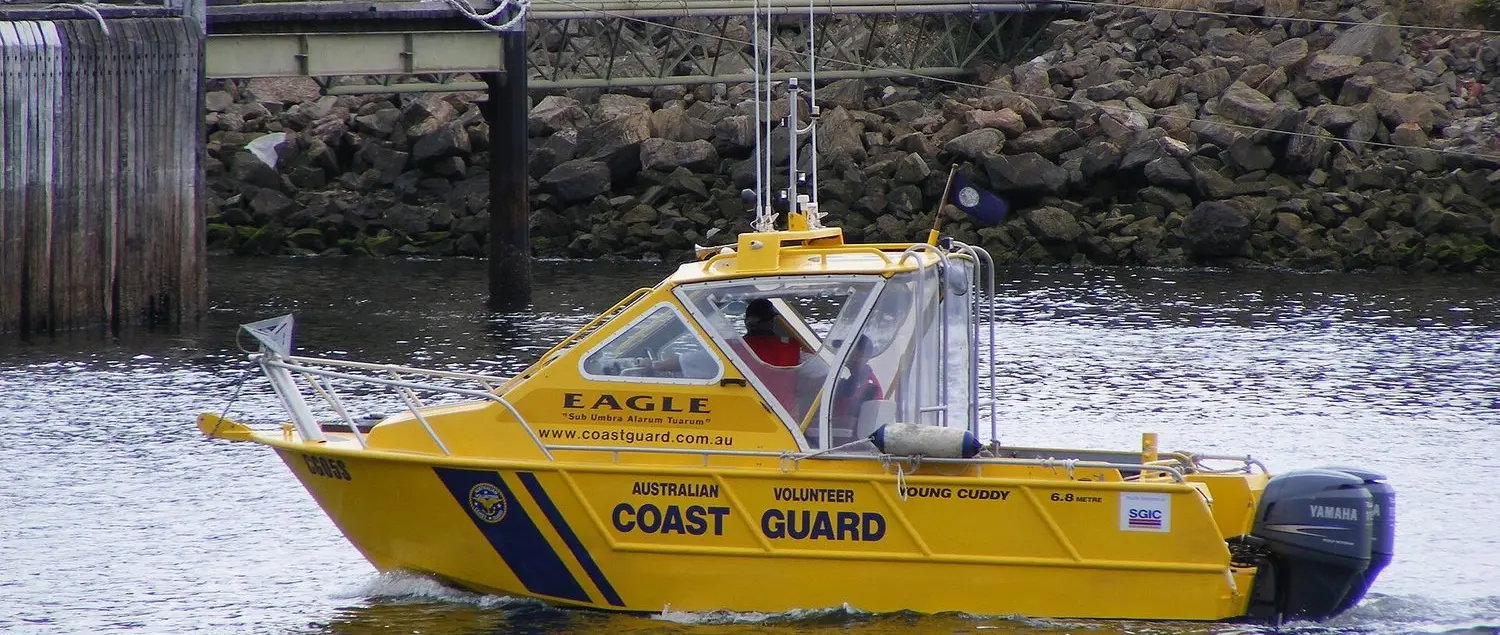
Sources: Coastguard Tautiaki Moana, official 2026 awards and unit citations and Boating New Zealand's summary. Photograph: a volunteer coastguard boat in Australia, by Peripitus, Wikimedia Commons, CC BY-SA 3.0. This is illustrative, not Coastguard Nelson or its rescue vessel.
