
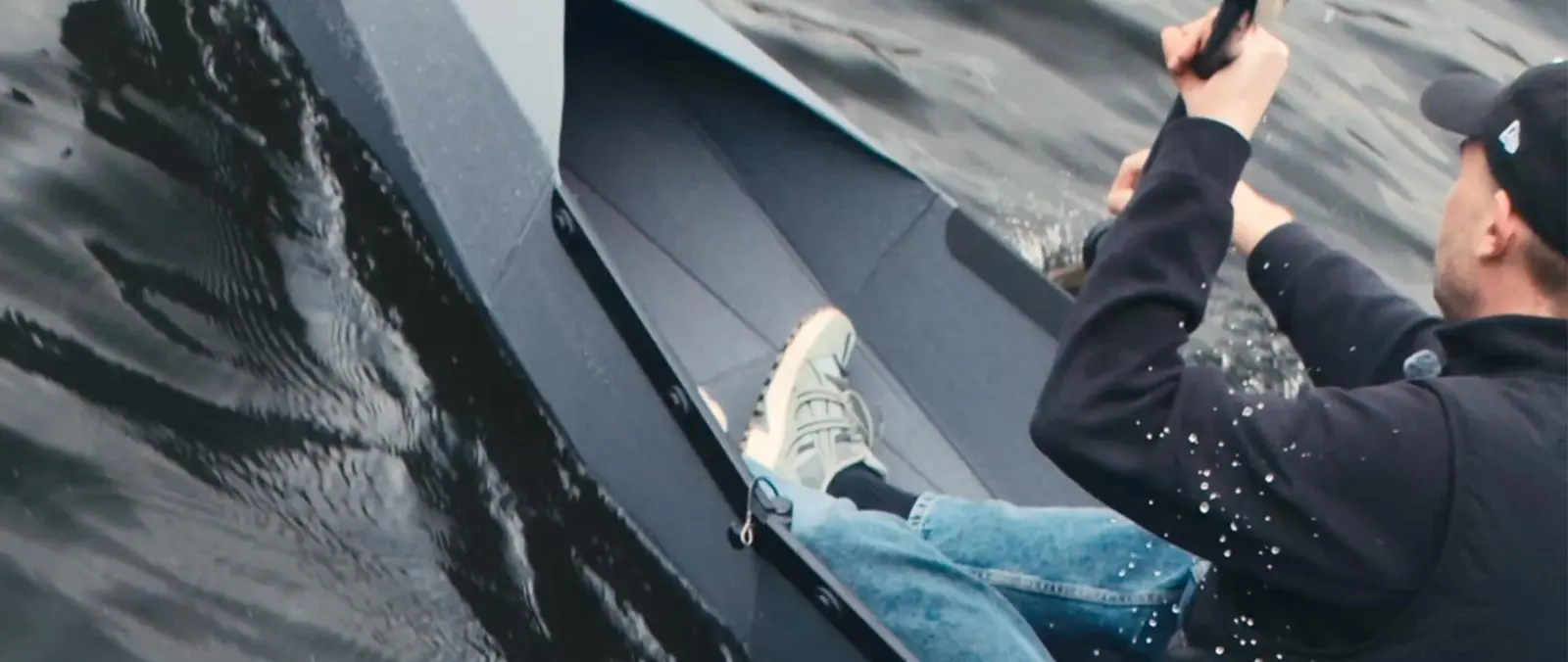
A recreational kayak designed to travel in a backpack
Berlin-based CLR Outdoor's VIK 3.8 ULTRA has received a 2027 recreational product award at the Paddle Sports Show in Strasbourg, highlighting a folding kayak that can be carried without a trailer or roof rack. The single-person boat measures 3.8 metres long and 70 centimetres wide, and CLR lists its weight as 11 kilograms. Folded, it occupies a package of approximately 70 by 55 by 16 centimetres.
Portability matters because storage and access can limit how often people use small boats, especially those living in a city apartment or relying on public transport. A folding design may open up paddling for people who cannot keep a rigid kayak on a car or in a garage. The trade-off is that setup and checking the structure become part of every outing.
A combination of frame, panels and covering
CLR describes the VIK's structure as combining recycled polypropylene hollow-chamber panels with an aluminium frame and water-resistant technical fabric. The folding mechanism includes dedicated locks and ratchets to hold the assembled shape. The company manufactures the kayak in Berlin and emphasises the aim of delivering a more rigid feel than a soft inflatable while retaining a compact package.
Those claims should be assessed on water. A folding kayak can behave differently from a moulded polyethylene hull in waves, during a hard grounding or when loaded with equipment. Buyers should inspect the connection points, understand the assembly procedure and establish which parts are replaceable after repeated use.
Five-minute setup after practice
CLR says an experienced owner can assemble or take down the VIK in roughly five minutes, while published specification material gives an approximate five-to-eight-minute range. The process involves opening the structure, fitting the frame and securing it with locking components. That may be convenient beside a lake, but a first-time owner should allow substantially more time to learn the method without rushing.
Before every launch, a paddler should check that the frame is seated correctly and the locks are secure. Any visible damage to fabric or rigid panels requires attention before proceeding. A compact boat is especially attractive for spontaneous outings, but safe preparation cannot be skipped simply because the manufacturer has designed assembly to be quick.
Capacity and comfort should guide a purchase
The manufacturer's published carrying capacity is 120 kilograms, including the paddler. That figure is not spare luggage allowance on top of the person's weight. Clothing, food, drinking water and safety equipment all contribute to the loaded total and influence trim. A single-seat craft should never be treated as a tandem simply because a child or pet appears small enough to fit.
The open-deck design may make entry and exit feel less restricted, while the low seating position is intended to contribute to stability. Customers should examine back support, foot positioning and the ability to climb aboard from their usual launch. A demonstration is especially useful to determine whether the boat tracks comfortably for the intended journey.
The significance of a lightweight recreational award
The Strasbourg award places CLR Outdoor among manufacturers seeking practical ways to make paddling accessible without conventional boat storage. The VIK 3.8 ULTRA is not a replacement for every touring or whitewater kayak, but it offers a specific solution to the problem of transporting a rigid recreational craft. The 2027 recognition confirms industry attention to that idea.
CLR's official product information is the reference for current specifications, delivery and warranty terms. A careful buyer should compare the complete package, the cost of replacement components and the conditions in which the kayak will be used. If it helps the owner paddle more frequently while remaining easy to maintain, the design will have delivered its most valuable promise.