
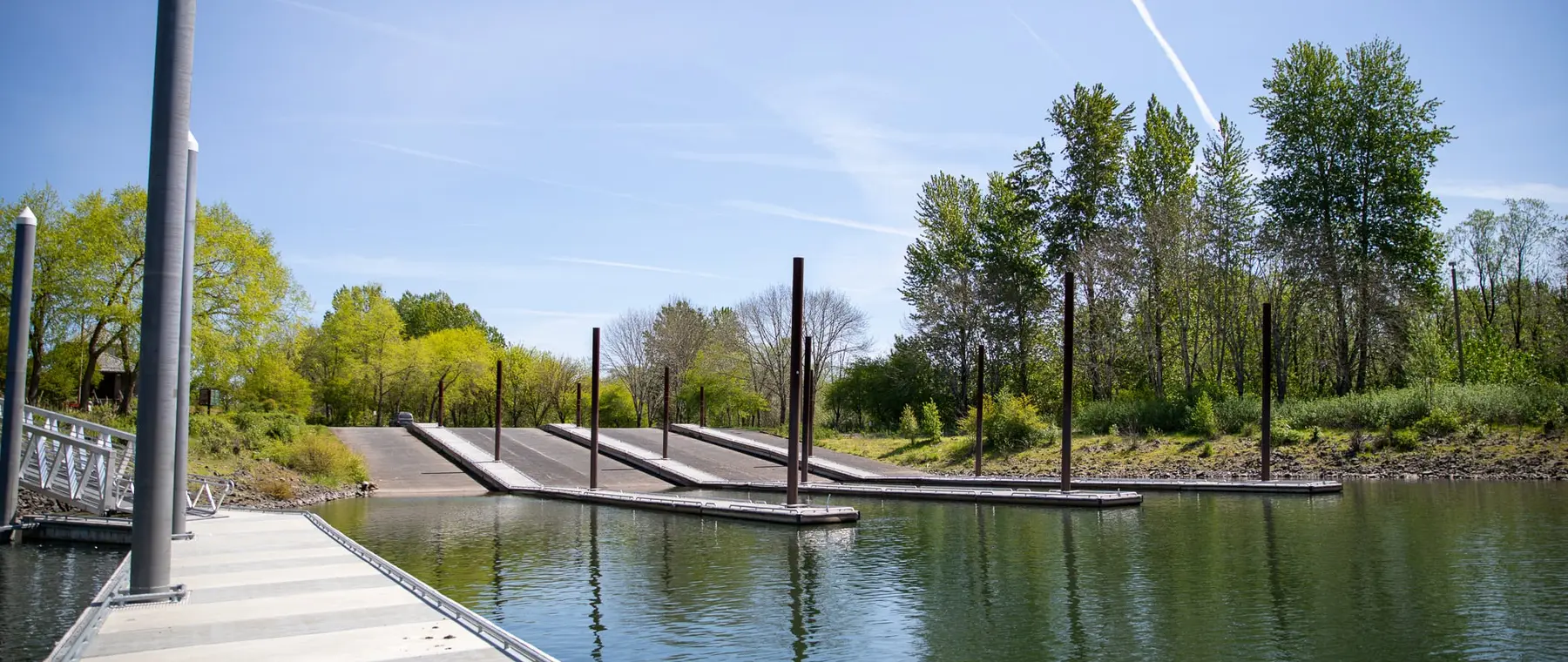
Chinook Landing faces short-term launch disruption
Boaters planning to use Chinook Landing Marine Park on the Columbia River need to allow for intermittent launch-lane and dock restrictions in the final week of October. Oregon State Marine Board's 21 October 2026 Opportunities and Access Report says contractor activity to replace and relocate the Multnomah County Sheriff's Office river-patrol boathouse began on 21 October. The published advisory identifies 23–27 October as the period in which ramp lanes and dock use may be affected.
The notice describes intermittent impacts, not a blanket closure of the whole marine park for the entire period. That distinction is important for anyone towing a boat from outside the Portland area. Access may vary from one visit to the next while work is under way, and an open launch lane should not be assumed merely because the facility normally operates every day.
The project concerns the river-patrol boathouse
The work is associated with the Multnomah County Sheriff's Office river-patrol facility at Chinook Landing. According to the state Marine Board, the existing boathouse is being replaced and relocated, with contractor activity anticipated to continue until 13 November. The October restrictions are tied to a particular stage of that broader programme.
River-patrol infrastructure serves a different function from the ordinary public launch, but construction can still affect shared waterside space. Contractors may need equipment, access lanes or dock areas close to the public operation. A visiting boat crew does not need to know the engineering sequence in detail to respond safely; it does need to recognise that temporary arrangements may have priority during working periods.
What remains available at the park
Metro, the regional government that operates the site, describes Chinook Landing as one of Oregon's larger public boating facilities, with six launching lanes on the Columbia River. Its regular amenities include accessible docks, restrooms, picnic and viewing areas, as well as wetland and wildlife habitat. The standard park page lists opening hours from 4:30 in the morning until sunset.
These are normal facility details rather than a guarantee of full use during the construction period. The state Marine Board's temporary advisory should be checked alongside Metro's current park information, because not every lane or dock may be available when crews arrive. Regular hours and published features cannot supersede a safety closure or a work-zone instruction on site.
Why intermittent closures are difficult for trailer boaters
An intermittent restriction creates a different planning problem from an announced full-day closure. A boater may find the ramp open at the beginning of an outing but face a changed operating arrangement on return. Families making a long journey, larger trailer rigs and crews who need access to a dock immediately after launching should plan with this uncertainty in mind.
The safest approach is to check both official sources close to departure and assess the site again before launching. Do not rely on an old screenshot or a social-media comment about what was open earlier in the day. If access appears doubtful, consider changing the time of the trip or using a different authorised launch after verifying conditions there.
Boat handling around a working waterfront
A busy multi-lane ramp depends on a predictable sequence: prepare away from the water, back the trailer down, launch under control and clear the ramp promptly. During construction, that rhythm may be interrupted by moving barriers, equipment deliveries or access being restricted to a smaller portion of the facility. More careful communication between driver and boat handler becomes essential.
Keep people clear of plant and fenced areas and avoid idling in a lane while deciding whether to launch. An available lane is not automatically suitable for every craft, especially if the approach, float-off depth or adjacent dock arrangement is different from normal. Skippers should be ready to stop and seek guidance from on-site personnel when the work area is unclear.
A Columbia River trip still needs a return plan
Chinook Landing provides access to an active river where current, wind, larger vessels and changing weather can complicate a short recreational outing. If a dock is temporarily unavailable, a returning crew may have fewer convenient places to hold the boat while a trailer is recovered. That could increase exposure to current and wake at the busiest point of the outing.
Before leaving the ramp, boaters should agree on the intended return time, check that all passengers have appropriate flotation equipment and ensure communications will work on the route. Crews should never improvise a landing near equipment or an area marked closed. If retrieval looks unsafe when they return, they should follow the operator's instructions and seek a permitted alternative rather than forcing a hurried manoeuvre.
Use the two official information channels
The Oregon State Marine Board Opportunities and Access Report carries the October construction advisory, including the dates when lanes and docks may be disrupted. Metro's Chinook Landing Marine Park page identifies the facility, its normal amenities and its regular operating hours. The two sources answer different parts of the same journey-planning question.
Anyone who needs certainty about a specific launch slot should contact the local operator rather than interpreting the word 'intermittent' as an all-clear. Conditions can change faster than general webpages are updated, especially when a contractor is working at the waterfront. Skippers who have not used this ramp before should allow additional time to locate the correct entrance, parking and safe staging area.
The immediate message for 25 October
As of the 21 October state advisory, Chinook Landing's period of potential ramp and dock disruption includes Sunday 25 October. The projected broader contractor programme runs into November, but the specific 23–27 October window is the clearest published warning for public launch users at present. The article's information is time-sensitive and must be rechecked before a trip.
The practical advice is straightforward: the park remains an important Columbia River access point, but individual lanes and docks may not be reliably available during these works. Make a flexible launch and retrieval plan, obey temporary barriers and on-site directions, and choose another authorised facility if safe access cannot be confirmed. A little extra preparation matters more than sticking to a schedule when a launch is shared with active construction.