
A technical feasibility study for an existing RIB
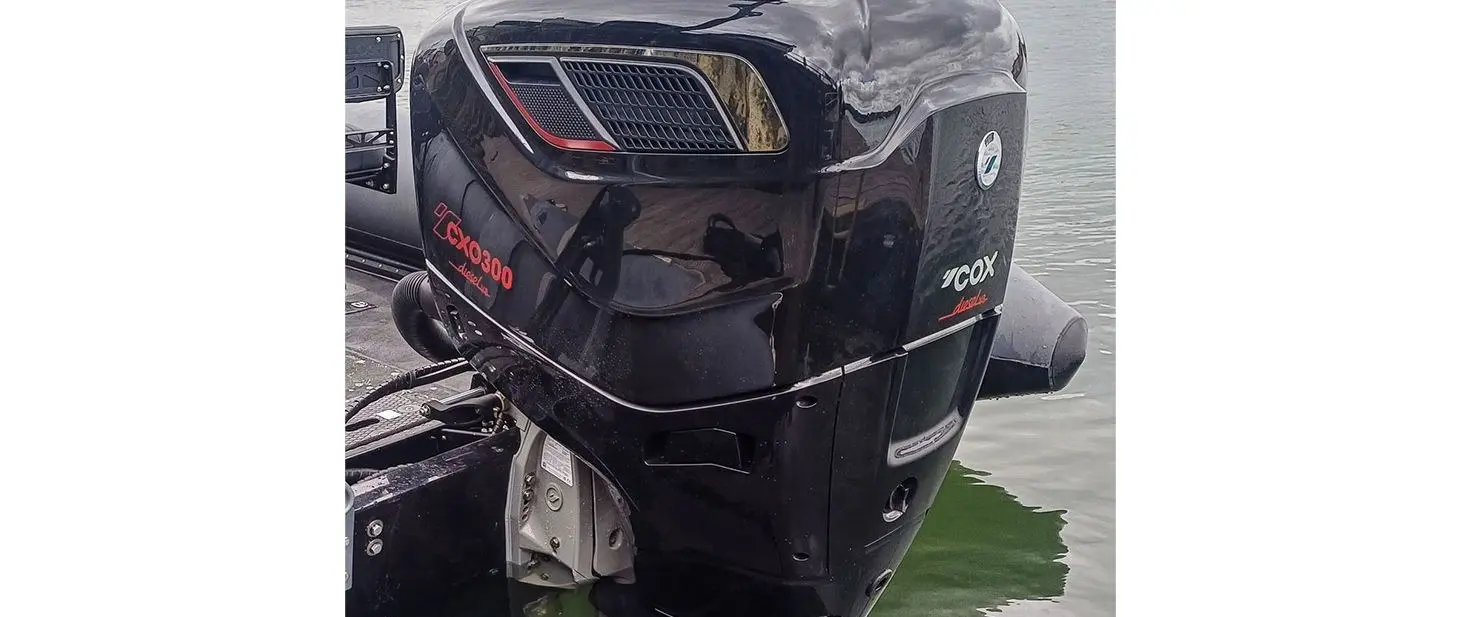
Barrus and Chartwell Marine have worked with Cox Marine on a feasibility study examining whether a 7.8-metre rigid-hulled inflatable boat could be re-engined using a Cox CXO300 diesel outboard. British Marine published the project in June 2026. The exercise assessed an existing craft rather than unveiling a new mass-production model, making it directly relevant to owners considering how long to keep a serviceable RIB.
Chartwell compared single- and twin-engine options, examining weight, trim, structure and expected performance as well as the installation work involved. The assessment concluded that a single CXO300 arrangement was preferred because it offered comparable predicted performance without major alteration to the boat's existing architecture.
Why a simple engine change is rarely simple
Replacing a petrol outboard with a diesel unit changes more than the fuel used at the pump. The weight distribution, transom loads, fuel system and service requirements can all differ, even if the rated horsepower looks similar on paper. A qualified naval architect or suitably experienced boatbuilder needs to determine whether the hull can accommodate the alternative.
The Cox CXO300 is a 300-horsepower diesel outboard designed for demanding operating roles. The study considered how its installation might extend the useful life of an existing boat, avoiding immediate replacement of the hull. That outcome depends on the original craft's condition and should not be applied automatically to other RIBs.
Operational reasons for considering diesel
Barrus identifies changes to flammability risk during transport, servicing intervals and operational efficiency among the possible attractions of a diesel configuration. These advantages may matter particularly to professional users who already manage diesel fuel and operate a boat for many hours. Recreational owners with short annual engine hours may arrive at a different financial conclusion.
The engineering work included predictions and detailed arrangement drawings rather than reporting a completed series of independent sea trials on repowered boats. As a result, projected performance must be distinguished from measured results after installation. Procurement decisions require confirmed estimates, warranty coverage and service support.
Lessons for a small-boat repower
A useful repowering investigation should begin with the condition of the hull, transom and fuel system, followed by the installation envelope and operating needs. Owners should not select an engine on fuel type or maximum power alone. Vibration, steering integration, cooling, access and emergency arrangements are part of the decision.
The Barrus-Chartwell study demonstrates a method for assessing the feasibility of extending a boat's life through a properly engineered propulsion change. It does not imply that every 7.8-metre RIB should adopt diesel, or that the proposed installation is universally approved. Individual technical review remains essential. It is particularly important to check the manufacturer’s maximum transom loading and the effect of fuel-system changes on the boat’s classification or insurance. These matters cannot safely be inferred from an engine power rating alone, even where the vessel is already used commercially.