
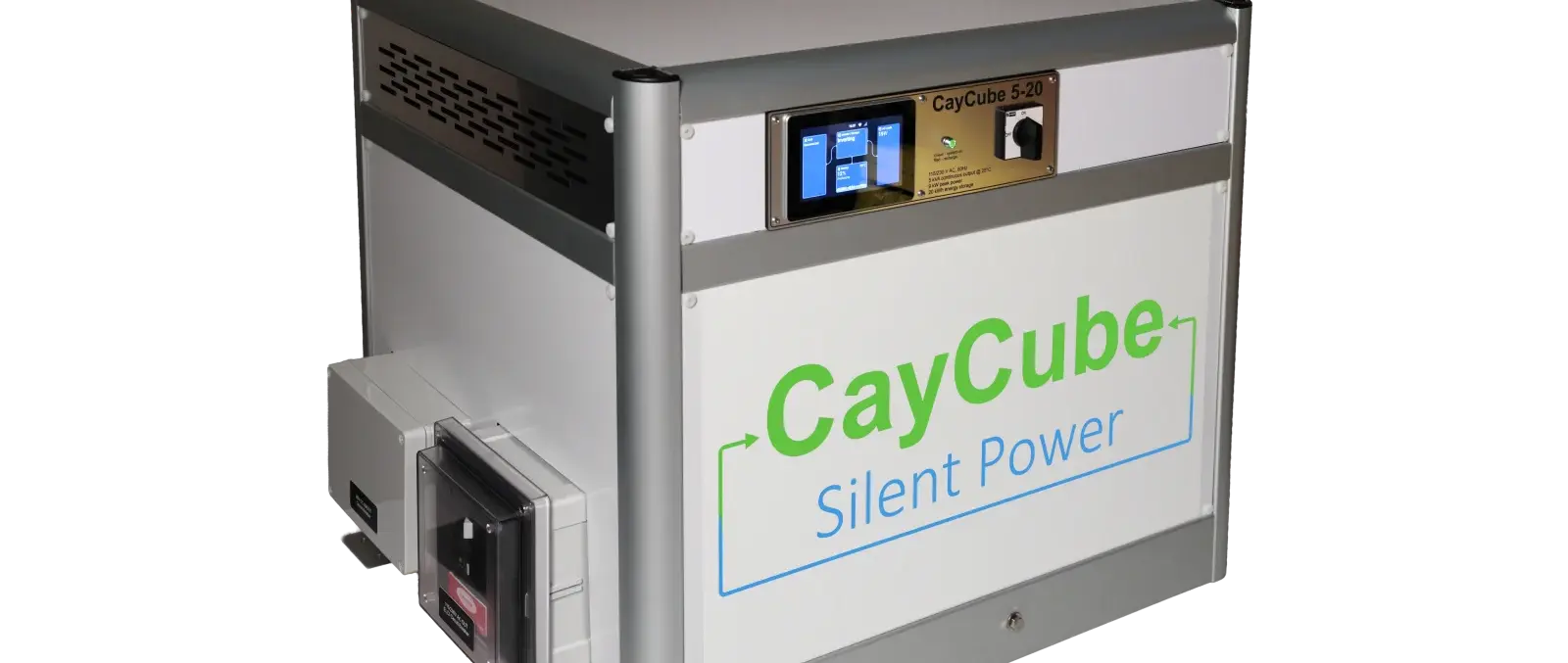
Cay Electronics will showcase its CayCube solid-state onboard power system at IBEX 2026 as an alternative to a conventional marine generator. The system stores energy and supplies AC loads without an engine, exhaust system or moving generator components.
CayCube is intended to run equipment such as air-conditioning, appliances, battery chargers and stabilisers while the main engines are stopped. The company says the system can also work alongside an existing generator to reduce genset runtime.
Three configurations cover different onboard loads
Cay Electronics offers three current CayCube configurations with peak outputs of 9kW, 18kW and 27kW. Continuous power and energy storage increase across the range, allowing the installation to be matched to the boat's expected hotel load.
The smallest 5-20 model provides 5,000VA continuous output and 20kWh of stored energy, while the larger models scale upward from there. Actual runtime depends on air-conditioning demand, appliances, ambient temperature and how aggressively the battery reserve is managed.
Charging can come from several sources
CayCube can be recharged from shore power or an existing generator, and a hybrid option adds a dedicated alternator driven by the propulsion engine. Solar charging can also contribute where the boat has enough panel area and suitable operating conditions.
This flexibility matters because stored-energy systems are only as useful as the owner's ability to replenish them. A boat that spends long periods away from shore power needs a realistic charging plan rather than relying on headline battery capacity alone.
IBEX focus is on generator replacement and support
The company will demonstrate CayCube at IBEX from 6 to 8 October in Tampa, where builders and installers can compare it with conventional onboard AC solutions. CayCube is already being promoted both as a complete generator replacement and as a way to reduce generator operating hours.
For smaller leisure boats, the technology is most relevant where air-conditioning and domestic AC loads would otherwise require a compact genset. Weight, installation space, recharge capability and total system cost still need to be assessed boat by boat.