
Two Caribbean models return to Melbourne
Caribbean Boats brought two renewed flybridge models to the Melbourne Boat Show at Docklands from 15 to 18 October 2026. The Australian yard's official September announcement named the 40F Flybridge Cruiser and the smaller 27F Flybridge as the centrepieces of its return. Both had already been launched at the Sanctuary Cove International Boat Show in May, so Melbourne was an opportunity for local visitors to inspect production examples rather than the first unveiling.
The pair addresses different boating uses without abandoning the builder's association with offshore fishing. A 40-foot flybridge cruiser has the space for longer days afloat and overnight possibilities, while a 27-foot flybridge is a more compact proposition for anglers and coastal families. Caribbean describes both as drawing on traditional deep-V hull design and a substantially updated approach to layout, finishes and equipment.
A Melbourne name with a long history
Caribbean dates its origins in Melbourne to 1958 and has built a reputation for fibreglass boats able to handle exposed Australian coastal conditions. The brand's revival is being guided by boatbuilder Bill Barry-Cotter, founder of Maritimo, whose involvement places a well-known local design and manufacturing background behind the project. The return to Melbourne therefore has a significance beyond a routine product display in another boat-show city.
Heritage does not by itself establish a boat's modern capabilities. Buyers assessing either model should compare the actual construction, access to mechanical systems and available equipment with competing contemporary designs. The value of a familiar hull philosophy lies in how it is translated into comfort, reliable operation and sensible maintenance, rather than the history attached to the badge.
Caribbean 40F: flexible cruising and fishing
The 40F is the larger of the two show boats, described by Caribbean as a flybridge cruiser that can be configured for serious fishing or recreational cruising. A substantial cockpit is a central part of the design, providing an area that can serve anglers when fishing or family and friends when the boat is used more casually. The builder also highlights a refined interior and configuration options intended to suit different ownership preferences.
That variety makes the selection of equipment particularly important. Fishing owners may want easy access around the cockpit, rod storage and robust working surfaces, while cruising families might prioritise seating, galley arrangements and storage for day-to-day supplies. A dealer's standard stock specification is not necessarily the one that best suits each use, and prospective owners should investigate the choices before comparing prices.
Caribbean 27F: a compact offshore proposition
The new 27F revives the builder's smaller flybridge-fishing concept for owners who do not want the scale of a 40-foot cruiser. Caribbean says the model is powered by 300-horsepower outboards, with an emphasis on offshore-fishing capability in a manageable size. The arrangement is intended to combine the practical visibility of an elevated helm with the open deck space associated with Australian fishing boats.
Outboard power can simplify access to propulsion components, but a buyer still needs to consider service intervals, installation details and whether the specified engines suit local operating conditions. A flybridge also affects how a boat feels in strong wind and at low speed. Sea-trial handling, visibility, passenger movement and the ability to use the cockpit safely deserve attention alongside published top-speed claims.
Deep-V design and real-world conditions
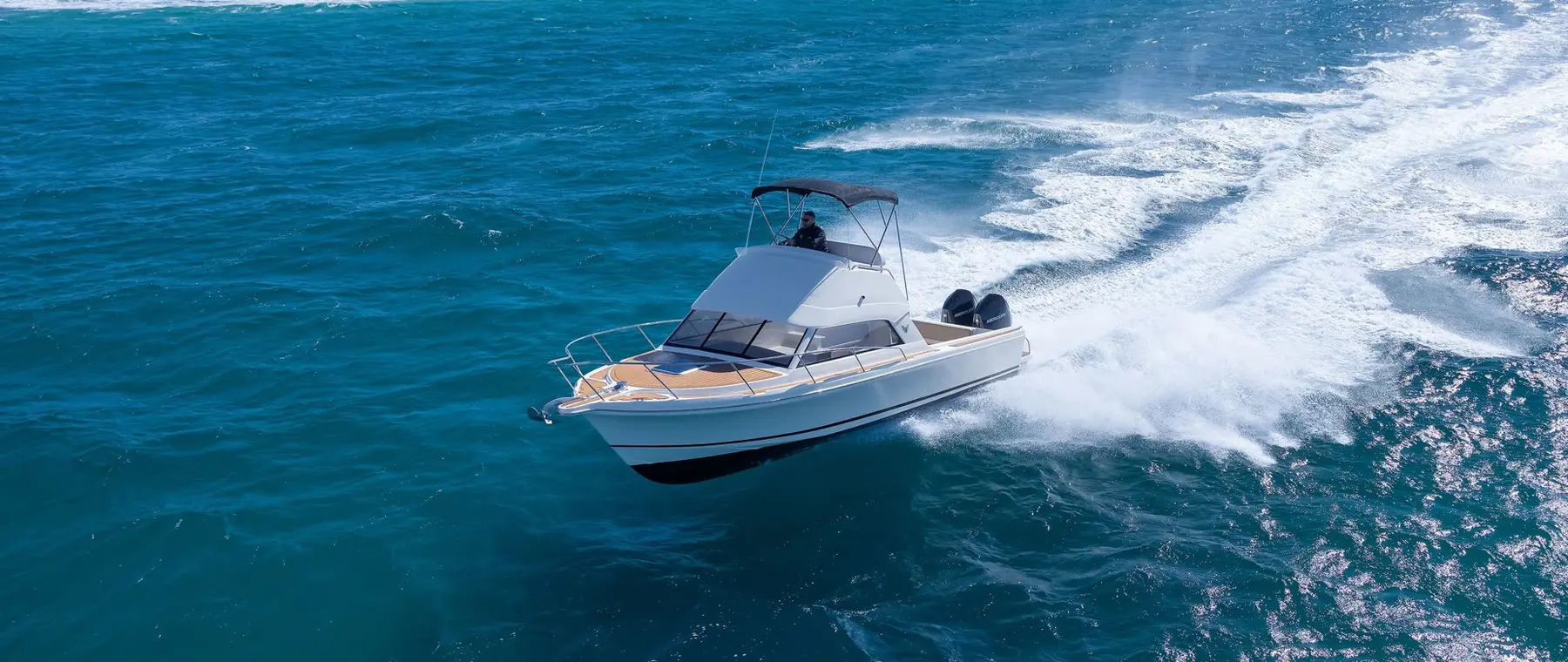
Both models draw on what Caribbean calls its proven deep-V offshore heritage. A hull of this type is commonly chosen for its ability to meet waves in exposed waters, although the actual ride depends on design details, speed and load. The builder's photographs show the 40F running offshore, while the technical claims in the press release concern the models as supplied rather than independent performance measurements.
Anyone planning coastal passages should assess the usual sea state and distance from sheltered water before selecting a craft. A boat that performs comfortably with a light demonstration load may behave differently when passengers, tackle, fuel and equipment are aboard. Comparison trips in representative conditions provide more useful evidence than promotional descriptions of offshore pedigree alone.
Why boat-show inspections are useful
Melbourne's October show gave prospective customers a chance to see how the 40F and 27F differ in deck space, flybridge access and accommodation arrangements. Physical inspection matters because photographs often conceal steps, headroom limits and the reach needed to handle lines from a berth. Dealers can also explain which specifications were actually fitted to the display boats and which features require an option or special order.
The 2026 Melbourne Boat Show has now concluded, so customers considering a purchase should contact Caribbean or an authorised representative for current demonstration arrangements. The company's September announcement should not be read as confirmation of stock or immediate delivery in October. Written equipment inventories, available build slots and after-sales arrangements remain separate matters for the buyer to verify.
The ownership checklist
A useful comparison starts with where the vessel will be kept and how it will be used most often. For a 27F, launching, storage and day-to-day handling may be particularly relevant, while a 40F owner is more likely to weigh accommodation, longer passages and berth availability. On both models, access for fuel, electricity, maintenance and emergency equipment can make the difference between convenient ownership and an expensive compromise.
Prospective buyers should ask about engine installation, hull and structural warranties, electrical layouts, practical service access and the network supporting the vessels. Insurance and operating qualifications vary by jurisdiction and must be checked separately. For fishing applications, cockpit drainage and secure storage are especially important; for family use, comfortable passageways and secure seating can matter just as much.
What the Melbourne return signals
The Australian builder's participation provided another public presentation of its revived Caribbean range after the May launches. Bringing both a compact flybridge and a larger cruiser to Docklands demonstrated that the relaunch is not being limited to a single niche. The official release presents the 40F and 27F as the foundation of a new chapter in a brand with long local roots.
For boaters the immediate value is greater choice in offshore-oriented fibreglass craft, backed by a recognisable Australian builder. Whether that promise is borne out will depend on product quality, actual delivery schedules and ownership experiences in the coming years. The showroom photographs and the boat-show display are introductions; a properly documented specification and sea trial remain the basis of a purchasing decision.