
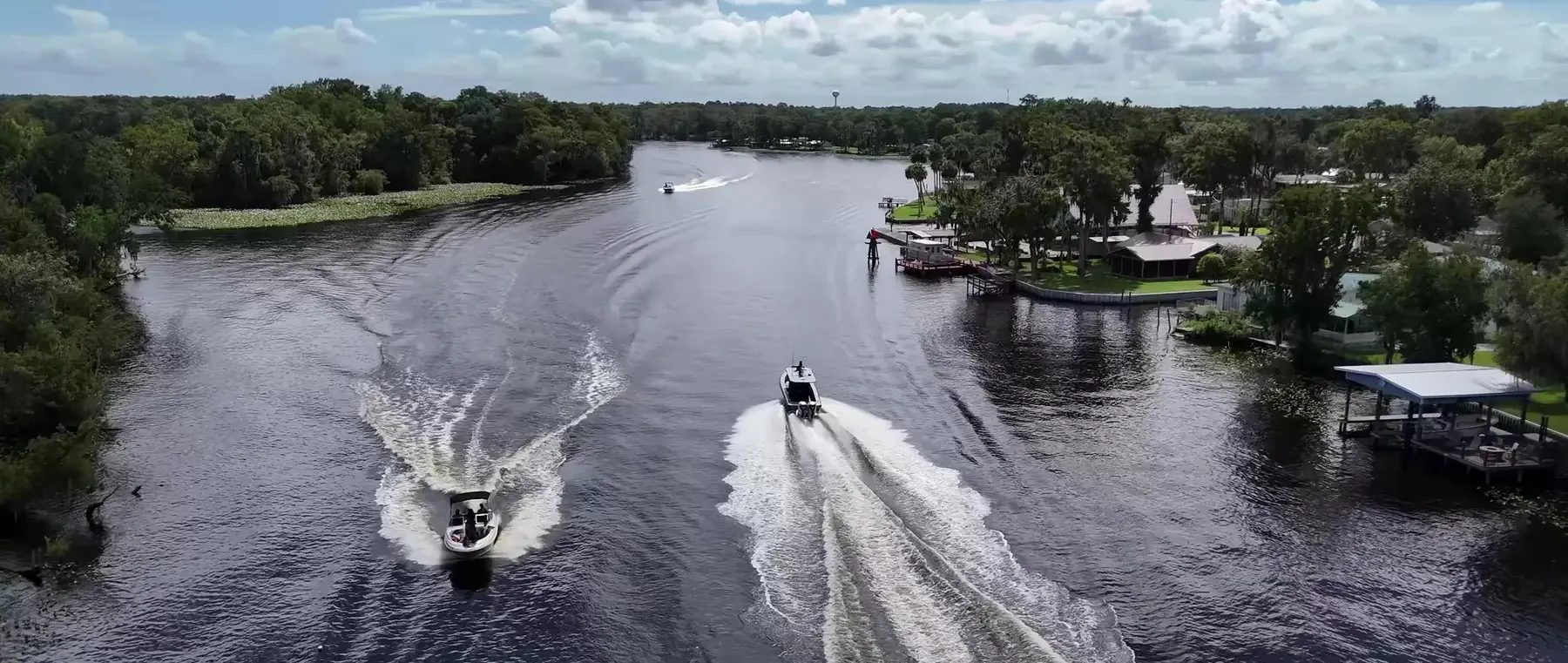
A demanding passage with a charitable purpose
Captain Scott 'Red' Flowers completed the 2026 Great Loop Challenge in 20 days and 18 hours, according to a report published by marine-electronics company Raymarine on 30 October. The result followed a long journey around eastern North America intended to draw attention to the National Pediatric Cancer Foundation's work. It is an ambitious schedule for a route normally associated with leisurely cruising, but the personal motivation matters as much as the elapsed time. Flowers has spoken publicly about his own treatment for melanoma and the children he encountered during that period, an experience that helped inspire the fundraising challenge.
The foundation's launch announcement confirms that the 2026 attempt began on 8 August aboard a custom 30-foot Portā DARK:30 Velocity boat. Its stated aim was a more extensive circuit than the previous effort and a continuing campaign toward a one-million-dollar fundraising goal. Neither source establishes that the entire fundraising target has been met, so no donation total is asserted here. Raymarine's completion account concerns the passage itself; the foundation remains the primary place to check the status of the charitable campaign and its current donation arrangements.
Why the 20-day figure needs context
Raymarine calls the latest voyage record-setting, but the context is important. The National Pediatric Cancer Foundation says Flowers previously completed a Great Loop challenge in 2024 in 19 days and 19 hours, on a shorter route. The 2026 mission was explicitly expanded, with a planned distance of more than 7,300 nautical miles. A time of 20 days and 18 hours therefore should not be presented without qualification as a faster completion of the same course. The two journeys had different scopes, and independent confirmation of any formal record category would be needed before making a universal fastest-ever claim.
That distinction does not diminish the seamanship involved. Travelling for such a long period on a small fast craft puts pressure on fuel planning, watch arrangements, weather decisions, vessel maintenance and crew endurance. The Great Loop includes very different waterways and navigational environments, from coastal passages to inland sections. An accelerated run compresses the time available for rest and contingencies. It should not be treated as a template for ordinary holiday cruising, where a slower schedule and the freedom to wait for suitable conditions are usually much more appropriate.
Three Axiom 2 displays support shared navigation
Raymarine says the crew used three Axiom 2 chartplotter displays, alongside radar and a Teledyne FLIR M364C marine thermal camera. Two displays could support the people working at the helm, while the third was positioned farther aft for other crew to review the route and identify approaching fuel stops. According to the manufacturer's account, those crew members could send proposed destinations forward rather than repeatedly interrupt the person steering. That is a useful example of why navigation-system layout and clear division of responsibilities matter on a boat undertaking sustained travel.
The crew also used the electronics to monitor fuel consumption, trip data and distances between waypoints. These are practical tasks rather than glamorous features, but they are central to reliable passage management. A waypoint alone says little about whether a vessel can safely reach its destination; the skipper must consider fuel reserve, expected speed, changing conditions and potential diversion ports. A well-organised dashboard can make this information easier to share, but the underlying plan still needs to be checked against independent charts, notices and the actual fuel state of the boat.
Thermal imaging at night and in poor visibility
The FLIR M364C thermal camera was described by Flowers as especially useful after dark and during low-visibility sections. Unlike a conventional daylight camera, thermal imaging detects temperature differences that can help outline some objects and shore features when visible light is limited. It is an additional source of information, not a guarantee that every obstruction will be detected. Radar provides different information again, and the two tools can complement the chartplotter displays and an alert lookout, especially where a single sensor might give an incomplete picture.
For recreational skippers, the lesson is not that electronics make continuous high-speed running in darkness advisable. Small unlit debris, local traffic, weather, spray and restricted visibility remain serious hazards. Thermal equipment has limitations in contrast, range and interpretation; radar has its own limitations in clutter and small-target detection. The proper decision may still be to reduce speed or stop. Raymarine's account illustrates the systems carried on this particular voyage, but it is not an independent certification of the safety of the route or its operating choices.
Teamwork behind the helm
A sustained journey depends on far more than the person holding the wheel. The crew had to watch the next legs, monitor remaining fuel and keep the route moving without allowing planning work to distract the helmsman. Giving another person access to a dedicated navigation display was one way to distribute that load. Raymarine's report describes a coordinated approach in which upcoming stops could be identified and proposed while the vessel continued toward the next waypoint. The details underline how a sensible onboard workflow can be as valuable as any single item of hardware.
This coordination is relevant to smaller leisure boats too. A short family passage may not require multiple fixed screens, but it still benefits from a clear plan, assigned tasks and agreement about when someone should speak up. A second crew member who checks depth, weather, fuel or the next marker can reduce the pressure on the skipper. The Great Loop mission used an unusually demanding schedule, yet the underlying principles of preparation, communication and maintaining a safety margin carry across to much less ambitious trips.
The wider meaning of the Great Loop Challenge
The National Pediatric Cancer Foundation describes the challenge as part of a campaign to support more effective and less harmful treatment for children with cancer. Flowers' personal story gives that ambition a human focus, while sponsors and boating supporters have helped the mission reach people well outside the usual cruising community. Raymarine's October update highlights the electronics contribution, but the fundraising purpose and the people involved should not be reduced to a product demonstration. The voyage brought a charitable cause into view through an undertaking that captures the imagination of recreational boaters.
For boat owners following the story, there are two separate conclusions. First, the 20-day, 18-hour 2026 journey represents a remarkable extended passage, distinct from Flowers' shorter 2024 challenge. Second, reliable voyage management comes from preparation, responsible judgement and teamwork, with electronics serving as aids to those decisions. Anyone interested in the charitable campaign can consult the foundation's Great Loop Challenge page for direct information. The sources provide no reason to treat this specialised endurance run as a recommended pace for normal Great Loop cruising.
Original reporting source and photograph: Raymarine. Charity information: National Pediatric Cancer Foundation. The foundation confirms the expanded 2026 route and the previous 2024 completion time.