
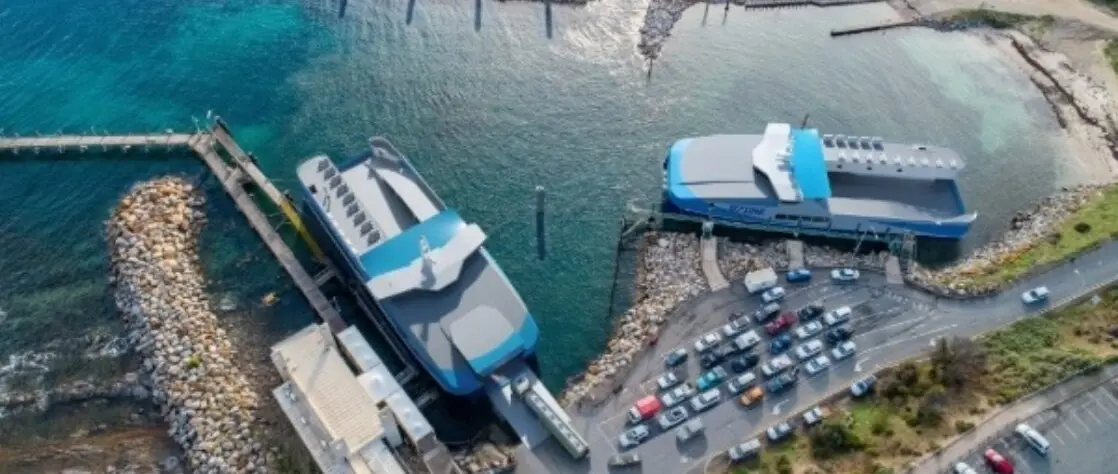
Cape Jervis is in the middle of a significant change to its harbour operations, and recreational boat owners face a practical consequence this week: the public boat ramp is closed while SeaLink completes work connected with the new Kangaroo Island ferry infrastructure. The District Council of Yankalilla says the closure runs from Monday, October 12, to Friday, October 30, 2026, inclusive, and has arranged free use of the Wirrina boat ramp over the same dates. Anyone intending to tow a trailer boat to the southern Fleurieu Peninsula should check the access notice before leaving home.
A separate South Australian Notice to Mariners, No. 68 of 2026 (Temporary), gives the ramp closure through October 31, one day later than the council's published date. This is a meaningful discrepancy for anyone considering an end-of-month launch, and the safest response is to treat reopening as unconfirmed until the relevant harbour authority or operator provides an updated operational notice. An advertised end date is not itself evidence that the ramp is open on the next morning.
What is closed, and why?
According to the council, the ramp closure supports the final stages of SeaLink's Cape Jervis ferry-terminal works, including operations involving barges, workboats and other construction vessels. These are not ordinary maintenance conditions where a recreational skipper can simply wait for a quiet gap between vehicles; the work zone has to accommodate marine lifting equipment, moving vessels and personnel on the waterfront. Launching and retrieval access must be planned away from the affected facility for the published period.
The project is part of a wider transition involving Cape Jervis on the mainland and Penneshaw on Kangaroo Island. SeaLink's October 14 update confirmed a planned three-day ferry-service interruption from October 20 to 22 while new loading infrastructure was installed at the two terminals, subject to weather. By October 25 those scheduled dates are in the past, but the separate ramp restriction is still relevant, and ferry operating arrangements should not be confused with recreational launching permission.
The alternative: Wirrina Cove
The most immediately useful detail for trailer-boat owners is the council's temporary arrangement at Wirrina. The District Council of Yankalilla states that the Wirrina boat ramp is available without its normal launching charge from October 12 through October 30 to reduce disruption from the Cape Jervis closure. That is an alternative access point, not a guarantee that every craft will find the ramp suitable under all tide, wind or swell conditions.
Before setting out, skippers should research Wirrina Cove's actual launching conditions for their hull, trailer and tow vehicle. A boat that uses one ramp comfortably may need a different tidal window, parking arrangement or retrieval procedure elsewhere, and demand can rise when traffic is displaced from a closed facility. Check current local signage, weather and any published access changes rather than assuming the alternative will operate exactly like Cape Jervis.
A harbour closure and a ramp closure are different
The South Australian marine notice draws a distinction between broader harbour restrictions and the ramp shutdown. It advises that construction started on September 21, with crane and barge work restricting normal harbour traffic, and describes a period from October 18 through October 23 when the harbour was closed to traffic unrelated to the works. That harbour-wide date range has passed as of this article's publication, whereas the notified boat-ramp closure continues later into the month.
Skippers approaching Cape Jervis by sea should nonetheless regard the harbour as an active work area and follow any current local directions. The marine notice asks mariners near the works to maintain a listening watch on VHF Channel 16 and to navigate cautiously; it cites several affected nautical charts, including AUS780 and the relevant electronic chart cells. A temporary notice is a navigational advisory, not a substitute for the latest chart updates, harbour directions or good lookout practices.
Why the different end dates matter
The council's updated August 19 bulletin lists Friday, October 30 as the final day of the ramp closure, a date also repeated by SeaLink in its October communications. The Department for Infrastructure and Transport's September 16 Notice to Mariners instead gives October 31 inclusive, while estimating completion of the overall harbour works on November 2. These statements can coexist if separate works or operational permissions have different windows, but the published texts do not resolve the one-day difference for recreational users.
Leisure Boat Guide therefore recommends confirming the actual reopening directly with the responsible local authority before making an October 31 or November 1 launching plan. This is especially important for visiting owners who would otherwise arrive with a boat already on its trailer and limited options for moving to another slipway. For general planning, a launch at Wirrina during the confirmed free-access window is more defensible than gambling on an early reopening at Cape Jervis.
Ferry transition is a separate timetable
SeaLink is using the infrastructure change to prepare for its next generation of Kangaroo Island ferries, including the vessel Wanggami. Its October 14 passenger-service announcement confirmed the planned October 20–22 ferry shutdown, and SeaLink's published transition information describes additional crew training and harbour familiarisation once services resume. The ferry operator emphasises that its schedules and transitional operations can change, so passengers should check the booking provider rather than extrapolate from an earlier projected timetable.
The operational distinction matters even to people who never use the ferry themselves. Trailer launching, commercial ferry berthing, construction movements and local navigation may share a relatively constrained approach area, but they do not automatically follow the same access permissions. A ferry arriving or departing is not proof that the public recreational ramp is open, and the absence of visible construction equipment from shore does not override a posted restriction.
Planning a safer departure
For a visit later in October, select the intended ramp before planning passage times and reserve enough daylight for a careful launch and retrieval. Review wind against tide, forecast visibility, sea state and your craft's range, then brief passengers on the altered departure point and emergency arrangements. If your boat is normally stored or prepared for launch at Cape Jervis, allow additional time for the road transfer to the alternative site and for any changed access or parking arrangements.
When passing near marine works, keep an effective lookout for barges, workboats and restricted manoeuvring space. Avoid assuming that a construction vessel can move out of a small boat's way, and keep radio communications practical and concise if a warning or local instruction is issued. Recreational skippers remain responsible for selecting a safe route and complying with current official notices, irrespective of how familiar the coastline may be.
Where to confirm the position
The principal recreational-launching update is the District Council of Yankalilla's revised Cape Jervis boat-ramp notice, which states the closure and Wirrina free-access dates. SeaLink provides its own October ferry-transition update, and South Australia's maritime regulator publishes Notice to Mariners No. 68/2026 with the different October 31 ramp date. These official sources should be reviewed together before a time-sensitive trip.
Cape Jervis is a gateway to exceptional southern Australian cruising, but at present the best voyage begins with a realistic launch plan rather than an assumption about access. The free Wirrina arrangement offers a workable option for eligible trailer-boat crews through October 30; the reopening date at Cape Jervis should be rechecked because the official notices do not align precisely. A five-minute confirmation can prevent a wasted drive and help keep small boats out of a busy construction area.