
New evidence for the Pacific coast
A NOAA Fisheries report issued on 13 November 2026 describes research connecting declining California Chinook salmon recruitment with a combination of freshwater and marine environmental conditions. For people who own small fishing boats or organise recreational trips along the Pacific coast, the most important implication is that the prospects for future angling depend on much more than the abundance of fish encountered during a single season. The research is intended to improve understanding of the factors behind those fluctuations.
This is a scientific development, not a new regulation or a promise of longer fishing seasons. The researchers assessed three stocks, including the fall runs of the Sacramento and Klamath rivers and the spring run of the Central Valley. The distinction between those stocks matters when managers consider the consequences of allowing fishing in coastal waters where fish from different rivers can be encountered together. The research offers a potential way to improve those decisions over time.
A look beyond the landing statistics
Salmon catches are one visible expression of the health of a fishery. They reflect the opportunities that fishermen have been given, the decisions they make about going to sea and the abundance of fish available to those who do. A low catch figure does not, by itself, explain which of those influences is most important. Nor does an increase in catches establish that every contributing stock is recovering.
For that reason, the NOAA study is particularly interesting from a recreational perspective. It attempts to identify environmental and biological signals associated with the survival of the fish before they become available to fishermen. The experience of a crew returning to port with a good catch remains valuable to that crew, but it cannot replace systematic information covering fish populations and conditions over a longer period. Both forms of information have their place when a fishing community considers its future.
The connection with river temperatures
Among the factors investigated were the temperatures experienced by salmon during important stages of their freshwater lives. Eggs and juvenile fish have particular environmental requirements, and the researchers identified relationships between warmer river conditions and poorer subsequent outcomes. The freshwater environment can therefore affect the supply of fish that will eventually reach coastal waters, even though the recreational boat owner may never fish within the river concerned.
Understanding that connection helps explain why the conversation about the future of ocean salmon fishing extends well beyond the coast. Water use, habitat restoration and river management can all have consequences for the marine environment. Recreational fishermen may be accustomed to watching sea temperature, baitfish or ocean weather when planning a trip. The new research adds a much broader perspective, involving conditions that can affect a year class well before anglers encounter it.
River flows and the journey to sea
Freshwater flows also feature in the analysis, especially in relation to young Sacramento River salmon moving towards the ocean. The migration is a critical stage, because fish must reach conditions suitable for the next part of their lives. Changes to the amount and timing of water moving through river systems can influence how successfully young fish complete that transition.
For a fishing community, this means that environmental management decisions upstream can form part of the longer-term picture of opportunities offshore. A recreational angler should distinguish that relationship from a claim that a particular river release will necessarily produce a predictable increase in catches. Salmon survival has many influences, and the study examines relationships with several of them. Restoration and water management strategies need to be evaluated against evidence gathered over time.
Ocean conditions add another dimension
Once salmon enter marine waters, their circumstances change. Food availability, the presence of predators and broader oceanographic patterns become relevant to survival. The research considers factors including a climate-linked ocean circulation pattern and the abundance of alternative prey that may affect the pressure exerted by predators on young salmon. The resulting picture is more complex than a simple assumption that all changes in salmon numbers originate in their spawning rivers.
This complexity is familiar in a practical way to anglers who observe substantial differences between successive fishing seasons. Nevertheless, observations made by an individual skipper during particular outings should not be interpreted as a measurement of the health of an entire stock. Fish may concentrate in one area or move away from another. Environmental monitoring and population research can help explain the broader changes that underlie those local experiences.
Forecasting and the limits of the study
The NOAA announcement describes the possibility of improving forecasts by tracking indicators associated with future salmon performance. A more informative outlook could help managers evaluate potential harvest opportunities and conservation measures. It could also help communities prepare for uncertainty rather than wait for a season to begin before considering how changing biological conditions might affect them.
The key distinction is between a promising research indicator and an operational forecast that has been demonstrated to work reliably for management purposes. The announcement explicitly recognises that further work is needed. Small-boat operators should follow the official management process rather than attempt to infer future catch allowances from the research alone. A relationship identified in past observations must be assessed against further evidence before it is treated as a dependable guide to future abundance.
What mixed-stock fishing means in practice
A coastal salmon fishery can encounter fish from different populations. This makes conservation more complicated than simply deciding whether one particularly successful run could support a harvest. A population of conservation concern may be encountered alongside a more abundant stock. Managers must consider the potential effect of fishing on those less numerous fish.
For recreational boaters, this is an important explanation of why fishing opportunities can remain constrained when some stocks are doing better than others. The limits are not necessarily a direct reflection of the number of salmon a crew sees on a given day. They may also reflect the need to account for mixed catches, uncertainty and the requirements placed on fishery management. Check the specific open area, dates and retention rules applicable to the planned trip.
Habitat improvements and future options
The NOAA report discusses actions that may improve salmon resilience, including targeted freshwater management and restoration. It also describes the removal of barriers in the Klamath watershed and work to restore access to suitable habitats. Projects of this kind are important to understand because they address the processes that produce fish, rather than simply changing the proportion of existing fish that people may catch.
Recreational fishing businesses have an interest in those long-term outcomes. A charter operator depends not only on favourable weather and customers but also on a sustainable fishery that customers can continue to enjoy. A private skipper has similar reasons to support responsible conservation. Improvements that increase the prospects for salmon survival could create greater flexibility in future management, although neither the timing nor scale of any resulting opportunities should be assumed from this announcement.
Planning ahead as a small-boat angler
Owners preparing for the next Pacific coast fishing season should keep the scientific news separate from the practical requirements that govern actual outings. A proposed holiday or fishing programme needs flexibility. Before committing to a particular species, check official decisions on when and where it may be targeted, whether fish may be retained and what rules apply to tackle, reporting or release.
The same principle applies when arranging a charter. Ask the provider how bookings are managed if a target fishery is restricted and what legitimate alternatives are available. A well-prepared operator can explain the difference between a predicted opportunity and an authorised season. The ability to adapt to a changing schedule is particularly helpful in small-boat recreational fishing, where the available weather window can already be narrow.
Continuing to follow the evidence
The research is a reminder that the appeal of fishing from a leisure boat depends on living systems that extend far beyond the boat's immediate surroundings. A quiet river spawning area, conditions during a juvenile migration and changes offshore may all influence future experiences for people setting out from a coastal harbour. Better understanding of those connections offers a useful foundation for informed discussion among boat owners, scientists and fishing businesses.
NOAA's announcement does not remove the need for conservation measures or supply a new schedule for recreational fishing. Its contribution is to identify factors that may strengthen future assessments and assist decisions about the maintenance of salmon fisheries. For the recreational boating community, the sensible response is to follow the developing research and the separate regulatory announcements, plan responsibly and recognise that sustainable opportunities depend upon the long-term health of the underlying fish stocks.
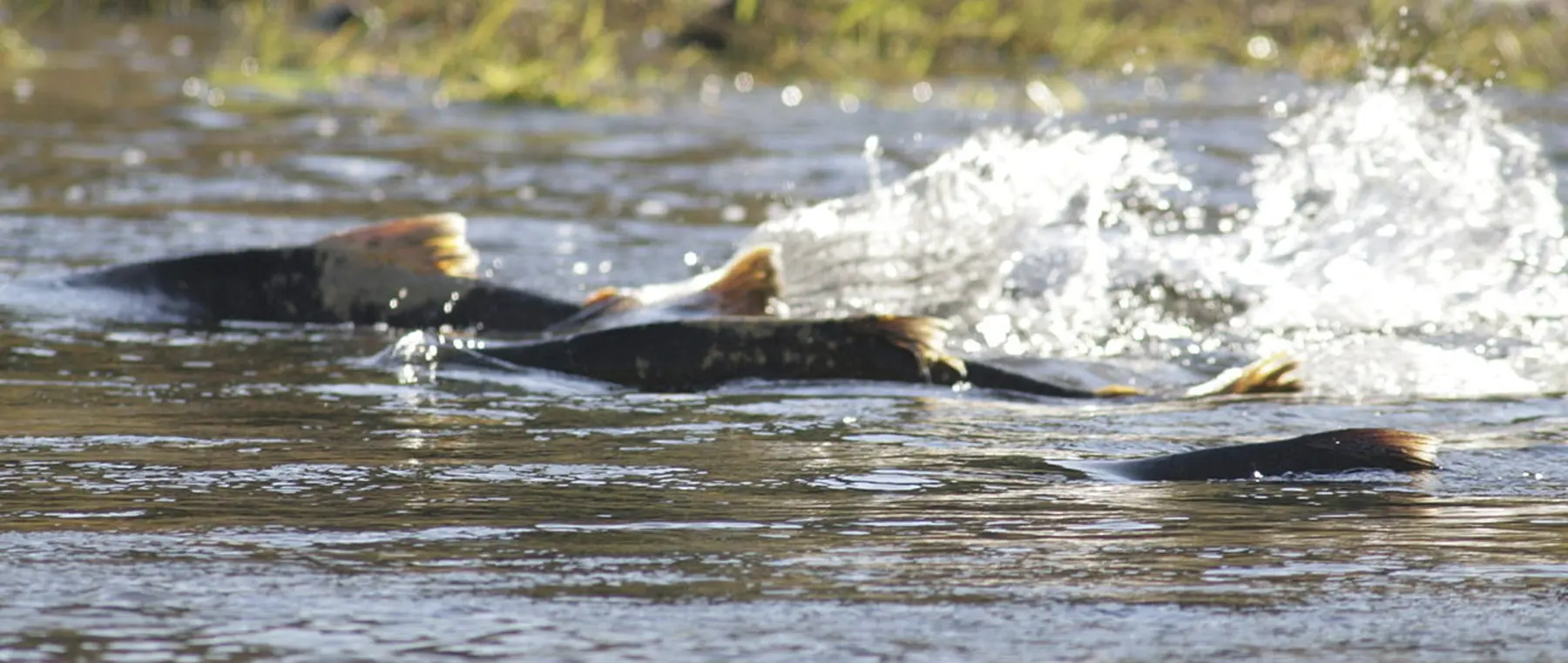
Official source: Read the primary announcement. Chinook migrating upstream to spawn in Northern California, USFWS public-domain archive photograph. Photograph used with documented public-domain provenance.