
Design and intended use
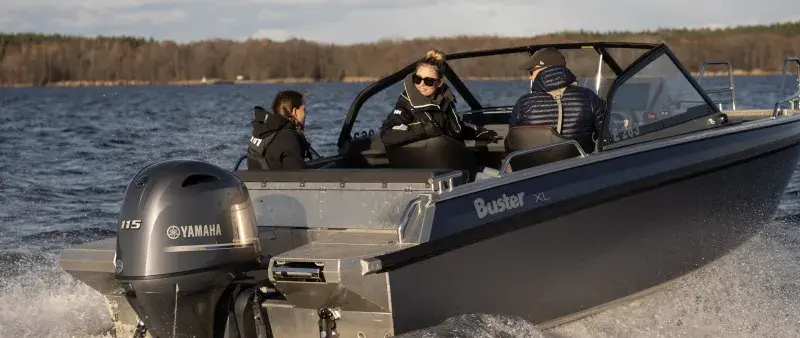
Buster's 2026 manual lists the XL at 6.02 metres overall and 2.18 metres of beam, with a design capacity of seven people. The aluminium model is intended for everyday family boating and practical short trips.
The profile concerns a manufacturer-model specification rather than a new sale or delivery. Each design is within Leisure Boat Guide's under-12-metre remit, although its handling and practical role differ from other small craft.
Arrangements on board
A smaller boat is appealing when launch and recovery must happen regularly, but the combined passenger and equipment allowance determines how many people can actually travel. Owners should calculate real loading rather than count seats alone.
A layout that works at the quay should also allow secure circulation, suitable seating and access to essential gear underway. A buyer should inspect the actual craft, not only rely on promotional photographs.
Technical details
The manufacturer lists 760kg without engine, a 160-litre tank and maximum power of 115hp. Its published maximum calculated trailer-transport weight is separate from the unladen hull mass and needs confirming for the configured boat.
Published numbers may reflect an optional engine or particular model year and do not replace a vessel-specific data plate. Fuel consumption, range and ride depend on weather, hull condition, crew weight and fitted equipment.
The ownership checklist
Consider the water where the boat will be used, the berth or trailer available, and how it will be serviced between trips. An individual inspection should include hull structure, steering, electrical installations, engine access and safety equipment.
Before a trial or voyage, review the forecast, passenger limits, communications, navigation and return plan. A properly arranged sea trial and the builder's current manual provide more useful evidence than an assumed brochure speed.
Primary source: official model specifications. Independently written Leisure Boat Guide editorial profile.