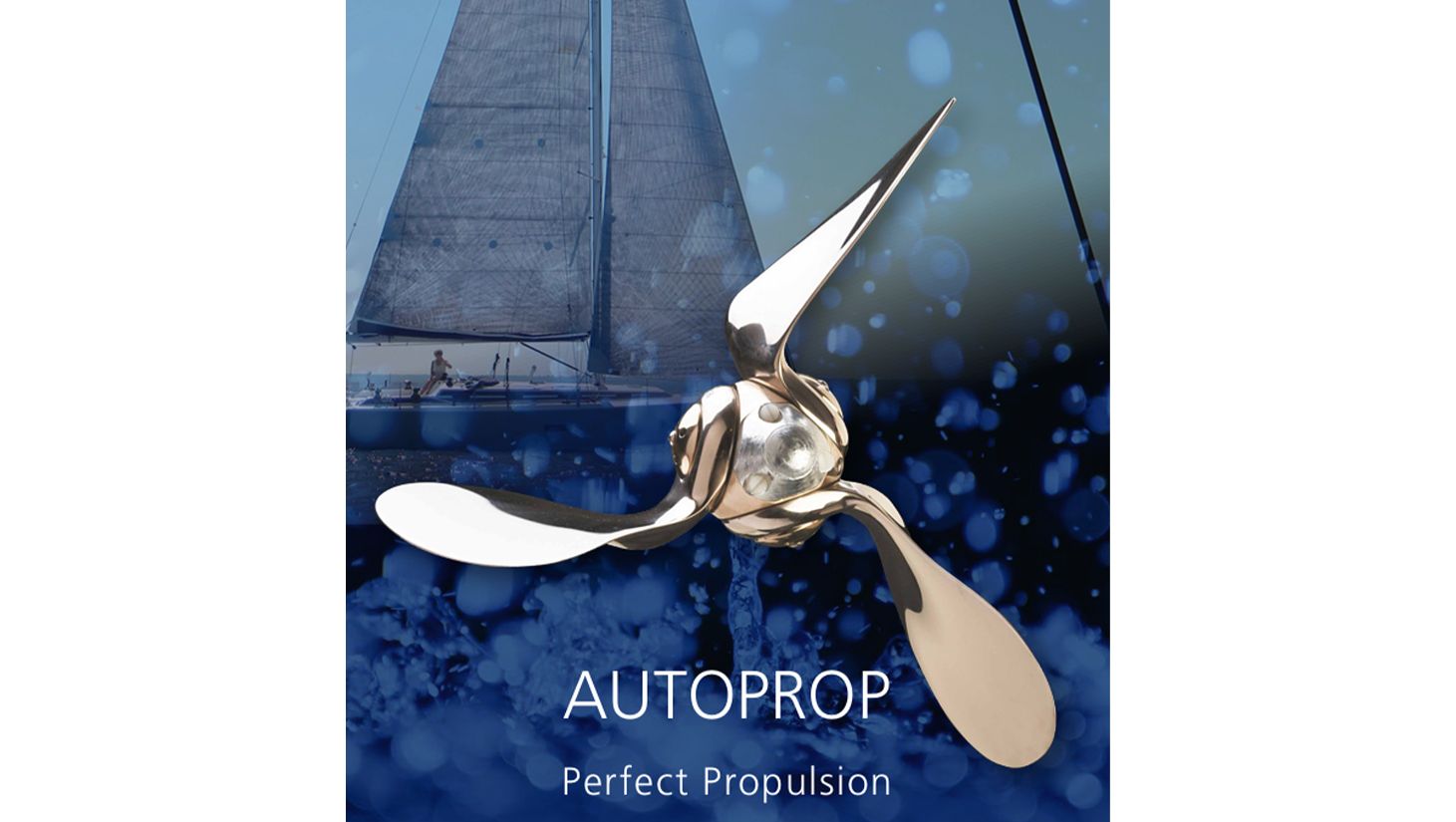
Bruntons Propellers has announced a revised bearing arrangement for selected Autoprop models, introducing replaceable needle-bearing components intended to simplify future servicing. The British manufacturer set out the development in a 13 November 2026 statement distributed through British Marine ahead of METSTRADE in Amsterdam. The update concerns the Autoprop H5 and APS saildrive models, together with related Eco*Star variants, and adapts a bearing design already used in larger propellers. It is especially relevant to owners of smaller cruising sailboats, for whom a propeller that needs specialist machining can create expensive downtime. Bruntons says the new arrangement will be fitted to relevant new units and that compatible existing propellers may also be retrofitted. Actual eligibility needs confirmation from the manufacturer.
Why propeller bearings deserve attention
A sailing boat's propeller spends much of its life underwater, exposed to salt, motion and the mechanical loads associated with changing engine speed. Even when the propeller itself appears sound, internal bearings and their surrounding surfaces may wear over time. On a feathering or self-pitching design, the movement of the blades is part of how the assembly performs, making the condition of the supporting components particularly important. Wear can affect freedom of movement, vibration and the reliability of the mechanism. Owners sometimes focus primarily on the engine and gearbox while giving the propeller relatively little attention. Bruntons' update draws attention to the service life of a component that can be expensive or inconvenient to remove.
Autoprop uses a different approach from a fixed propeller
The Autoprop family is known for its variable-pitch characteristics, which are intended to allow the blades to respond to changing conditions rather than remain at one fixed angle. Such designs are of interest to cruising sailors who alternate between motoring and sailing and want a propeller that performs appropriately in both modes. The benefits depend on correct sizing, installation and maintenance. It would be misleading to claim that every boat will achieve the same improvement in speed or fuel consumption simply by fitting an Autoprop. Hull shape, engine characteristics, gearbox ratio and loading all contribute to the result. The new 2026 development concerns bearing serviceability rather than an independently demonstrated change in propulsion efficiency.
The older bearing arrangement had limits
Bruntons describes the previous H5 and APS arrangement as using roller-bearing wear surfaces machined directly into the bronze components of the blade and hub. Over time, wear could require the surfaces to be reconditioned. The manufacturer says that such reconditioning could be performed only a limited number of times before the original surfaces became unsuitable for further work. This is a familiar maintenance problem in mechanical engineering: even a well-made assembly may reach a point when repeated machining is no longer practical. An owner then faces a more significant repair or replacement decision. A removable bearing element can be valuable if it allows routine wear to be addressed without repeatedly altering an expensive parent component.
The new design separates wear from structure
The updated arrangement incorporates replaceable needle-bearing elements, allowing selected wear components to be renewed without reworking the original machined surfaces each time. Bruntons states that this approach was adapted from larger propellers in its range and developed by its own engineering team. The benefit is potentially greater serviceability over the life of the propeller, but the actual result will depend on the condition of the surrounding components, correct fitting and continued maintenance. A damaged hub or blade cannot be made safe merely by installing fresh bearings. Owners should seek an assessment of the complete assembly when unusual movement, corrosion or impact damage is suspected.
What a needle bearing does
A needle bearing uses relatively slender cylindrical rolling elements to support movement under load within a compact space. Such bearings can be useful where designers need load capacity without adding excessive bulk. Their performance, however, depends heavily on the surrounding surfaces, lubrication, alignment and sealing. A marine propeller presents particular challenges because it operates underwater and may be exposed to debris or corrosion. The announcement does not specify every internal dimension or lubricant requirement for the updated design. Owners should therefore follow the latest Bruntons technical information and use the correct service kit rather than attempt to select generic bearings from appearance alone.
The company highlights basic-tool serviceability
Bruntons says the revised bearing arrangement is intended to be serviceable with basic tools and the appropriate Autoprop tool kit. That could make repairs more straightforward for a qualified marine engineer or an experienced owner familiar with the mechanism. The statement should not be read as advice for every boat owner to dismantle a propeller without training. A heavy metal component can be difficult to remove, and incorrect assembly may create serious operating problems. Special procedures can be necessary for locking devices, seals and the connection to the shaft or saildrive. The important development is the reduction in reliance on repeated specialist machining, not the elimination of all skilled maintenance.
New propellers and retrofit options
The manufacturer intends to fit the updated arrangement as standard to relevant new H5 and APS models, including corresponding Eco*Star variants. It also says that a retrofit route has been developed for suitable existing propellers. This is welcome news for owners who wish to retain expensive hardware rather than replace an entire unit. However, the fact that an Autoprop is described as an H5 or APS does not automatically establish retrofit eligibility. The serial number, age, existing design and current condition may affect what can be done. A proper enquiry should provide these details and, where requested, photographs or an inspection report. Owners should obtain confirmation before ordering parts or removing equipment.
Why the H5 matters to smaller sailboats
Autoprop H5 products are among the models used on cruising sailboats where the diameter, shaft arrangement and engine power are compatible with the design. The manufacturer's general range information refers to H5 propeller diameters around 380 to 510 millimetres, although a specific installation must be sized professionally. Some boats under twelve metres use shaft-driven engines, while others have saildrives with different mounting requirements. The H5 and APS designations are not interchangeable simply because they are mentioned together in the release. Buyers should identify their precise model and the applicable configuration before discussing the new bearings. That is especially important when equipment has changed over the boat's lifetime.
Saildrive installations have their own requirements
An APS saildrive propeller works with a drive arrangement whose shaft, seals and underwater gear housing differ from those of a conventional shaft installation. Servicing the propeller therefore needs to respect the saildrive manufacturer's instructions as well as those from Bruntons. Owners should consider the condition of the hub attachment, anodes and other relevant components during maintenance. A bearing update does not change the need for proper corrosion protection or inspections recommended for the saildrive itself. If the boat's propulsion system has experienced grounding or striking debris, the complete installation may need professional assessment. Replacing internal propeller bearings alone could overlook other damage.
A charter fleet helped inform the development
The British Marine release refers to feedback from an operator managing approximately forty charter boats in Greece. Such fleets can provide useful practical information because their vessels may spend long periods under power and experience repeated service cycles. Equipment that is manageable on one private boat may create significant downtime when multiplied across many charter vessels. Bruntons says this operational feedback contributed to the decision to adapt its bearing approach. The claim demonstrates a connection between servicing experience and product development, but it does not provide a controlled comparison of repair costs across the fleet. Those figures should not be invented or assumed from the number of boats involved.
Serviceability can reduce disruption
For a cruising owner, a propeller repair may involve lifting the boat, removing the assembly and arranging specialist work away from the marina. That can interrupt a holiday or prevent a planned passage. A design with replaceable wear components may reduce some of those difficulties if the repair can be completed with readily available parts and tools. Actual time and cost will vary with access, damage and the local availability of expertise. The announcement does not establish a fixed repair duration. Owners should therefore assess the update as a potential improvement in maintainability rather than a promise that a failed propeller can always be repaired immediately alongside the quay.
Maintenance intervals still apply
Bruntons' introduction of replaceable bearings does not eliminate the need for inspection, greasing and other regular servicing. Its existing guidance describes periodic attention to Autoprop components and the possibility of seal or bearing wear over time. The correct maintenance schedule should come from the current manual for the specific model and installation. A routine inspection can reveal looseness, abnormal movement or signs of corrosion before the boat returns to service. Owners should also maintain records of work carried out, including the date, model, serial number and parts fitted. Such records are particularly useful if a vessel changes ownership or is maintained in several different countries.
Comparing repair and replacement costs
An owner considering an older Autoprop may face a choice between reconditioning, upgrading the bearing system or purchasing a replacement assembly. The best decision cannot be made from the manufacturer's general announcement alone. A specialist quotation should account for the actual state of the propeller, labour, shipping, lifting charges and any related work. A new bearing system may offer future service advantages, but a badly damaged blade or hub could make the broader repair uneconomic. The owner should also consider whether the propeller remains properly matched to the current engine and gearbox. An upgrade is useful only when the rest of the propulsion arrangement is suitable.
The METSTRADE launch is a technical update
Bruntons presented the bearing design to industry visitors at METSTRADE from 17 to 19 November 2026, with representatives available to explain the engineering. This makes the story a product-development announcement rather than a claim that a new boat or engine has been launched. The company has an established history in the propeller market, and the revised H5 and APS bearings extend an existing family. The practical significance lies in how wear parts are handled through the service life of the product. Such developments may not attract the attention given to a new hull design, but they can be important to owners whose boats are expected to remain operational for many years.
A broader interest in repairable equipment
The idea of replacing a worn component rather than discarding a larger assembly has relevance beyond propellers. Boat owners face similar decisions with pumps, winches, steering systems and deck hardware. Products that can be serviced with obtainable parts can offer practical benefits, especially when a boat is cruising far from its original dealer. The environmental implications can also be positive when sound components remain in use, but specific resource or carbon savings require evidence. Bruntons has not published a complete lifecycle assessment in this release. The clearest verified benefit is a change to the mechanical arrangement intended to make further servicing less dependent on repeated machining.
Questions an owner should ask Bruntons
Before planning an upgrade, an owner should identify the exact H5, APS or Eco*Star model, note the serial number and explain any known issues. It is worth asking whether the new bearing system is approved for that particular assembly, what parts and tools are needed, and whether the work can be completed by a local authorised engineer. Warranty treatment, service intervals and the cost of parts should also be clarified. If the propeller has been previously reconditioned, that history may be especially important. A proper technical response depends on accurate information rather than simply sending a generic image of the propeller.
A practical development for long-term ownership
Bruntons' revised needle-bearing arrangement is significant because it addresses the future maintenance of a mechanical component rather than relying on a headline change in performance. The new design, announced in November 2026, is intended to improve serviceability on relevant H5 and APS saildrive products and to support retrofits where appropriate. Owners of smaller cruising sailboats should not assume an immediate, universal upgrade, but the announcement gives them a useful question to put to their service provider. A propulsion system that can be inspected, maintained and repaired sensibly is often more valuable than one whose features look impressive only on a specification sheet. The real benefit will emerge through careful installation and years of dependable operation.
Official sources and photography
Reporting independently based on Original primary publisher announcement.
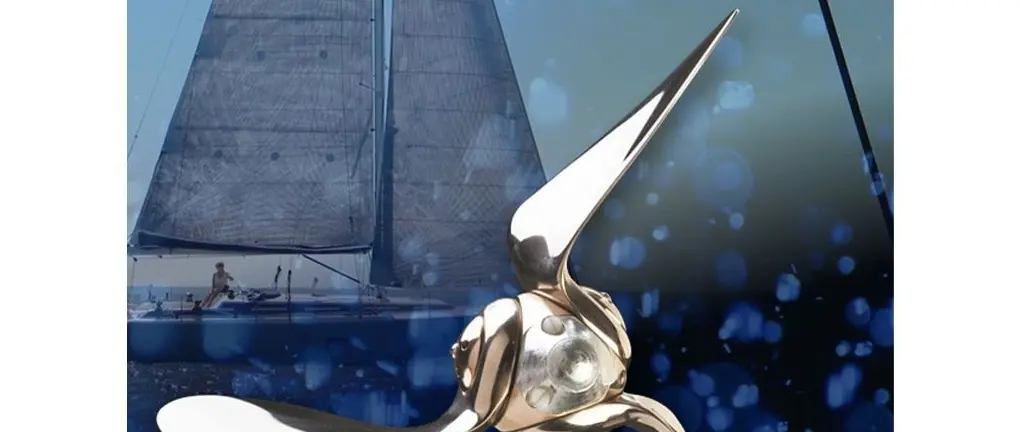
Original lead product photograph: Bruntons Autoprop sailboat propeller photographed for official British Marine product press coverage; crop focuses the propeller rather than the new internal bearing. Original image rights remain with the source publisher and photographer. Official press-image source.