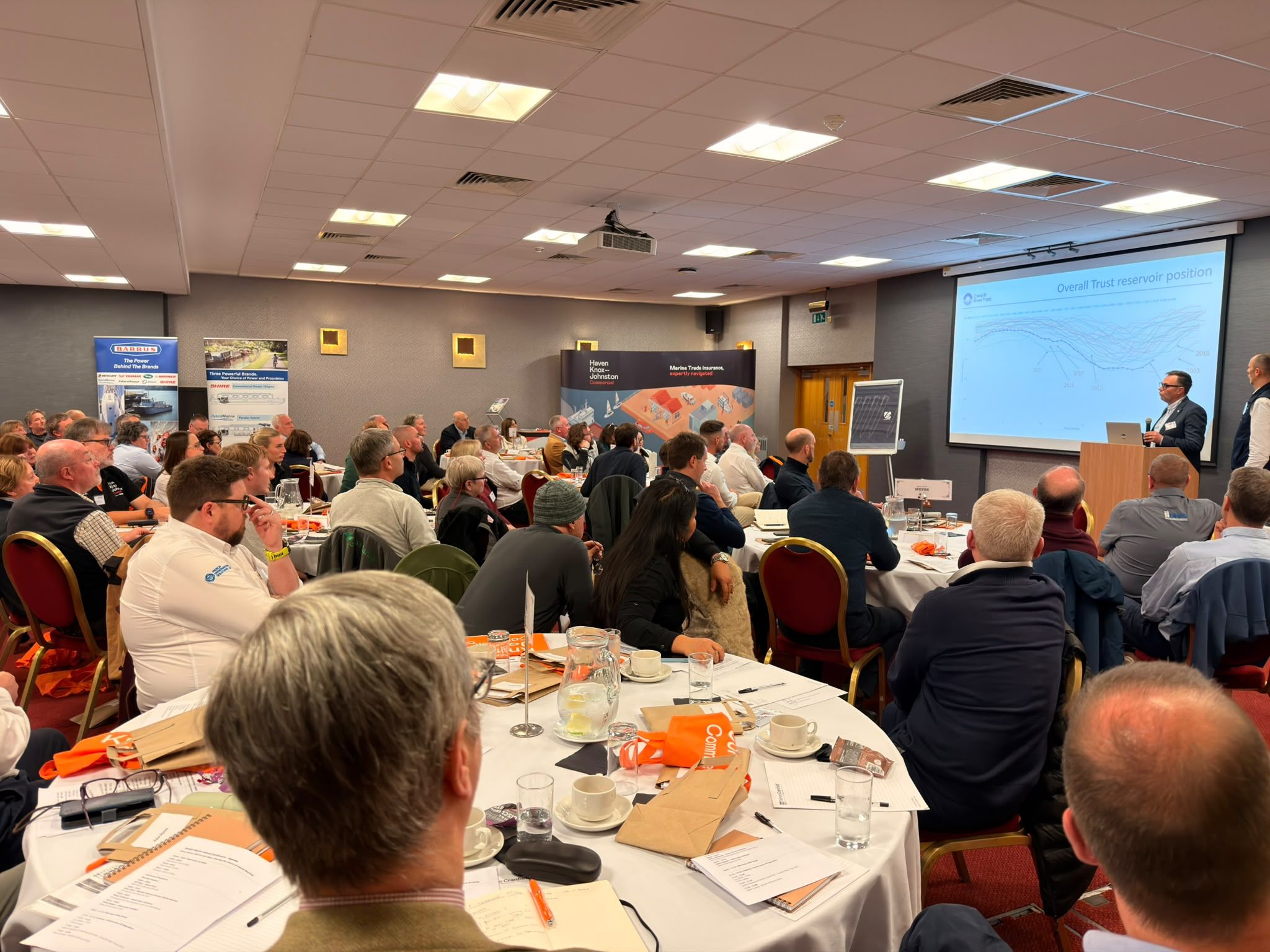
British Marine's Inland Conference brought more than 120 delegates to Mitchell Hall at Cranfield University on 12 November 2026, providing an opportunity for marina operators, boatbuilders, navigation authorities and other businesses to discuss the future of the UK's waterways sector. The trade association reported on the gathering on 18 November, describing a programme of speakers and networking sessions focused on opportunities and challenges facing inland boating. The release does not publish the full outcomes of every discussion or announce new legislation, so the conference should not be treated as the start of a specific regulatory programme. For owners of canal cruisers, narrowboats and small inland craft, its importance lies in the operators and suppliers whose decisions affect maintenance, moorings, safety and access to the waterways.
A meeting of different parts of the inland sector
Inland boating involves a wider range of organisations than the companies selling boats. Operators maintain marinas and hire bases, boatyards carry out repairs, navigation authorities look after stretches of waterway and suppliers provide equipment and services. British Marine says all of these groups were represented at the Cranfield gathering. Bringing them together can help identify problems that cross organisational boundaries. For example, a boat owner may depend on a marina for a berth, a contractor for maintenance and a navigation authority for reliable passage. Poor communication between those organisations can affect the owner even when no single business has made a major mistake. A useful industry conference should therefore encourage practical exchanges rather than simply present individual company achievements.
The reported attendance was over 120
The organisers describe more than 120 delegates taking part in the 2026 event. That figure is a useful indication of participation, although it does not establish how many unique businesses were represented or how the attendance compares with every previous year. British Marine notes a positive atmosphere and significant opportunities for networking. Those are observations from the organiser rather than independently measured business outcomes. A reader should not infer that participants signed particular contracts or agreed new operating standards solely because they attended. The value of the meeting will depend on what the organisations subsequently do with the ideas and relationships developed there.
Inland navigation depends on practical infrastructure
Canals and navigable rivers require regular care. Locks, bridges, bank edges, signs, mooring facilities and service points are all part of the system that allows small craft to travel. When a structure is unavailable or a waterway is temporarily restricted, the effect can spread along an entire route. The conference report mentions the future of waterways management as a subject of industry interest but does not document the precise repair budgets or stoppage plans discussed. For boat owners, the relevant question is how authorities, operators and suppliers coordinate work and communicate changes. Reliable navigation notices and realistic scheduling can be more valuable than ambitious claims about long-term improvements.
A marina serves several types of customer
Inland marinas may accommodate permanent residential boats, privately owned leisure craft, holiday hire vessels and visiting crews. Their needs are not identical. A residential boater may place particular importance on access and everyday services, while a holidaymaker needs straightforward instructions, visitor moorings and reliable facilities. Operators have to manage safety, waste arrangements, electrical connections and customer expectations across these groups. British Marine says marina operators joined the Cranfield event, making such practical questions relevant to the audience even where the release does not itemise each session. A well-run marina can make inland boating more accessible, but the details of service quality matter more than the mere number of berths.
Hire boating introduces new users to the water
Narrowboat and inland cruiser hire businesses often serve people with little previous boating experience. Their staff must explain steering, locks, mooring and emergency procedures in a limited handover period. That creates a particular need for clear operating standards and good communication with navigation authorities. The conference included businesses from across the inland sector, and Waterways Holidays was among the named supporting sponsors. The report does not say that a new nationwide training scheme was agreed. Nevertheless, owners and operators can recognise the importance of consistent instruction. A first successful holiday can encourage repeat participation, while an avoidable incident may discourage a family from boating again.
Boatbuilders face changing customer expectations
Inland craft are used for holidays, recreation and, in some cases, residential living. Builders must balance cabin space, handling, energy systems and long-term maintainability. New buyers may expect more electrical convenience and clearer information about running costs than previous generations. British Marine's account describes delegates considering challenges and opportunities across the sector but does not provide a list of new vessel models unveiled at the conference. It would be wrong to invent a boat launch or a technology agreement. The broader issue is that builders and suppliers need to adapt practical designs to how people actually use their craft, while maintaining safe systems and a price that prospective owners can understand.
Smaller engineering firms play a large role
Many inland boats depend on local specialists for engines, heating, electrical installations, hull work and safety equipment. These businesses may be small in staff numbers yet essential to keeping the waterways functioning. A boat can lose an entire holiday if a repair cannot be completed promptly or if a necessary part is unavailable. The conference provided a meeting place for marine service providers and suppliers, giving them a chance to exchange contacts and industry knowledge. The report does not claim that these discussions resolved a particular parts shortage. For the customer, the practical value of industry relationships is seen when a reputable specialist can offer informed advice and coordinate work without unnecessary delay.
The interests of navigation authorities
Navigation authorities have responsibilities that differ from those of private marinas or boatbuilders. They may manage passage, navigation notices, infrastructure and certain environmental requirements, depending on the waterway. A discussion that affects boat users should account for these responsibilities without assuming every authority operates under the same legal framework. British Marine lists navigation authorities among the types of delegates attending the conference. It does not publish a joint statement changing navigation rules. Owners should therefore continue to consult current notices from the relevant authority rather than treat the conference as a new source of operational instructions. An industry meeting can encourage cooperation, but formal changes require separate communication.
Weather and water levels remain operational realities
Inland waterways can be affected by flooding, drought, strong currents and maintenance restrictions. These conditions influence hire routes, marina access and the scheduling of work. Operators must respond to information that can change over a relatively short period. The November conference report does not identify a new national water-level policy, so any specific claim about agreed measures would be speculative. The relevant challenge is that businesses and navigation authorities benefit from sharing accurate, timely information. Boat owners can assist by observing restrictions, checking notices before departure and allowing flexibility in their itineraries. Responsible operation begins with recognising that an apparently sheltered waterway can still present changing conditions.
Environmental management touches everyday boating
Water quality, waste handling, fuel spills and the treatment of shoreline habitats can affect the experience of inland boating. Marinas, boatyards and navigation authorities may face different obligations in managing these issues. An industry conference can provide opportunities to share methods that work, though the British Marine report does not publish measurable environmental targets agreed at Cranfield. Owners should be wary of treating a positive discussion as evidence that a particular pollution problem has been solved. Everyday improvements may involve reliable waste-disposal facilities, sensible maintenance practices and clear guidance for users. The best outcomes are those that can be seen in how boats and facilities operate, not simply in conference language.
Sponsors reflect different aspects of the industry
British Marine thanked Haven Knox-Johnston as its headline sponsor and named EP Barrus, Waterways Holidays, LALIZAS UK, Leesan, Metpow and Marina & Holiday Park Solutions among supporting sponsors. The variety of organisations illustrates the breadth of products and services connected with inland boating. Sponsorship should not be interpreted as evidence that all the companies endorsed a specific policy or signed a collective agreement. Their participation helped the organiser deliver the event. For readers, the list shows how finance, insurance, engines, travel, safety products and infrastructure services can all form part of an inland boating economy. An owner's experience may depend on several of these sectors during a single season.
Professional relationships can improve service
A marine business often needs to work with other organisations to solve a customer's problem. An engineer may need advice from an equipment supplier, a marina may need to schedule access for a contractor, and a hire operator may need timely information about a navigation closure. Industry conferences can help people make those connections before they face urgent operational demands. British Marine highlighted networking throughout the event, but it did not measure the number of projects started as a result. The benefit of such meetings is therefore best understood as an opportunity rather than a confirmed economic outcome. Their real worth can become visible through later improvements in communication and customer service.
Training and recruitment are continuing concerns
The inland marine sector relies on skills that are not always easy to replace quickly, from practical boat maintenance to hospitality and customer support. Businesses may need people who can work comfortably around water, understand technical systems and communicate well with inexperienced customers. Although the conference report does not attribute a specific workforce policy to the event, the industry's broader needs make training an important topic for operators to consider. New technology can change the skills required, while established crafts remain essential. A well-supported apprentice or trainee may eventually become the person who maintains a fleet, repairs a lock or helps a family enjoy its first boating holiday safely.
The event photographs document participation
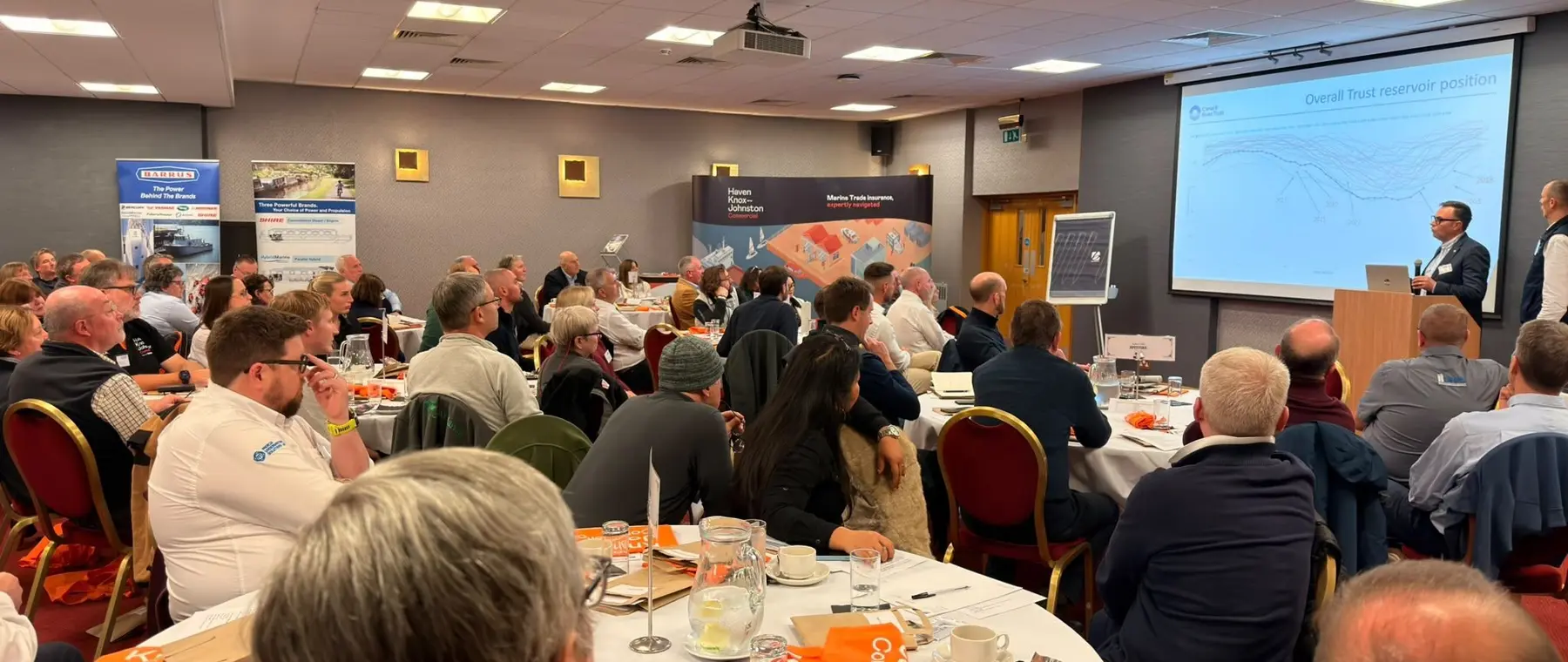
British Marine's 18 November news release includes official photographs taken at the conference, showing attendees and the meeting setting. These images should be described as coverage of the gathering, not as evidence that a particular policy was approved or that a specific individual made an unquoted statement. The editorial image used here originates from the organiser's own event coverage and retains its credit and source URL. Such photographs provide a useful visual record of the people and activity behind an industry discussion. They should not be replaced with unrelated scenic canal images when the story is specifically about a meeting held at Cranfield.
What boat owners can expect next
The report does not promise that the conference will produce an immediate change in mooring prices, navigation fees or availability of facilities. Those decisions belong to individual operators and authorities and may be subject to separate processes. An owner can still take an interest in the organisations represented and ask local providers how they respond to sector-wide challenges. Where a concern affects navigation or customer safety, clear and constructive feedback may help businesses understand practical needs. The best follow-up to an industry meeting is transparent information about what has been decided, what remains under discussion and which actions can be evaluated. Readers should avoid confusing a general conference summary with an official operational notice.
Planning for 2027 and beyond
British Marine says it expects to continue the conversation and welcome participants back in 2027. The November report does not provide a final agenda or confirmed location for that future gathering. As operators plan new seasons, they will need to balance maintenance, customer demand and the resources available to their businesses. For inland boaters, the most useful result would be reliable access, competent services and clear information about the network. Those objectives require work by many different organisations rather than a single annual event. Continued dialogue can contribute to progress when it is followed by practical decisions and measurable improvements.
A gathering that highlights the whole network
The 2026 British Marine Inland Conference brought together more than 120 people with a professional interest in canals, rivers, marinas and the boats that use them. Its documented significance is the opportunity for discussion and cooperation across a diverse industry. No unannounced policy change or boat launch should be inferred from the meeting. For Leisure Boat Guide readers, the event is a reminder that the pleasure of cruising inland depends on an extensive system of businesses, waterways structures and skilled people working behind the scenes. When those organisations communicate well, owners and holiday crews can spend more of their time enjoying the journey and less dealing with avoidable disruption.
Official sources and photography
Reporting independently based on Official original press release.
Official source product photograph: British Marine Inland Conference attendees at Cranfield University in November 2026, original organiser press photograph documenting the event. Original image rights remain with the source publisher and photographer. Official press-image source.