
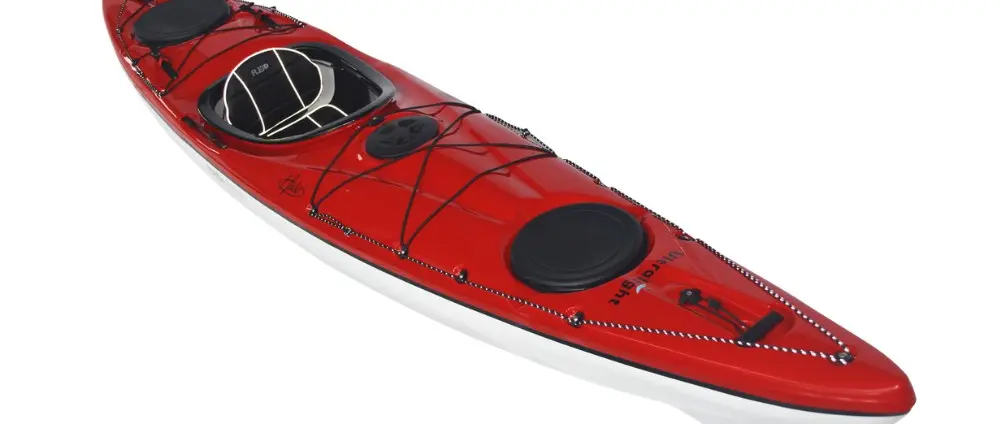
A lighter approach to recreational touring
BoréalDesign has presented the Halo 130 Ultralight for the Paddle Sports Show's 2027 recreational product selection, positioning the kayak between approachable day paddling and more refined touring performance. The manufacturer highlights a hull influenced by sea-kayak design, with the intention of giving paddlers dependable tracking and a reasonably dry ride without an excessively heavy boat. Its distinguishing technical choice is a thermoformed ABS construction that helps achieve a published weight of 22.4 kilograms.
That weight matters because the practical barrier to paddling is often encountered before the boat reaches the water. A kayak that requires several people to load may be used less frequently by someone who makes short trips alone. Reducing hull mass can make storage and transport more manageable, but the complete weight including attached equipment should still be considered.
Dimensions for an intermediate-sized craft
The Halo 130 measures approximately 3.92 metres long and 62.5 centimetres wide, with a height of around 34 centimetres. The maker specifies a maximum load capacity of 102 kilograms, a relatively modest figure that owners must compare with their own weight and the supplies they intend to bring. It is not a capacity to which luggage can be added after accounting for the paddler.
A narrower hull can feel more responsive and efficient than a broad, entry-level recreational kayak, but it may also require greater familiarity with edging and balance. A person accustomed to a wide sit-on-top should test the Halo on sheltered water before deciding whether its handling feels comfortable. The right boat needs to suit the paddler's actual skills rather than an ambition to own something more advanced.
Thermoformed ABS construction in focus
Thermoforming involves shaping heated sheet material into components that can be joined into a finished hull. BoréalDesign's use of ABS is intended to keep the Halo relatively light while retaining durability for ordinary touring. The material differs from conventional rotomoulded polyethylene and from composite laminates, so owners should confirm the appropriate cleaning, storage and repair methods.
A lighter hull is not automatically more resistant to every kind of impact. Approaching a rocky shore, dragging the kayak up a ramp or striking a submerged object may create stresses that depend on the precise construction. Good ownership includes using appropriate landing methods and carrying the craft whenever possible rather than using its underside as a sliding surface.
Seating designed around adjustment
The Halo 130 is equipped with the manufacturer's Flex 4 seat using Drytech fabric, with adjustment intended to provide a comfortable position for different body dimensions. Seating is a significant part of touring performance because a paddler may stay aboard for several hours with limited opportunities to stand. Poor thigh position or inadequate back support can become distracting long before the journey ends.
A buyer should sit in the kayak wearing the clothing and footwear used on real outings, then check footrest reach and the ability to rotate the torso while paddling. Comfort in a showroom is useful but not enough. The seat should also allow a clear exit, and any adjustments need to remain secure when the boat is moving through waves.
Three storage zones support day trips
The manufacturer lists sealed hatches with bulkheads and a dedicated day hatch intended for smaller essentials. Separating equipment helps manage the boat's trim and keeps frequently used items accessible without unpacking a large compartment. For a day paddler, having a predictable place for spare clothing, snacks and suitable safety gear can make short journeys more enjoyable.
A sealed hatch still requires routine inspection and is not an invitation to leave sensitive electronics unprotected. Dry bags remain advisable for belongings that must not get wet. Heavy objects should be positioned appropriately and secured so they cannot slide when the kayak leans or is carried. The total load has to remain within the published limit.
An optional rudder for different conditions
The Halo can be specified with an optional rudder, which may help a paddler maintain a line on longer passages or deal with some wind effects. The value of a rudder depends on where and how the craft is used. For sheltered lakes and short rivers, an owner may prefer to rely entirely on paddle strokes, while another may value additional directional control.
Any rudder adds moving components requiring inspection, adjustment and protection when landing. It cannot compensate for poor route choice or eliminate the need for appropriate paddling technique. A trial without the rudder deployed can be useful for understanding the hull's natural response before deciding whether the accessory is worth the additional complexity.
What light weight changes in ownership
At about 22.4 kilograms, the Halo may be easier for some owners to carry and load than a heavier touring design. The manufacturer suggests it can be manageable for solo car-top loading, but actual feasibility depends on the person's strength, the vehicle and the loading equipment. No one should attempt a lift that is unsafe simply because a brochure calls the kayak ultralight.
Storage is another part of the equation. A 3.92-metre boat still requires a rack and room for the full length, while supporting the hull at suitable points helps protect its shape. A lightweight construction can create opportunities for more frequent paddling when paired with practical transport rather than treating weight as an isolated selling point.
A promising design to compare on water
The Paddle Sports Show entry establishes the Halo 130 Ultralight's inclusion in the 2027 recreational product selection, not victory in the award category. Its combination of relatively narrow proportions, touring-inspired hull and manageable weight makes it worth comparing with other day-touring options. The official show photograph depicts the actual kayak, giving readers a relevant view of the product.
An informed purchase should include verification of the final specification, load rating, warranty and authorised service options. If the paddler can comfortably transport the boat and feels confident using it in intended conditions, the Halo's design may deliver the practical improvement it promises. The decisive evidence is a stable, comfortable outing, not a trade-show accolade.