
A Hall 3 announcement with a practical message
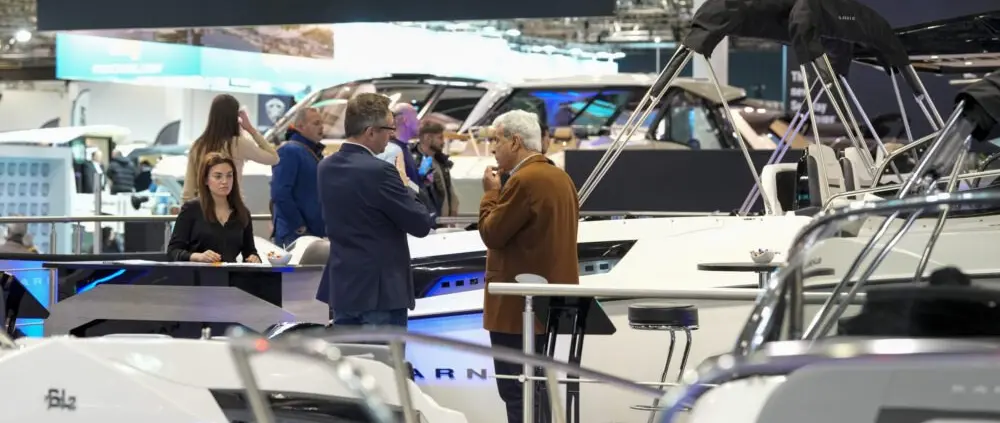
The organiser of boot Düsseldorf has put small motorboats and first-time ownership at the centre of a new preview for the January 2027 exhibition. Its 27 November briefing says 65 suppliers of boats up to ten metres are expected in Hall 3, creating a concentrated place to compare compact craft rather than sending newcomers across an entire show.
The announcement matters because the purchase decision for a small boat is rarely just a question of its headline price. A buyer must also consider transport, storage, propulsion, training, insurance and the waters in which the boat will operate. Bringing a broad group of exhibitors into one hall could make those comparisons more straightforward, although the show has not promised that every boat will be available for immediate delivery.
What the organiser actually confirmed
The event runs from 23 to 31 January 2027 in Düsseldorf. In its official briefing, the organiser identifies Hall 3 as a centre for small motorboats and says that 65 exhibitors will present craft up to ten metres, including established international manufacturers and smaller European firms. Those are plans for the forthcoming fair, not a record of stands already visited.
Messe Düsseldorf identifies the Brunswick Group in a group of Hall 3 stands and also mentions Slovenia's Roto Nautica and Germany's Viper Sportboats. That mix should offer visitors different interpretations of what compact boating means: fishing, short cruises, open-deck recreation and more protected layouts. Actual exhibited model lists and individual stand availability should still be checked before making travel or purchase commitments.
Why length alone tells only part of the story
The organiser's category of boats no longer than ten metres is a useful starting point, but a ten-metre cabin cruiser and a five-metre open boat can demand very different budgets and handling skills. Length affects marina charges, towing combinations, launch arrangements and how easily owners can make a spontaneous trip. Beam, displacement and engine selection deserve equal attention.
A smaller craft is not automatically a simpler or safer craft. Owners planning exposed coastal trips must distinguish design category, sea conditions and equipment requirements from advertised convenience. An open dayboat can be excellent for sheltered summer outings while unsuitable for a family's long passage in deteriorating weather. The relevant comparison is how well a particular boat fits its intended use.
The importance of a trailerable format
Many owners prefer a boat that can move between lakes, rivers and coastal launch sites instead of remaining at one marina. Trailerability can broaden where the investment is used, especially for families who spend time in different regions. Yet a boat described as trailerable may still require a substantial towing vehicle, specialist trailer brakes or a launch facility with sufficient depth.
Before treating transport as a saving, buyers should calculate the combined weight of hull, engine, fuel, gear and trailer. They should also verify road limits and driving-licence requirements in their own jurisdiction. The German show's emphasis on compact models offers a useful opportunity to ask suppliers for realistic ready-to-tow figures rather than relying on a bare-hull catalogue weight.
European buyers are not all looking for the same boat
The release points to different small-boat traditions across Europe, from Scandinavian family craft to Dutch sloops and central-European compact cruisers. Those traditions are shaped by local geography and usage. Sheltered waterways may favour relaxed seating and ease of boarding, while cold coastal areas make cabins and weather protection more significant buying considerations.
Neither approach is universally better. A sunny-day buyer who wants fishing room and a direct wash-down may reasonably reject a small enclosed cruiser. Someone who uses a boat into autumn may value a protected helm over a large open lounging area. Hall 3's reported diversity matters if exhibitors demonstrate these trade-offs instead of treating every layout as an all-purpose solution.
A market signal from Finland
The organiser cites information attributed to the Finnish marine industry association Finnboat suggesting that around 87 per cent of newly registered motorboats in Finland during 2025 were no longer than seven metres. This is a market indicator from a specific country and year, not a global market-share figure or proof that seven metres is an ideal boat size.
The figure still helps explain why builders invest in modestly sized models even while high-profile yacht launches attract attention. Boats small enough for ordinary weekend use account for many people's actual experience of being afloat. Their owners often engage directly with local marinas, service technicians, clubs and waterways, making this segment important beyond its share of glossy advertising.
First-time ownership and the total cost
A compact boat can make entry into boating appear attainable, but buyers should ask for the full first-season cost. Engine choice, trailer, safety equipment, antifouling or storage, registration, maintenance and fuel can alter the calculation. For customers considering new ownership, a realistic annual operating estimate is more helpful than comparing two starting prices on an exhibition stand.
The same principle applies to financing and resale. A boat bought for occasional afternoons needs to earn its place against rental, club membership or shared use. That does not make ownership unattractive; it means the flexibility of having a boat ready should be valued alongside the costs of keeping it ready. Dealers who can explain these options candidly provide more useful advice than those who emphasise only an introductory payment.
What a family should inspect onboard
At a boat show, the shape of the cockpit and the route from boarding point to seating are easier to evaluate in person than in photographs. Families should check the number of secure handholds, the ability to move around without stepping on cushions, storage for lifejackets and the location of controls. A quoted passenger capacity is an upper rating, not a guarantee of comfort at that number.
Parents should also examine how children can be supervised while an adult handles lines, anchors or the helm. Practical concerns include whether boarding steps become slippery, whether a swim ladder can be deployed from the water and whether storage compartments can trap gear against moving parts. These questions matter more to everyday use than many decorative features.
Choosing between outboard and other power arrangements
The small-boat market encompasses different propulsion formats, but the organiser's Hall 3 notice does not provide engine specifications for every exhibitor. Buyers should therefore resist treating show-wide marketing claims as measurements. An outboard arrangement can free interior space and simplify certain service tasks, while other propulsion systems may suit distinct hull types or preferred operating patterns.
Engine suitability depends on permitted power, local speed restrictions, load and expected cruising distance. A high maximum horsepower figure does not mean the boat will be more economical, quieter or easier to handle in routine use. Visitors should ask for manufacturer test conditions, realistic loaded performance and a local service contact, rather than extrapolating performance from one demonstration craft.
Comparing build quality without a sea trial
An indoor exhibition can be excellent for assessing access, finish and ergonomics, but it cannot replace a properly planned on-water trial. Opening lockers, checking hinges and inspecting wiring access can reveal how easily the owner or a technician might maintain a boat. The condition of the displayed example should be assessed without presuming that every production unit is identical.
Questions about warranty exclusions, repair times and dealer responsibilities deserve specific answers in writing. When a stand demonstrates a new model, buyers should distinguish between standard equipment and optional presentation features. A carefully styled show boat can be useful evidence of possible configuration, but its equipment list is not necessarily the specification of an entry-level purchase.
Why compact day cruisers attract interest
The organiser reports feedback from dealers that compact day cruisers are attracting buyers who want flexible trips, swimming stops and short breaks. This demand makes intuitive sense: the same boat may host a quiet family lunch on one outing and more active watersports on another. Nevertheless, no single layout delivers every activity equally well.
For a family considering day cruising, the important details are usable shade, safe movement around the cockpit, sheltered storage and a boarding arrangement that works in practice. Buyers considering overnight use should also examine ventilation, privacy and berth dimensions rather than assuming the presence of a small cabin makes the boat suitable for repeated multi-night journeys.
The role of smaller manufacturers
A show containing major manufacturers alongside regional boatbuilders can be especially valuable to buyers who are unsure whether a familiar brand fits their local needs. A smaller builder may offer a distinctive hull, equipment approach or service relationship. A large group may offer a wider dealer network and more standardised ownership support. The organiser's list suggests both groups are expected.
Those differences should be explored without presuming that one type of builder has superior craftsmanship or support. Visitors can ask for references from existing owners, clarification of production capacity and documentation of required conformity. The point of seeing several firms together is not simply to gather brochures, but to test claims against comparable questions.
Planning a useful visit to the fair
Prospective visitors could begin with a short description of their intended boating: usual crew size, waters, storage arrangements, expected annual hours and a firm budget that includes equipment. That description turns a broad indoor exhibition into a structured buying exercise. It also helps dealers explain where a given model is a poor match as well as where it might work.
Visitors should confirm each exhibitor's location and planned boat display through current official listings before travelling. The 27 November statement is a preview, and stand programmes can change. People seeking an actual sea trial, dealer quote or country-specific specification will usually need a follow-up appointment beyond the exhibition visit itself.
The boundary between preview and confirmed outcome
At the time of publication, boot Düsseldorf 2027 has not yet opened. The 65-supplier figure, Hall 3 emphasis and 23–31 January dates are statements from the show organiser about the forthcoming event. They do not establish eventual attendance, sales, exhibitor satisfaction or the number of boats ultimately displayed. Those outcomes can be assessed only after the event.
The most useful conclusion for leisure-boat owners is that compact craft are receiving deliberate attention in the show's planning. Whether that attention translates into affordable, well-supported ownership depends on the individual boats and dealers. Independent buyers can use the announced concentration of exhibitors to ask better questions, compare alternatives and make a decision grounded in how they actually intend to get afloat.
Verified original news sources and image credits
Original independent news reporting based on the original responsible organisation or boatbuilder announcement. Original first-party boat photographs used to illustrate the same verified craft are credited © Messe Düsseldorf / CTillmann and the original photographers. Earlier manufacturer photos are not represented as 27 November 2026 event-day photos. No first-hand sea trial, price, sales availability or unreported result is claimed.