
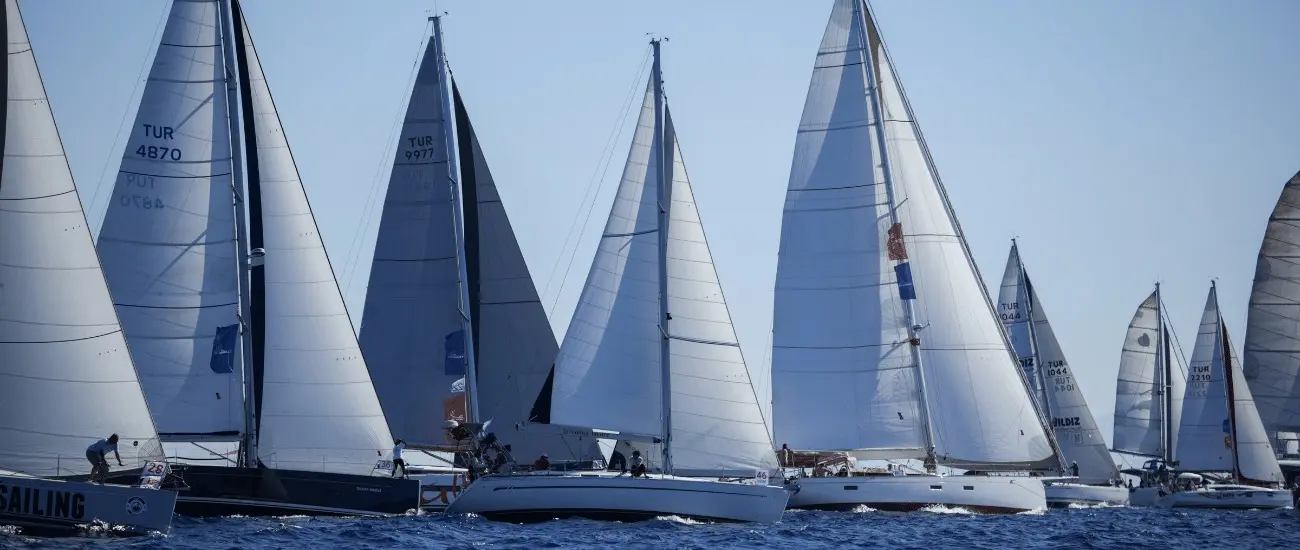
The 38th The Bodrum Cup is entering its closing stages after a fleet of approximately 90 boats and 1,000 sailors crossed the waters between Knidos and Ortakent on Thursday, 22 October. The Turkish sailing festival is now turning towards Yalıkavak for its final two legs, with Friday’s Ortakent–Yalıkavak passage followed by a closing race and prize ceremony on Saturday. The organising committee's update confirms the route and programme but does not yet report overall race winners.
The six-day gathering runs from 19 to 24 October and mixes competition with a celebration of the region's maritime heritage. Organisers have structured the racing around five legs covering a stated 79 nautical miles, taking crews through bays, ancient coastal sites and modern marina facilities. The combination gives the event a character distinct from a single-course regatta: where boats sail is an important part of the story.
From Bodrum to Knidos and back towards the peninsula
Racing began with the 12-nautical-mile SumOne leg off Bodrum, before the fleet headed for Knidos on Wednesday’s 20-nautical-mile Ruins Luxury Resort leg. The second day's destination was especially significant because Knidos returned to the programme after a lengthy absence. The ancient settlement at the tip of the Datça Peninsula offered participants an opportunity to connect the competitive sailing schedule with the region’s archaeological heritage.
Thursday brought another 20-nautical-mile passage, the Yalıkavak Marina leg from Knidos to Ortakent. The organisers reported the start and expected arrival of the fleet, with competitors racing in their respective categories. Without a published, verified finishing order in the source material, it would be premature to assign stage victories or league positions; those details should be checked against the official results service when available.
On Friday, 23 October, the programme continues with the 15-nautical-mile OPET leg from Ortakent to Yalıkavak. The published visitor schedule lists a 10:00 departure point opposite Bodrum Castle and a planned 17:00 arrival at Yalıkavak Marina. Times given in a race programme are intentions rather than guarantees, however, and people watching from shore should allow for changes due to wind, routing and operational decisions.
Saturday’s final 12-nautical-mile Anadolu Sigorta leg is planned entirely from Yalıkavak back to Yalıkavak, bringing the competitive portion of the festival to its close. The sum of the stated leg distances is 79 nautical miles. For skippers and spectators, the finish is the point at which a moving procession along the peninsula becomes a concentrated gathering at one marina.
A festival for traditional boats and contemporary sailors
The Bodrum Cup began in 1988 through the Era Bodrum Sailing Club, with an emphasis on the boatbuilding and seafaring traditions of the coast. Its 2026 edition again brings traditional wooden craft together with other sailing yachts across several competition categories. The appeal lies partly in seeing vessels associated with local craftsmanship operating under sail rather than only at the quay.
Organising a multi-leg event of this scale also requires an extensive shore-side network. Sponsors and supporters named by the committee include marine businesses, municipal authorities, tourism organisations and Yalıkavak Marina. Their involvement provides practical facilities for crews and visibility for a regional maritime economy that extends from boatyards to hospitality and transport.
Yalıkavak Marina has two roles during the final part of the programme: its name appears on the third stage and it will host the fleet for the closing events. The marina's management has framed its participation around preserving Bodrum’s seafaring identity as well as showcasing its international yachting facilities. For visiting crews, this creates a natural transition from several days of racing to a shared post-regatta setting.
Why the Bodrum Ship anniversary matters
One of the festival’s less visible stories concerns the Bodrum Ship, the sailing-school vessel associated with The Bodrum Cup, which marks its 25th anniversary in 2026. The organising committee says a maintenance and renovation programme is under way at Ağanlar Shipyard with contributions from maritime companies and public institutions. The objective is to return the vessel to its educational and cultural activities in future.
The project is a reminder that nautical heritage survives through use, training and maintenance, not only through museum displays. A boat able to take young people onto the water gives maritime traditions a practical next chapter. The organisers have described ambitions for further training and international activities, but have not announced a completed return-to-service date, so the work should be regarded as ongoing.
What visitors can expect at the finish
The official programme schedules the prize-giving at Yalıkavak Marina for 19:30 on Saturday, 24 October, followed by a concert by Turkish group Pinhâni at 21:30. There is also a separate exhibition of paintings by Dr Şahin Ünal, titled The Bodrum Cup Special, at the race centre in Bodrum Municipality Square from 19 to 24 October. These cultural elements broaden the gathering beyond the competitors and their support teams.
For anyone hoping to follow the sailing rather than simply attend the closing celebration, the most reliable starting point is the organiser’s own website. It provides links to race schedules, official results, tracking, media and spectator-yacht participation information. On-water viewing requires particular care: spectators should respect race-control instructions, maintain a safe separation from competitors and arrange any boat access through legitimate operators.
Those staying ashore can make better use of the festival by understanding the geography of the course before travelling. Bodrum, Ortakent, Knidos and Yalıkavak are distinct points on an extended coastal route, not interchangeable viewing locations. Road journeys and marina access can be affected by local activity, and the publication of a nominal departure or arrival time does not promise that every boat will be visible from a chosen vantage point.
The 2026 race week highlights a useful model for marine tourism: racing that keeps local wooden-boat traditions visible while connecting multiple destinations and services. Its immediate focus is the concluding pair of legs and the Yalıkavak celebrations, but the longer legacy includes apprenticeship, conservation of working sailing craft and opportunities for younger sailors. The final sporting result remains to be confirmed by the organisers when all racing has concluded.