
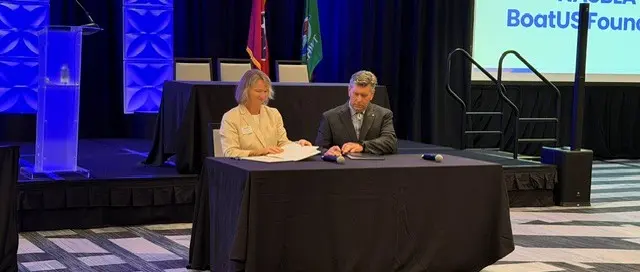
The BoatUS Foundation for Boating Safety and Clean Water and the National Association of State Boating Law Administrators have formalised a new partnership focused on recreational boating safety and education. Their memorandum of understanding was signed on 16 September and announced the following day.
The organisations say the agreement will help them coordinate work at national and local levels rather than operating completely separately. Areas identified include boating-education standards, certification initiatives and public outreach programmes for recreational boaters.
Education standards are a central focus
The partnership specifically identifies support for the National Boating Education Standards as one potential area of joint work. It also leaves room for new safety-certification initiatives and educational programmes developed with state agencies and boating organisations.
For owners, this matters because education requirements and accepted course standards can influence how people qualify to operate boats in different US jurisdictions. The memorandum itself does not create a new legal requirement, so existing state rules continue to apply unless formally changed.
The groups plan to share expertise and resources
BoatUS Foundation and NASBLA say they will look for ways to combine expertise and coordinate programmes supported by the Sport Fish Restoration and Boating Trust Fund. That could allow safety initiatives to reach more boaters without duplicating work across organisations.
The agreement also includes environmental stewardship alongside accident prevention and education. Details of individual programmes will need to be assessed as they are announced because the memorandum is a framework for cooperation rather than a finished national programme.
What small-boat owners should take from it
Most recreational boating incidents involve ordinary craft rather than large yachts, making education and operator behaviour directly relevant to the LBG audience. Better coordination between national organisations and state-level authorities can improve consistency in the information offered to new and experienced boaters.
Owners should still check the rules where they actually boat, particularly for age restrictions, certification and local equipment requirements. The partnership may shape future education resources, but it does not replace those jurisdiction-specific obligations.