
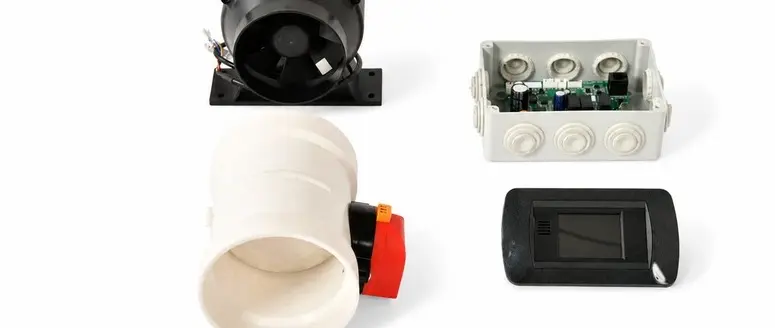
Blue-Airco's Multizone Control Kit has won the Onboard Facilities, Comfort and Entertainment category of the 2026 DAME Design Awards for a system intended to serve two independently controlled air-conditioning zones from one existing marine cooling unit. Announced at METSTRADE on 17 November, the result highlights an approach that manages airflow rather than requiring a second compressor and refrigerant circuit. The idea could be relevant to smaller cabin boats where the skipper wants different temperatures in a saloon and sleeping area but has little room for additional machinery. The design's benefits still depend on the capacity of the existing air-conditioner, the layout of ducting and how the boat's electrical system is configured.
The award category and what it recognises
METSTRADE's official DAME report identifies the Multizone Control Kit as the winner of the Onboard Facilities, Comfort and Entertainment category. It was not one of the three joint overall DAME winners. The distinction is worthwhile because the overall award and category results are not interchangeable, and a product's nomination is different again. The jury recognised an equipment concept that can make a limited onboard air-conditioning installation more flexible without necessarily duplicating its largest mechanical components. That is a design achievement, not an independent guarantee of a particular temperature reduction or electrical saving on every boat. Performance depends on the connected climate system and the spaces being served.
How the Multizone arrangement is intended to work
Blue-Airco says its kit divides the output of an existing air-conditioning unit so that two areas can be controlled separately. A motorised shutter directs the airflow, while a variable-speed brushless DC fan regulates how much air is delivered. A dedicated touchscreen provides the user interface. The basic approach differs from installing a second complete air-conditioner for a second compartment. It also differs from simply putting a manual grille in the duct and expecting both spaces to maintain independent temperatures. The precise control behaviour will depend on sensors, the cooling unit's response and how much capacity remains available when both zones request cooling.
Why two zones could suit a compact cabin boat
A small cruiser may have a saloon used during the day and a sleeping cabin occupied at night. The thermal conditions in those spaces may differ because of window area, sun exposure, ventilation and the number of occupants. A single fixed-output cooling arrangement can leave one space too warm while another becomes uncomfortably cold. Separately controlling airflow may make the onboard environment more comfortable if the base unit has enough capacity to serve the total heat load. Owners should avoid assuming the product creates additional cooling power. It redistributes what is available, rather than changing the fundamental amount of heat the installed air-conditioner can remove.
A kit designed around existing equipment
The manufacturer positions the Multizone kit as compatible with Blue-Airco equipment and some air conditioners made by other suppliers. This broader compatibility could be valuable for boatowners considering a retrofit, but it still requires model-by-model confirmation. Duct connection dimensions, controller requirements, available electrical voltage and the characteristics of the existing blower all influence the installation. A buyer should have an HVAC specialist review the fitted equipment rather than assume that any cooling unit will accept the new parts. A small air-conditioner already operating near its capacity may not offer acceptable performance in both compartments merely because a controlled duct and extra fan are added.
The published weight and airflow figures
Blue-Airco lists a standard kit mass of approximately 1.8 kilograms and airflow capacity of up to 200 cubic metres per hour, with a maximum electrical consumption of 24 watts for the kit. Those are manufacturer-reported specifications for the equipment, not evidence that the complete air-conditioning installation consumes only 24 watts. The compressor and the existing air handler have their own power demands, which can be much larger. The airflow figure also needs to be understood in the context of duct resistance, bends, filters and outlets. Owners should ask for expected airflow under the actual installed conditions rather than assume the maximum is available everywhere on the boat.
The importance of low-voltage compatibility
The kit is described as supporting 12, 24 and 48 volts DC, widening its relevance to different marine electrical systems. Voltage compatibility is useful, but correct wiring and protection still matter. A 12-volt boat might require a different cable size and connection arrangement from a 48-volt installation to achieve acceptable voltage drop and fault protection. Owners should also check whether the unit can share an existing supply or needs a separate protected circuit. The presence of a low-voltage DC rating does not establish that the system is suitable for unsupervised installation by an owner without electrical experience. Commissioning should include functional testing of both the airflow control and the display.
What the touchscreen is supposed to manage
A dedicated touchscreen is intended to allow users to operate the second-zone functions without physically changing dampers or moving grilles. This can make sense when a sleeping cabin is separated from the main saloon. However, a comfortable user interface should also be easy to interpret, with clear indication of which zone is being adjusted and how its demand affects the other. It is important to establish whether the control shows actual temperature, selected temperature or fan speed, because those are different pieces of information. The manufacturer's product listing confirms a touchscreen but does not provide a complete software manual for every possible connected air-conditioning unit.
Ducting is likely to determine the retrofit effort
Moving cooled air through a small boat requires room for insulated ducts, outlets and components that can be inspected later. Even a compact control kit can be difficult to fit if bulkheads and storage lockers leave no practical path between the original cooling unit and the new zone. Bends, restrictions and poorly sealed joints can reduce airflow and create noise or condensation. An HVAC specialist should assess the full route rather than quote on the kit alone. On a new build, the designer can reserve paths and mounting space early; on an existing boat, avoiding damage to structure and existing services may be a larger part of the work than mounting the controller itself.
The risk of creating uneven temperatures
Two independently adjustable zones do not automatically mean two fully independent air-conditioning systems. If one space receives more airflow, the other may receive less, and the base cooling unit still has a limited total capacity. Temperature differences can also be influenced by open doors, uninsulated windows and air leakage. Owners should understand how the controller prioritises competing requests and whether either zone can demand more capacity than the unit can supply. A well-designed installation should use realistic settings and appropriate airflow balancing. Without adequate commissioning, the system might create the impression of separate control while leaving occupants dissatisfied with actual comfort.
Noise control is important in sleeping cabins
A second duct fan can help move air to a remote compartment, but it may also introduce noise or vibration that is noticeable at night. The manufacturer refers to a variable-speed brushless DC fan, which offers control over intensity, but the short product summary does not give a complete acoustic performance curve for every operating speed and installation. A buyer should ask for noise data where available and consider where the fan is mounted relative to sleeping spaces. Duct isolation, mounting brackets and airflow resistance can all affect the sound perceived in a cabin. An otherwise efficient solution may be less desirable if it disrupts the rest the owner hoped to improve.
Condensation and insulation remain design issues
Air-conditioning systems remove heat and may also produce condensation in humid conditions. Adding ducting, outlets or shutters introduces further locations where cold surfaces can meet humid air. Insulation and drainage must therefore be designed correctly to avoid damp liners, damaged furnishings or mould. The new kit does not remove the need to service the original cooling system's condensate path. Boaters in warm and humid regions should pay particular attention to these details. A correctly installed multizone arrangement may improve comfort, but it should not create new hidden moisture problems behind panels and cupboards that are difficult to inspect.
Comparing a second zone with a second system
A second complete air-conditioning unit can provide additional cooling capacity and may offer separate operation, but it also adds expense, mass, machinery space and electrical demand. A multizone kit avoids some of that duplication if the existing unit is sufficiently capable. The key comparison is therefore not just the price of the kit against a new compressor. Owners should compare achievable temperature control, installation work, service access, power use, noise and future maintenance. On a boat with a weak original air-conditioner, the correct solution may still be replacement or improved insulation. A kit that redistributes inadequate cooling will not satisfy the occupants.
What the manufacturer does not establish alone
The product specifications give useful points for an initial review, including kit mass, maximum airflow, electrical consumption and DC voltage options. They do not provide a universal vessel-size limit, a guaranteed temperature difference between zones or a complete list of compatible air-conditioning systems. Nor does the DAME result quantify savings on a specific boat. Owners should request the full manual, compatibility table and installation drawings from Blue-Airco or an authorised installer. Where the boat already has a complex control network, the professional should also determine how the new touchscreen and sensors will interact with the original controls.
Practical questions before commissioning
A useful quotation should identify the existing cooling unit, measured or calculated thermal load in both spaces, duct changes, electrical requirements and the commissioning procedure. It should explain how temperatures will be measured, how the controller reacts if one zone reaches its target and what will happen if the fan or shutter fails. Service access and replacement parts are also important. An owner could ask for a practical demonstration with both zones requesting different levels of cooling rather than rely only on a display showing separate set points. This kind of test can expose whether the arrangement delivers meaningful comfort improvement on the chosen boat.
A category winner focused on using space better
Blue-Airco's 2026 DAME recognition is notable because the design attempts to improve comfort by using existing cooling equipment more intelligently. For compact leisure cruisers, reducing the need for a second compressor and refrigerant circuit could help preserve storage and simplify machinery arrangements. But the physical limits of the base air-conditioning system remain, and installation details can outweigh the convenience of the controller. The right outcome is a properly engineered arrangement matched to two realistic cabin heat loads. For boats under twelve metres, the Multizone Control Kit is a worthwhile option to investigate where independent comfort zones are desirable but room and electrical capacity are constrained.
Official source: https://www.metstrade.com/products-and-services/blue-airco-srl/products/multizone-control-kit