
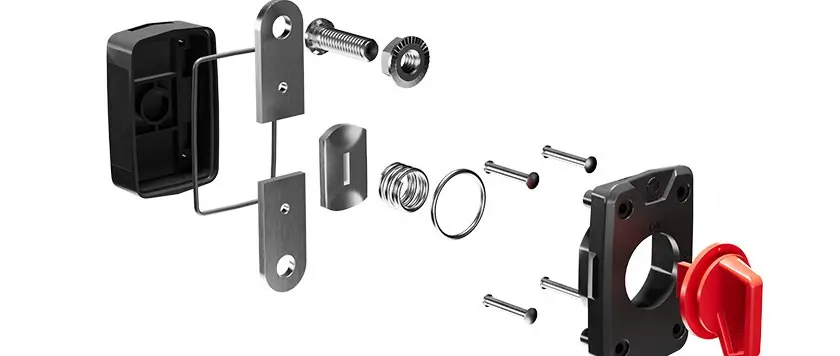
A smaller approach to battery isolation
Blue Sea Systems has introduced the MiniSwitch, a compact battery disconnect intended to mount directly at the terminal rather than taking up a separate position in the boat's electrical compartment. The manufacturer calls it model 5992 and presents it as an enclosed, marine-grade answer to a familiar problem: an owner wants to disconnect stored battery power without adding an elaborate switching arrangement to an otherwise straightforward installation.
The October 2026 announcement is especially relevant to smaller leisure craft, auxiliary batteries and boats that spend weeks or months on a trailer or mooring between outings. An owner may want quick isolation during storage or maintenance, but a switch must still be correctly sized, securely installed and compatible with the entire electrical circuit. Convenience alone cannot determine electrical safety.
An enclosed housing around live parts
The MiniSwitch uses a fully enclosed housing intended to reduce access to exposed conductive surfaces. Blue Sea says this arrangement helps limit accidental contact, sparks and short circuits around the battery. That matters in confined compartments where tools, loose equipment and cable terminals can otherwise come dangerously close together during inspection or a hurried pre-departure check.
Enclosure should not be confused with automatic fault protection. A disconnect switch is designed to interrupt a circuit when operated, but it is not a substitute for correctly selected fuses, circuit breakers, sound cable terminations or battery restraints. The manufacturer's safety language needs to be understood as a feature of the switch itself, within a properly designed system rather than a promise that a poorly installed circuit becomes safe.
The two published current ratings
Blue Sea's official product listing specifies a 150-ampere continuous rating and a 450-ampere cranking rating for the new switch. These figures describe different operating duties. The first concerns sustained current flow, while the second relates to a short engine-starting demand. A boat owner should not assume that an item suitable for one engine starting circuit will automatically suit every high-load domestic system or auxiliary installation.
Actual battery wiring can supply multiple loads at once, from a bilge pump or navigation equipment to a refrigerator, windlass and engine starter. A qualified installer needs to understand the maximum expected current and the manufacturer's precise specifications before choosing a switching position. The published ratings are useful selection data, but they cannot substitute for measuring the demands and protection arrangements of the vessel.
Direct mounting avoids extra cable runs
The product is designed to bolt directly to either a positive or negative battery terminal, according to Blue Sea's product listing. This removes the need for an additional mounting bracket or a length of cable just to reach a remotely positioned switch. On a compact fishing boat or day cruiser, saving room and reducing unnecessary connections may be an appealing practical advantage.
The same direct mounting approach puts more responsibility on terminal clearance, battery-box space and cable support. An installer must confirm that the switch does not touch a lid, foul nearby conductors, strain a post or become inaccessible after the battery is secured. A short installation is not necessarily a correct installation, and the boat's existing battery configuration deserves careful inspection before any new hardware is fitted.
One-turn control for periods of storage
The MiniSwitch provides a one-turn on-off control intended to isolate the connected battery during storage or maintenance. On boats used mainly at weekends, owners often want a clear, repeatable procedure for shutting down systems after returning to the berth or ramp. An accessible mechanical switch can be easier to check visually than a more elaborate remote arrangement, provided it is clearly identified and operated correctly.
A boat may contain circuits that must remain energised, including a permanently connected automatic bilge pump, alarm or monitoring device. Turning off an incorrectly positioned master disconnect could defeat those arrangements. Owners should establish which equipment must remain live, consult the wiring diagram and obtain competent advice before assuming that complete isolation is always the right response when leaving the vessel unattended.
Materials intended for marine conditions
Blue Sea specifies ultraviolet-stabilised and corrosion-resistant construction intended to cope with exposure to sun, vibration and challenging outdoor environments. These characteristics are relevant because a battery switch may sit in a compartment that experiences humidity, salty air, repeated opening and the movement associated with a trailer or a boat crossing choppy water. Hardware in that setting has to do more than function on a dry workshop bench.
The manufacturer also states that the enclosure is built to operate under substantial electrical loads without excessive heat when used within its rating. Independent long-term tests across different boat installations have not been presented in the announcement, so owners should still inspect for loose terminations, discolouration, corrosion or unusual warmth. Appropriate maintenance remains important even where the materials and published electrical ratings appear reassuring.
How it fits into a sound electrical system
A sensible battery installation brings together adequate cable cross-sections, properly crimped terminals, circuit protection, ventilation where required and secure restraint of the battery itself. Adding a switch is only one part of that arrangement. The MiniSwitch may offer a neat way to isolate a chosen circuit, but it does not make a neglected battery, damaged insulation or poorly supported cable acceptable for continued operation.
For engine starting, the difference between continuous operating current and brief cranking demand is important. Owners should also check whether a battery management system, charger, solar controller or electronic engine system has special procedures for disconnection. Unexpectedly removing supply from equipment while it is operating can create risks or errors. The most reliable installation is one considered in the context of every connected device.
What buyers should check before fitting it
The new Blue Sea MiniSwitch is a specific product, listed as part number 5992 with ratings of 150 amperes continuous and 450 amperes for cranking. The manufacturer's own documentation and October product announcement establish those facts, along with the enclosure concept and direct-to-terminal mounting. Local availability, battery-post compatibility, installation clearances and suitability for a particular engine or service circuit still require individual confirmation.
For a simple leisure boat, the attractive idea is quick isolation without dedicating much space to a separate switch panel. Owners considering the MiniSwitch should start with a clear wiring plan, ask a qualified marine electrician to verify the proposed use and keep the manufacturer's instructions with the vessel's maintenance records. A compact switch is most valuable when its installation is deliberate, accessible and understood by everyone responsible for the boat.