
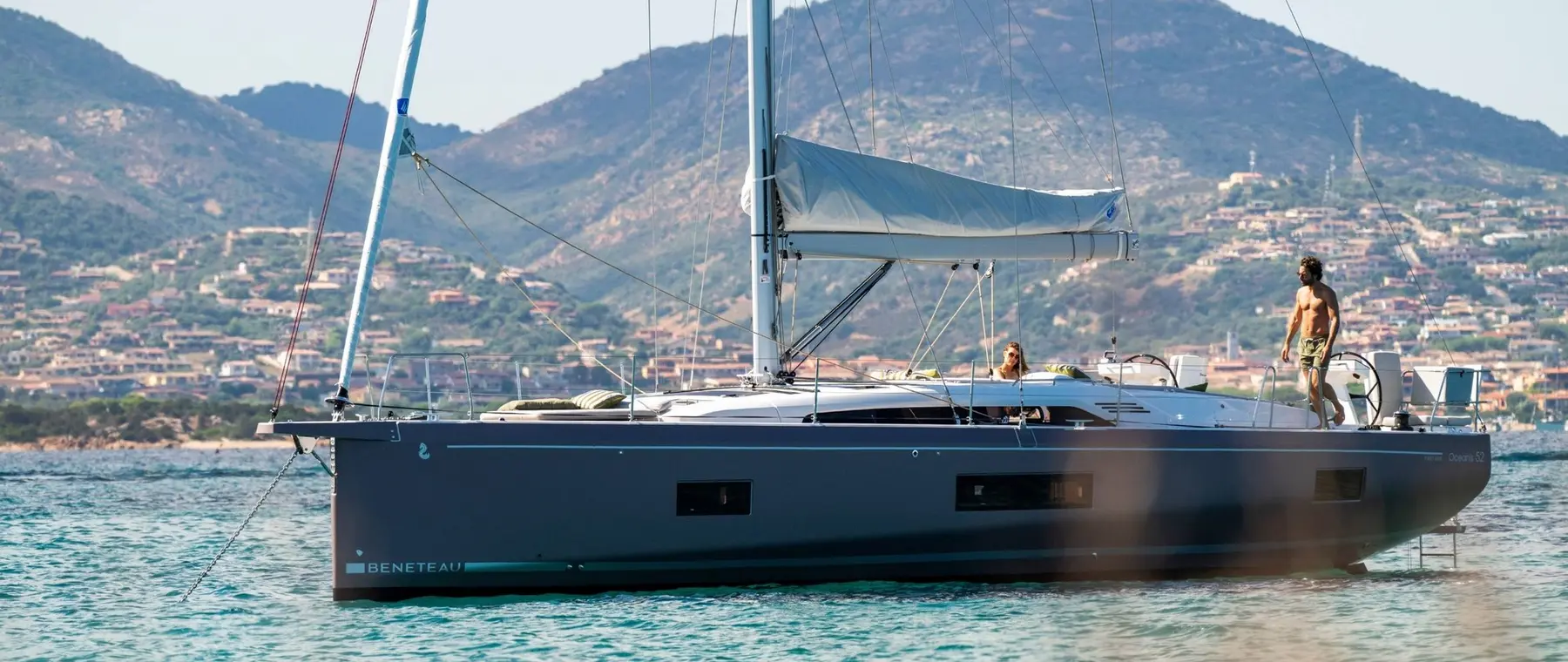
BENETEAU's Oceanis 52 brings the emphasis firmly back to sailing families who spend as much time relaxing at anchor as they do working the sails. The French builder's current design combines a generous aft cockpit with handling choices aimed at reducing the physical demands of cruising with a smaller crew.
The yacht measures approximately 16.28 metres overall, and its 4.84-metre beam is carried well aft to create more usable deck volume. BENETEAU says the cockpit provides about 30 percent more space than the earlier Oceanis 51.1, a manufacturer comparison that prospective owners can test for themselves on board.
Naval architecture is by Roberto Biscontini, with Nauta Design responsible for interior and deck design. That combination places the Oceanis 52 in the familiar modern production-cruiser category, but the new cockpit geometry gives it a distinctive social character even before the sailing plan is considered.
Opening space to the sea
Two C-shaped benches form an almost diamond-like gathering area aft of the companionway. Height-adjustable tables can become dining surfaces or sun-lounging arrangements, allowing the same deck to serve a proper cockpit meal after a day's sailing without leaving a permanent large table in the crew's working path.
The separation of primary and secondary winches is intended to keep sail-handling tasks organised while reducing the spread of loose ropes across the social area. This is an important safety consideration for family crews, since a generous cockpit is only comfortable if guests do not have to step over working sheets.
A lifting swim platform gives straightforward access to the water at anchor, while the aft cockpit can be specified with additional entertaining equipment. The practical questions include how the platform is secured under way, the location of emergency boarding equipment and whether the preferred arrangement leaves enough room for tender operations.
Engineering and power
BENETEAU offers a standard sail-handling approach with a furling mast and self-tacking jib, aimed at maintaining manoeuvrability with fewer hands. The optional First Line Pack uses a taller mast and more sail area for sailors who prefer a more performance-focused setup and accept additional sail-handling demands.
The helm includes a 12-inch display, while the published design emphasises clear routes from the steering positions toward the working deck. An owner should test visibility past the sprayhood and sails when seated and standing, because what looks spacious in harbour can become more challenging under heel.
The official specification lists a minimum draft around 1.92 metres and a deeper maximum configuration around 2.36 metres. That difference can have a major effect on marina selection, shallow-water anchorages and performance expectations, so the keel choice should be settled early rather than left to an afterthought.
Living aboard longer
Below deck, the saloon includes a C-shaped galley with a full-height refrigerator and substantial work surfaces. The design is intended to support days away from shore facilities, and the availability of a second refrigerator and additional storage may influence what food and provisions can be carried.
Accommodation choices include a three-cabin, two-bathroom layout and a five-cabin, three-bathroom option. A private family yacht and a crewed charter boat will make different demands on privacy, cabin size and shared facilities, making layout selection a more consequential decision than upholstery colour.
An owner's cabin with a broad bed and substantial storage is among the highlights of the private layout. Yet the practical success of that arrangement will depend on ventilation at anchor, access around the bed when heeled and whether all major services remain reachable without dismantling joinery.
Practical decisions for buyers
At 16 metres, the Oceanis 52 is a significant vessel for a cruising couple, especially during berthing and sail changes. The manufacturer gives a 200-litre fuel tank and approximately 420 litres of fresh water, figures that require conservative route planning and regular attention to consumption.
BENETEAU's connected Seanapps functions may help with maintenance planning and awareness of selected onboard systems. They should be seen as a supplement to the crew's physical inspections and logs, not a substitute for checks of rigging, seacocks, batteries and the condition of the sails.
The Oceanis 52's appeal lies in balancing real sailing capability with a cockpit and interior that encourage longer family trips. A buyer should assess the exact keel, sail plan and accommodation configuration during a proper sea trial, because those decisions will shape the character of the yacht far more than a headline feature list.