
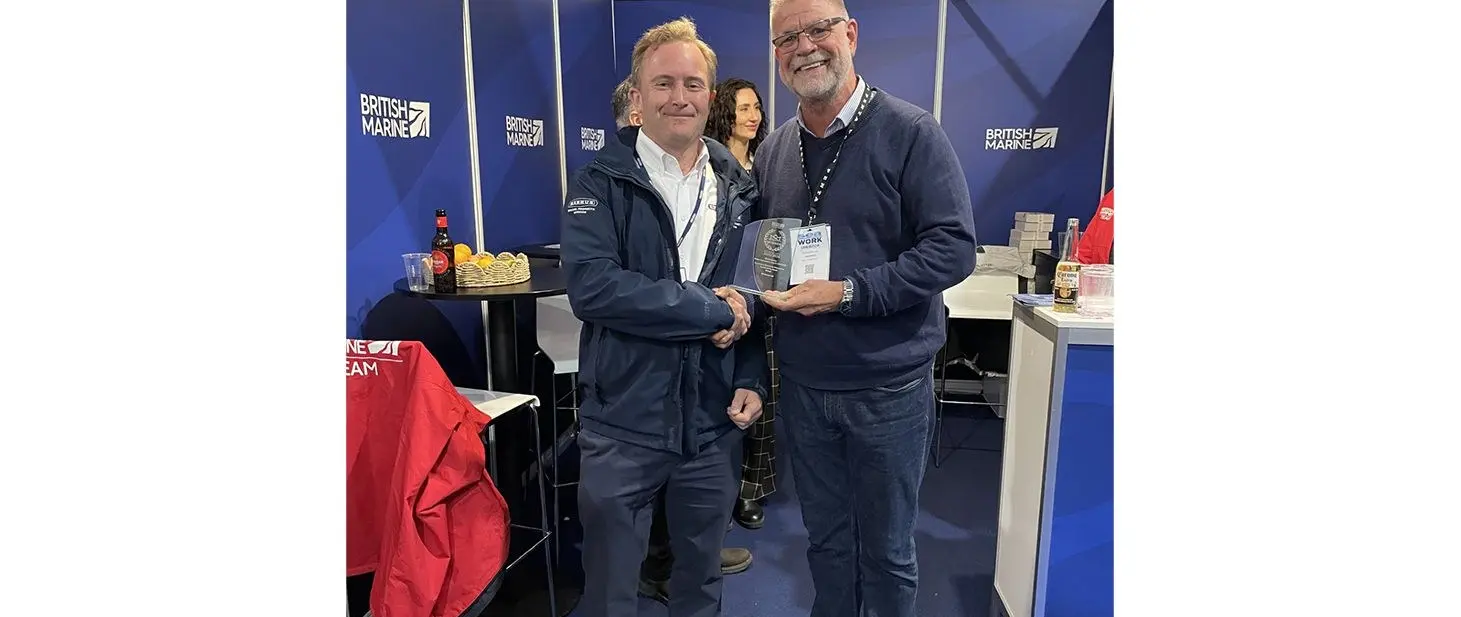
A marine-supplier sustainability award
Barrus received the Electrical and Electronics Association Sustainability Award at the British Marine Sector Association Awards during Seawork 2026. The trade association announced the result in June, recognising efforts extending from alternative propulsion options to packaging and operational practices. The award concerns the company’s broader programme, not an independently verified claim that one particular product has zero environmental impact.
The distributor's portfolio includes Mercury Avator electric outboards and Hybrid Marine systems, both of interest to operators considering alternatives to conventional combustion propulsion. On a small dayboat or tender, electric power can be convenient for shorter routes, but the practical case still depends on range, charging access and appropriate battery management.
From engine choices to day-to-day supply
Barrus also describes work to reduce plastic packaging across product lines. Packaging may appear secondary to boat performance, yet the marine trade moves large numbers of smaller parts and consumables between suppliers, workshops and owners. Reducing unnecessary waste can become meaningful when repeated across many deliveries.
The company says the August Race cleaning and maintenance portfolio has gained Marpol certification across its range, a claim buyers should interpret against the scope of the applicable standard and product documentation. An award announcement does not mean every chemical is appropriate for unrestricted discharge into the water.
Making an electric engine comparison
For someone considering a portable or small electric outboard, the most useful questions are about usable battery energy, actual time at normal cruising speed, charging arrangements and how much weight must be handled. Short harbour trips and sheltered inland routes can suit certain configurations better than long exposed passages.
The suitability of an electric system should be established through the boatbuilder’s approved power and weight limits. Owners must also understand isolation, storage, battery maintenance and safe charging. A system that works well for a sailing club’s support tender may not meet the needs of a fishing boat operating many miles offshore.
The limits of an industry award
A judging panel’s recognition can help direct attention to interesting practices, but it does not replace full lifecycle analysis or product-specific performance figures. Different buyers have different operating patterns and access to shore electricity. Comparing the total ownership arrangement is more informative than focusing only on the fuel or energy source.
The Seawork award is relevant to LBG because the products and maintenance practices it mentions span the smaller recreational craft market. It offers evidence that suppliers are examining the wider footprint of their operations while boat owners continue to make practical, vessel-specific choices. Small-boat users can also reduce unnecessary waste by maintaining existing engines correctly and choosing consumables suitable for the job. Product selection, disposal and workshop practice remain relevant whether a boat is powered by electricity, petrol or diesel.