
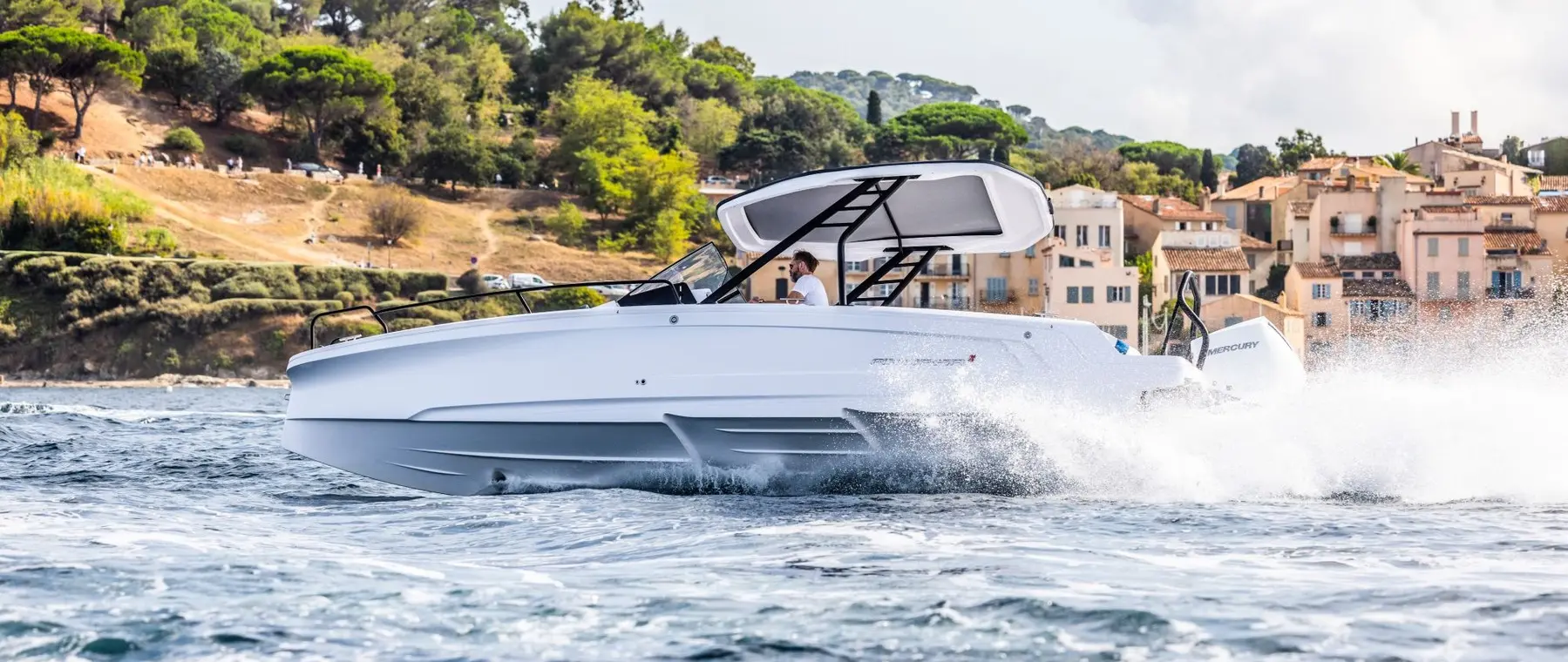
A smaller boat with a useful roof
Axopar's 25 Cross Top develops the brand's low, driver-focused format into an eight-metre boat with more useful shelter over the helm. Its appeal is to owners who want a fast, manageable dayboat but also value the ability to stay out when the weather becomes unsettled.
The roof and screens protect the forward seating positions without transforming the boat into a fully enclosed pilothouse. That distinction matters in northern waters, where a modest amount of wind protection is welcome but an entirely open deck can still be the point of ownership.
The foredeck remains available for lounging above the cuddy cabin, while the aft deck can be arranged around different seating and storage modules. Choosing the right configuration is often more important than ordering every optional accessory.
Twin-stepped hull and outboard options
Axopar lists a twin-stepped, 22-degree V hull for the 25 Cross Top. The published outboard power range is 200 to 300hp, with a 230-litre fuel tank and Category C coastal certification.
The builder also describes a potential maximum speed in the region of 45 knots, depending on equipment and conditions. Such a figure is not a cruising recommendation, and responsible speed should always reflect visibility, sea state and traffic.
At 2.23 metres of beam, the model remains relatively narrow for its eight-metre length. Berthing, road transport and the amount of secure storage should all be considered alongside the attraction of the streamlined form.
Useful overnight features
Below the forward deck is a cuddy cabin with two berths, accompanied by a compact toilet arrangement. It does not turn the boat into a large weekender, but it allows an owner to consider occasional nights aboard or to let a guest rest out of the wind.
A top-loaded refrigerator and a sink are among the practical extras described by the builder. These simple features often make the difference between an enjoyable full day afloat and one that involves frequent returns to shore.
Axopar offers alternative aft sofa and U-shaped seating modules, along with storage-oriented configurations. Those choices should reflect the number of regular passengers and whether the boat will usually carry swimming kit, fishing equipment or overnight bags.
How to judge the Cross Top
The boat's balance lies between agility and daily comfort. A good trial should include both slow-speed manoeuvring and moderate-speed cruising, as well as a seated view of the helm screens when the sun is low.
Owners should check how passengers pass from the bow to the cockpit and how they board over the side with the boat alongside a pontoon. Secure handholds and dry footing are more useful than headline speed when conditions deteriorate.
The builder's official model page details the current specification and upgrade choices. A final decision should be based on the actual fitted boat and a realistic understanding of how often the cabin and weather protection will be used.