
A sixth summer invitation
Australia's Boating Industry Association has launched the sixth edition of its Discover Boating summer campaign, continuing a national effort to bring new people into recreational boating and encourage existing owners to use their craft more often. The 2026–27 initiative began on 1 November under the familiar invitation See You Out There. According to a release authored by the association and distributed through sailing media, the campaign will use television, digital video, social media and online promotion during the Australian summer boating season.
The focus is deliberately broader than new-boat sales. The BIA describes participation through paddling, sailing, fishing and motorboating, with an emphasis on family experiences, outdoor recreation and people who have never considered boating accessible to them. That makes the announcement particularly relevant to the Leisure Boat Guide audience, where small craft and modest first steps can be more important than expensive vessels. The campaign's success will ultimately depend on whether interest turns into safe, sustained activity on the water.
The participation problem behind the campaign
Many members of the public see boating as something that belongs to other people: those with expensive marina berths, technical knowledge or a family history on the water. The association wants to challenge that picture. A hired kayak, a sailing lesson or an introductory fishing trip can be a first experience that requires no boat purchase at all. An affordable shared day out may provide a clearer understanding of the activity than a showroom filled with high-end products.
That approach does not make boating free of cost or risk. Equipment, training, transport and local rules still matter. What changes is the order of decisions: a newcomer can discover whether the activity appeals before choosing a vessel, a storage arrangement or a long-term commitment. A successful campaign should make those entry points easy to find and set realistic expectations. Promising simplicity without explaining safety and access would undermine the trust the industry hopes to build.
How the last campaign performed
The BIA reports that its 2025–26 promotion generated more than 49 million advertising impressions across television and digital channels. In the association's figures, television accounted for over 39 million impressions, while digital activity produced 9.9 million impressions and about 5.1 million video views, including 2.45 million full video completions. These numbers describe media exposure, not 49 million individual boaters and certainly not 49 million boat purchases. The distinction is important when evaluating the campaign's public reach.
Advertising metrics can show that a message has been distributed widely, but they do not by themselves prove changed behaviour. A person may see the same advert several times, and a video view does not establish that someone will book training or visit a club. The useful follow-up measures would include enquiries, first-time participation, repeat visits and the experiences reported by newcomers. The BIA's announcement provides a basis for expecting broad visibility, while the real-world effect remains to be established over the coming season.
Power, sail and paddle share the spotlight
The campaign deliberately spans multiple kinds of recreational boating. That is a sensible choice in a country with varied coasts, rivers and lakes, because no single boat type suits every household or location. Someone curious about nature may begin with a canoe, while a family interested in coastal fishing might try a guided outing on a small motorboat. A sailing club can offer a different route into the water, with instruction and a community that provides support beyond the first lesson.
These alternatives also have different safety requirements. A paddleboarder should understand wind and local conditions; a powerboat user needs competence with speed, manoeuvring and other traffic; a learner sailor needs appropriate instruction and a suitable environment. Responsible promotion should connect enthusiasm with practical information about local rules, lifejackets and training. The breadth of the campaign is promising precisely because it can help people find a form of boating matched to their interests and abilities.
Australia's marine economy as context
The association's 2026 industry report places Australian boating turnover at approximately A$10.5 billion for the 2025–26 period and describes a sector supporting around 35,000 direct and contractor roles across more than 2,000 businesses. These are industry figures attributed to the BIA, not a calculation made from the advertising campaign. They show why the sector invests in broad participation: a day on the water supports local services, equipment suppliers, instructors, boatyards and tourism enterprises as well as manufacturers.
A larger number of active boaters could help sustain small regional businesses, but the link is not automatic. New participants need credible options for access, facilities and training. If launching places are crowded, storage is scarce or local information is difficult to find, advertising alone cannot resolve the barrier. Industry organisations and public authorities therefore have complementary roles. Promotional spending can attract attention; practical infrastructure and quality service determine whether a newcomer returns.
The importance of showing ordinary boating
A communications campaign can accidentally reinforce the idea that boating is exclusively a luxury pursuit if its imagery concentrates on large yachts and exotic locations. The BIA says this year's effort will show experiences across smaller craft and familiar recreational activities. A compelling message for a beginner might be a calm morning with friends, a short coached sail or a family discovering a local waterway. Those scenes set an attainable aspiration and make room for a variety of budgets.
Owners also have a role in encouraging participation. A welcoming club, a responsible introduction and honest advice about equipment are more persuasive than pressure to buy the biggest possible boat. Sharing a safe local outing may create an enduring interest in the activity. Conversely, dismissing beginner questions or treating safety as an inconvenience can drive people away. The industry is promoting a lifestyle, and the quality of the welcome is part of the product.
Summer needs a safety message
The launch comes ahead of the busy Australian summer, when warm weather brings more people to beaches, estuaries and launch facilities. The campaign's invitation should be understood alongside official state and territory boating requirements. Licensing, registration, lifejacket rules and operating restrictions are not identical across Australia. A reader planning an outing should consult the relevant local maritime authority, check the marine weather and use safety equipment appropriate to the boat and waterway.
This is especially important for first-time participants, who may underestimate how quickly wind and current can change an easy-looking day. Practical preparation includes suitable flotation, reliable communications, a clear destination and knowledge of the safest place to return. A marketing message can inspire the trip, but the skipper remains responsible for safe decisions. Responsible boating should be visible within any effort to attract new users, not added only after someone has already committed to a purchase.
A role for clubs, marinas and dealers
The BIA says the campaign is supported by industry partners including GMSV and Club Marine, and it expects coordinated promotion through participating businesses and channels. Dealers, marinas and instructors can make that investment more useful by offering clear routes for newcomers to try an activity. That may mean transparent information on lessons, hire options, public events or introductory sessions rather than assuming every enquiry concerns an immediate boat sale.
Clubs can also pay attention to people who tried boating in earlier years but stopped. They may have moved house, lost access to a boat or found the social environment unwelcoming. A return through a beginner-friendly event may be easier than restarting alone. The campaign explicitly seeks to welcome those former participants back. The opportunity for the industry is to make re-entry uncomplicated while keeping appropriate safety standards and expectations in place.
What will count as success
The immediate news is the BIA's 1 November launch of its sixth annual campaign and its plans to extend mainstream advertising through the season. The previous year's exposure figures are substantial, but the more meaningful outcome will be the quality and diversity of actual boating participation. A small family boat used regularly, a new sailor who completes instruction or a group of paddlers who keep returning are all signs of the activity becoming more accessible.
For verified campaign details, the principal source is the BIA-authored 2026–27 release, with the association's own data report providing industry context. Readers should distinguish published advertising claims from independently measured participation. There is plenty of room for optimism, but a successful summer will be judged not simply in impressions and views. It will be judged in safe trips, welcoming places and the number of Australians who discover that they belong on the water.
Sources and image credit
Primary announcement: Boating Industry Association of Australia. Additional official context: reference 1; reference 2.
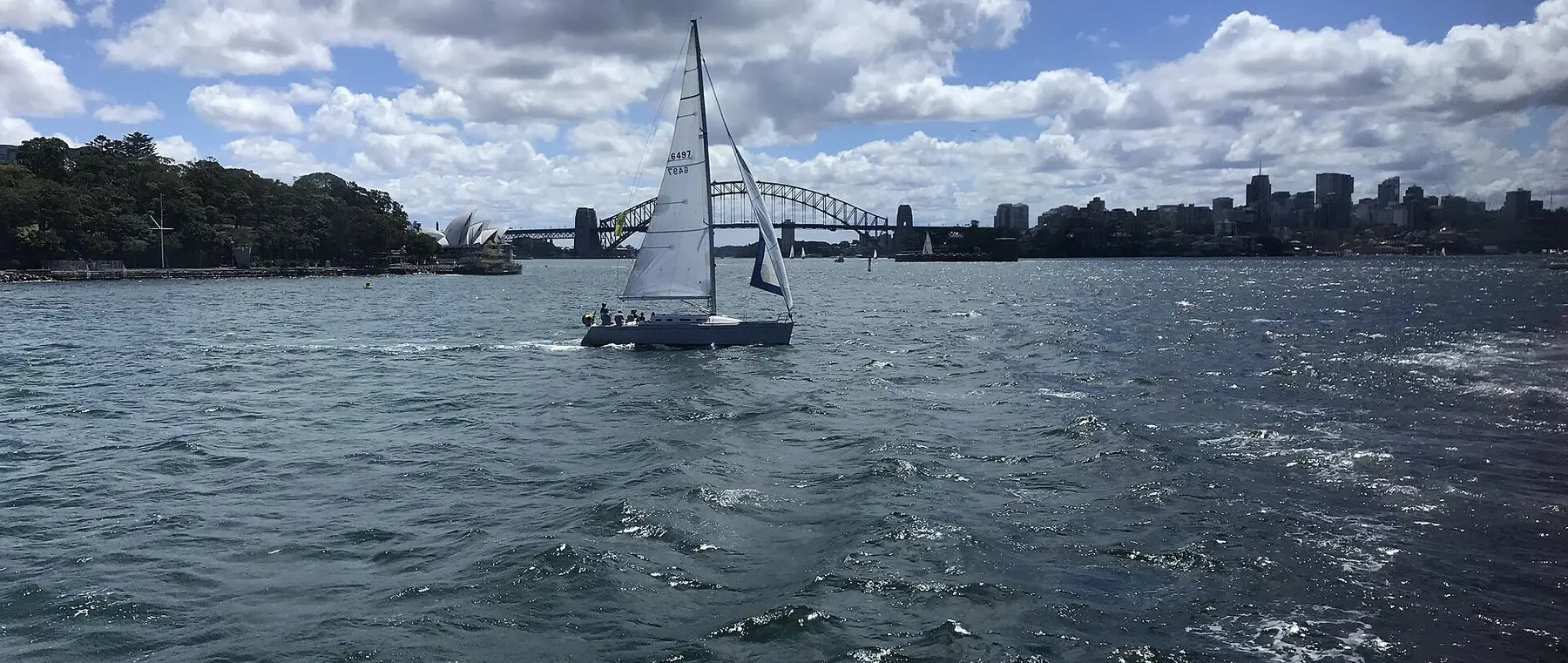
Illustrative photograph of a boat on Sydney Harbour, not imagery commissioned for the Discover Boating campaign. Photograph: DestinationFearFan / Wikimedia Commons, CC BY-SA 4.0; resized and recompressed for web and shared under the same licence.
