
Auckland plans a more hands-on boat show
The 2027 Auckland Boat Show is preparing to put more emphasis on on-water demonstrations, trailer boats, amphibious craft and flexible ways of accessing recreational boating. The event organiser says greater space for sea trials will be part of its response to visitor demand, with the show scheduled for 1–4 April 2027 at the Viaduct Events Centre, Jellicoe Harbour and Wynyard Wharf. That focus makes the exhibition particularly relevant to small-boat owners and people considering their first craft.
Rather than judging a boat only from a polished static display, visitors may have more opportunities to understand how a particular design behaves afloat. A sea trial cannot replace a full pre-purchase inspection, but it can reveal whether a family finds the cockpit practical, whether a helm is comfortable and how a boat handles at ordinary cruising speeds. The organiser's announcement signals an effort to connect product comparison with actual experience on the water.
What the organiser learned from the previous show
Auckland Boat Show manager Stacey Cook says the sea-trial zone was especially successful at the 2026 event. According to the organiser's update, one exhibitor took more than four hundred people out on the water, evidence of strong interest in experiencing boats rather than merely walking around them. The organiser intends to provide more space for this activity in 2027. Those reported figures describe a particular exhibition experience, not a guarantee of the number of trips offered next April.
The show's wider statistics help explain its ambitions. In its official review of the 2026 anniversary edition, the organiser said there had been more than 164 exhibitors, over five hundred brands and 1,220 sea trials. These are industry-supplied numbers rather than an independent audit, and they should be presented as such. The useful implication is that on-water engagement was already substantial before the proposed increase in 2027. That gives participating companies a reason to plan demonstrations early.
Why a trial changes a small-boat decision
Smaller leisure boats often compete on details that are difficult to judge from a brochure. A 6m runabout may offer attractive seating, but boarding height, sightlines, storage and movement around the outboard make a major difference to how it works for its owners. Being on the water can reveal how much shelter the windshield provides and whether passengers feel secure during normal turns. Those observations can help an owner narrow a shortlist before considering specifications and price.
Visitors should approach a sea trial as a structured comparison rather than a thrill ride. Ask the exhibitor what model and engine combination is being demonstrated, how much fuel and equipment are aboard, and whether the loading resembles normal family use. Note the wind, waves and harbour traffic at the time. A twenty-minute demonstration is valuable only when those conditions are understood. A smooth run on a sheltered day is not proof of performance in rough offshore weather.
Amphibious craft and the launch problem
The organiser expects a growing display of amphibious boats, reflecting the suitability of New Zealand's coastline for equipment that can travel directly between shore and water. These craft can reduce dependence on a conventional boat trailer and ramp, but they bring their own mechanical systems, weight and maintenance requirements. A potential buyer should examine beach access rules and the practicality of the shoreline where the boat will actually be used.
A vehicle that moves on land is not exempt from local navigation or environmental regulations once afloat, and moving across a beach may be restricted in some places. Owners need to think about storage, service support and how the amphibious system affects carrying capacity. Demonstrating a smooth launch at a show does not prove that every beach or private property offers suitable access. The benefit is real only where lawful launch conditions and the boat's operating envelope coincide.
Shared boating becomes a bigger part of the discussion
The official show statement also highlights subscription and shared ownership models. These are increasingly considered by people who want time afloat but do not want the full responsibilities of a privately owned craft. For newcomers, shared access may provide a chance to learn what kind of boat they enjoy before committing capital to a purchase. However, the value depends on availability, operating rules and the quality of the service behind the membership.
Prospective users should compare costs beyond a headline monthly fee. Ask how bookings are handled in peak summer periods, who pays for fuel, what training is required and how damage or breakdowns are managed. Understand the insurance terms and whether a preferred boat is available from the intended location. A subscription is not automatically the cheapest route to boating, nor is ownership always the most expensive. The organiser's choice to feature the topic creates an opportunity for informed comparison.
Watersports and foiling remain in view
Foiling and other accessible watersports were among the activity areas the organiser wants to develop further. For someone who usually thinks about motorboats, the wider display may introduce smaller craft that are easier to store or share. For a dinghy sailor or paddleboarder, a show can provide access to equipment advice and opportunities to talk with instructors. The important distinction is between a product demonstration and a training course; trying equipment under supervision does not establish lasting competence.
New participants should consider where they will learn and practise after the show. Instructors, local clubs and suitable sheltered water often matter more than owning advanced gear immediately. Foiling equipment can behave quite differently from traditional boards or dinghies, especially in gusts and busy waterways. A safe introduction requires instruction and appropriate conditions. A show that encourages participation can have lasting value if it also helps visitors find a credible path into the sport.
April dates and the central Auckland setting
The organiser confirms 1–4 April 2027 as the dates for the next show. The locations—Viaduct Events Centre, Jellicoe Harbour and Wynyard Wharf—place the event within Auckland's central waterfront. The planned format combines shoreside exhibition space with a significant on-water presence. Visitors should check opening hours, sea-trial booking arrangements and exhibitor lists through the official site as the date approaches, because a preliminary announcement does not define the final daily programme.
April weather in the Hauraki Gulf and Waitematā Harbour can vary, so a visitor should not assume every planned demonstration will proceed regardless of conditions. Exhibitors may adjust or cancel trials for safety, and access arrangements can be affected by working harbour activity. Wear practical footwear and clothing suited to spending time on pontoons. If a particular boat is the sole reason for travelling, contact the exhibitor beforehand and confirm whether a sea trial is offered.
What small-boat builders can gain
More sea-trial capacity may help manufacturers of trailer boats, RIBs, compact cruisers and smaller electric craft explain practical differences that are otherwise lost in crowded exhibition halls. A buyer can ask to observe steering response, acceleration at ordinary throttle settings and the layout of controls, while a builder can hear immediate feedback from potential customers. Those conversations are particularly valuable when a product seeks to solve a familiar problem such as launch access or family cockpit flexibility.
Sea trials also need resources. Vessels require suitable crews, safety briefings, fuel or charge, scheduling and coordination with harbour operations. The organiser's expansion is therefore a logistical commitment, not just a marketing phrase. It remains to be seen how individual exhibitors use the extra space. Consumers should be cautious about interpreting a manufacturer's non-participation in sea trials as evidence that a boat is unsuitable; demonstration plans depend on many commercial and operational factors.
How a visitor can make a useful shortlist
Before attending, write down the activities the boat must support: fishing, towing, relaxed cruising, marina visits, beach landings or family watersports. Specify typical passenger numbers and the realistic storage and towing limits. That simple list can prevent a visitor being distracted by features that look attractive but do not solve a real need. It also gives demonstrators something concrete to address when suggesting a model or propulsion package.
During the show, compare a few boats rather than trying everything. Photograph specifications and note which features are standard or optional. Ask about after-sales service and what happens if a boat needs warranty attention away from the selling dealer. Make time to ask how long it takes to launch, clean and recover the craft. An appealing boat must fit an owner's ordinary weekend, not just the short period when it is being presented by a professional team.
An opening for more people to go boating
The organiser's stated ambition is to attract more people into recreational boating through hands-on experience and varied access models. That is a meaningful direction for the small-boat market, where perceived complexity can be as strong a barrier as the initial purchase price. Clear information about clubs, shared access, training and boat handling could help visitors see a realistic route from curiosity to regular time afloat.
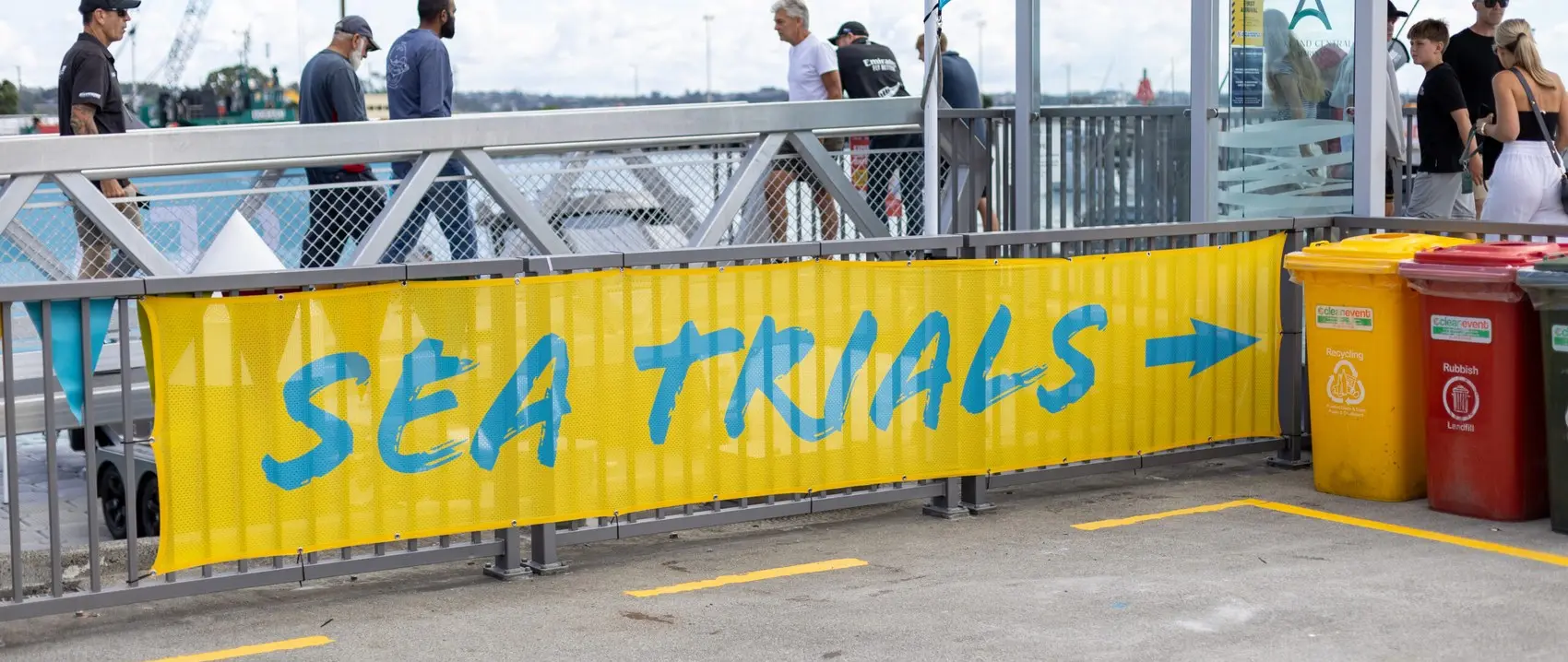
The official Auckland Boat Show announcement sets out the sea-trial and shared-boating focus, while the organiser's visitor information gives the confirmed 2027 dates. Photograph: Auckland Boat Show's own sea-trials image from its official announcement; it documents the event's on-water format rather than promising a particular trial slot in 2027. All plans remain subject to the event's latest programme and operating conditions.
The 2027 edition will succeed in its small-boat mission if visitors leave with more than a collection of glossy brochures. A practical trial, an honest conversation about costs and a clear path to training can make the difference between admiring a boat and confidently using one. That is the most promising aspect of Auckland's expanded approach.