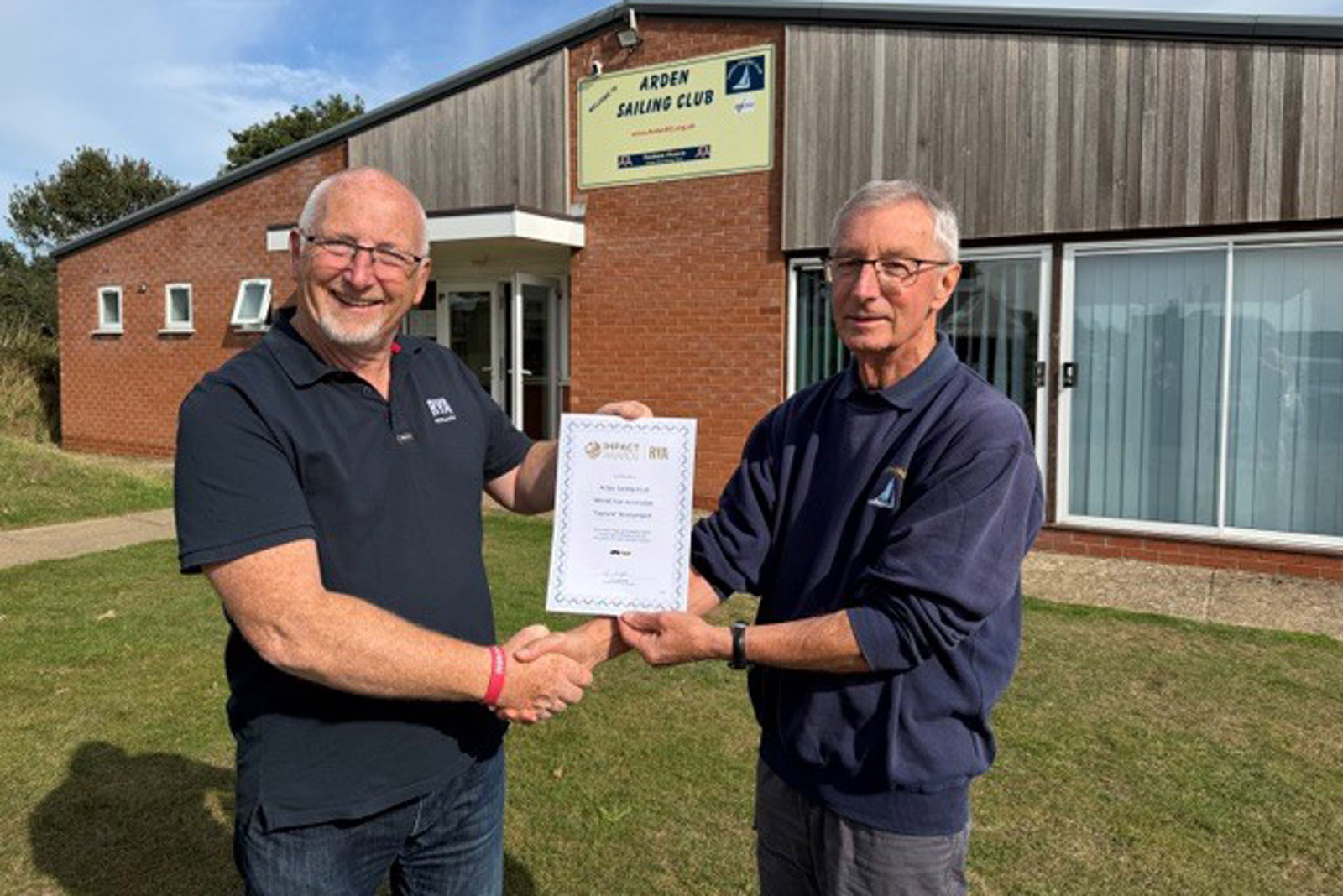
Arden Sailing Club has received an RYA Impact Award for its Explorer Boat Project, a community initiative designed to open time on the water to people who use wheelchairs or have limited mobility. The Royal Yachting Association announced the recognition on 11 November 2026 and identified club treasurer Steve Ryder as a driving force behind the adapted vessel. The project turns an ambition often expressed in boating into a tangible operational question: what must be changed so that someone can actually board, move about and enjoy a trip? Its solution includes a front-loading ramp, level flooring and electric outboard propulsion. The award recognises the club's effort to make access possible, not a commercial production launch or an indication that the adapted craft suits every user without individual assessment.
The project behind the award
The RYA says Ryder spent several years researching suitable technology and the requirements of people who might otherwise find boating inaccessible. The resulting Explorer was designed specifically around convenient boarding and movement, rather than attempting to adapt ordinary steps or narrow cockpit arrangements at the last moment. The initiative has taken considerable local commitment. According to the association, Ryder secured a £25,000 community government grant and matched it with additional funding to realise the boat. The announcement does not provide a full itemised build budget, manufacturer specification or verified maximum passenger capacity. Those details should not be inferred from the amount raised or from photographs. The key confirmed achievement is that the club has placed a functioning wheelchair-friendly boat into use on its local waterways.
First voyages and community use
The Explorer made its maiden voyage in 2025 and, the RYA reports, has since enabled more than 100 people to experience the water. Arden Sailing Club operates the project along the River Avon, making river and local-waterway access a practical focus. Those participation figures are an encouraging indicator of activity, but they are not a clinical measure of wellbeing or a guarantee that every person with a mobility impairment can use the vessel. Individual access needs, assistance arrangements and suitable operating conditions still matter. The club describes interest from different generations, including an older participant aged 88. Reporting that range is useful because inclusive boating is not a single age-group issue. It spans families, older people and people whose circumstances may change over a lifetime.
Why the ramp matters
For a wheelchair user, an apparently modest step or steep change in level can be the difference between independent participation and being unable to board. A front-loading ramp addresses one part of that barrier. Flat flooring can also make it easier to move within the vessel once aboard, particularly where conventional boat interiors include raised thresholds, tight corners and obstructions. Accessibility, however, is a system rather than a component. The shore approach, berth surface, boarding assistance, wheelchair position, securing arrangements and safe exit in an emergency all deserve consideration. The RYA release confirms the ramp and flat floor but does not certify the vessel against an exhaustive published accessibility standard. Clubs considering similar projects should seek specialist guidance and assess real users' needs rather than assuming that one visible feature solves every problem.
Electric propulsion as part of the design
The Explorer uses an electric outboard, which the RYA presents as a quiet way to enjoy the water. Low noise and reduced local exhaust can improve the experience for people observing wildlife or simply appreciating a gentle river outing. Yet electric operation still brings decisions about battery state, suitable range, charging, maintenance and the need for safe electrical installation. The boat's particular motor rating, battery capacity and endurance are not given in the award story and should not be invented. A safety margin is important on any electrically propelled vessel, especially where passengers may require additional assistance. A responsible operator must also be prepared for changes in current, wind or weather and should understand the limitations of the boat's chosen propulsion system and emergency arrangements.
Inclusion is also about people
A specially adapted craft is only one part of a successful access programme. Volunteers and skippers need a respectful understanding of the experience of passengers with different abilities. That can include clear explanations of the trip, appropriate assistance without taking control away from an individual, and listening carefully when someone identifies a problem with the boarding process. A project may succeed because its organisers work with users rather than treating accessibility as an engineering exercise completed at launch. Arden's recognition highlights the sustained volunteer and fundraising effort behind the boat. It does not establish a universal training syllabus for such operations. Any other club hoping to replicate the idea should seek appropriate safeguarding, disability-awareness and boating-safety advice from competent organisations.
Funding beyond the first grant
Community marine projects can face a difficult divide between obtaining the money to purchase or modify a boat and supporting it year after year. The initial grant described by the RYA was combined with other fundraising to produce the Explorer. Future operators of any similar craft must also plan for inspection, insurance, battery replacement if needed, shore facilities, volunteer support and ordinary wear. Reliable ongoing management matters because an accessible boat that is unavailable for long periods cannot deliver its intended benefit. This is a general operational observation, not a statement about Arden's accounts. The useful lesson from the reported initiative is that a targeted grant and persistent local leadership can make specialised access equipment possible, while a sustainable operating plan remains essential for any club attempting an equivalent programme.
The RYA Impact Award context
The RYA Impact Awards recognise people, clubs and organisations that widen participation and contribute to boating communities. They are open for nominations throughout the year and are not a ranking of boat models. Arden's award therefore highlights a social and practical achievement: removing a barrier that stopped some people from participating. Ross Ryan, the RYA regional chair for the Midlands, praised the opportunity the Explorer offers for people to experience the waterways from a different perspective. The association's account also reflects Ryder's aim of letting people enjoy the river even when ordinary boating facilities would otherwise make that difficult. The precise value of the experience is personal, and it should be described as participant opportunity rather than a medically proven treatment or universal accessibility outcome.
A model other clubs can examine
The RYA reports that Arden hopes to build on its success and explore taking the Explorer to other clubs around the country. That is an ambition, not a confirmed national tour with published dates. The idea is worth examining because clubs often have enthusiasm and local volunteers but lack access to a suitable adapted boat. Sharing practical learning about shore access, user feedback and operating routines could help another club decide whether to commission its own vessel or cooperate with an existing programme. Transferring a boat between venues is more complicated than moving it on a trailer: launching points, available facilities, local conditions and the needs of participating groups must all be checked. The appropriate next milestone is evidence of where and how the club can safely extend access.
Lessons for the wider leisure-boat sector
Accessibility should be considered earlier in boat and facility design, not only after potential users identify difficulties. Smaller craft often have limited space, which makes thoughtful layout especially important. Designers and marina operators might ask whether boarding arrangements can accommodate a wider range of users, whether controls are visible and usable, and whether crew members can move safely during normal operation. Solutions will vary between a river excursion boat, training dinghy and family motorboat. No single feature turns every vessel into a fully accessible product. The Explorer example instead shows what can happen when a clear user requirement guides decisions about deck layout and propulsion. That is a significant editorial lesson for a sector sometimes inclined to equate innovation only with power, speed or electronics.
What can be verified now
The association identifies Steve Ryder, the River Avon project, the specially adapted ramp and floor, the electric outboard, the funding contribution and more than 100 participants since the 2025 first voyage. It also identifies continuing local interest and the club's desire to reach more people. The official accompanying RYA photograph shows an award presentation connected with the project; it is not a technical certification image or a promise of specific wheelchair capacity. Anyone interested in joining a trip should contact the club for availability, individual requirements and operating arrangements instead of assuming ordinary boat-hire conditions apply. For the wider industry the story is a concrete example of a small craft being adapted around the people it is intended to serve.
Why it deserves attention
Many boating stories begin with a new model, a race result or an equipment award. This one begins with the obstacle that can prevent someone from reaching a boat at all. Arden Sailing Club's project has translated that obstacle into design choices and an operating programme. The RYA Impact Award acknowledges the work without removing the need to examine results and limitations carefully. More than a hundred reported participants indicate that the boat is being used, while future expansion remains a plan to be developed. The important outcome for leisure-boat readers is not that all access challenges have been solved. It is that one club has demonstrated a practical route from community need, through research and fundraising, to real people spending time afloat who might otherwise have been excluded.
Sources and image attribution
Primary reported announcement: https://www.rya.org.uk/news/making-the-water-accessible-to-all/.
Official photographic provenance: https://www.rya.org.uk/news/making-the-water-accessible-to-all/. Image supplied by the originating organisation, credited in the photograph title; original copyright remains with the rights holder. Official image file. The photographs are documentary or clearly labelled archival illustrations, not evidence of events that have yet to happen.