
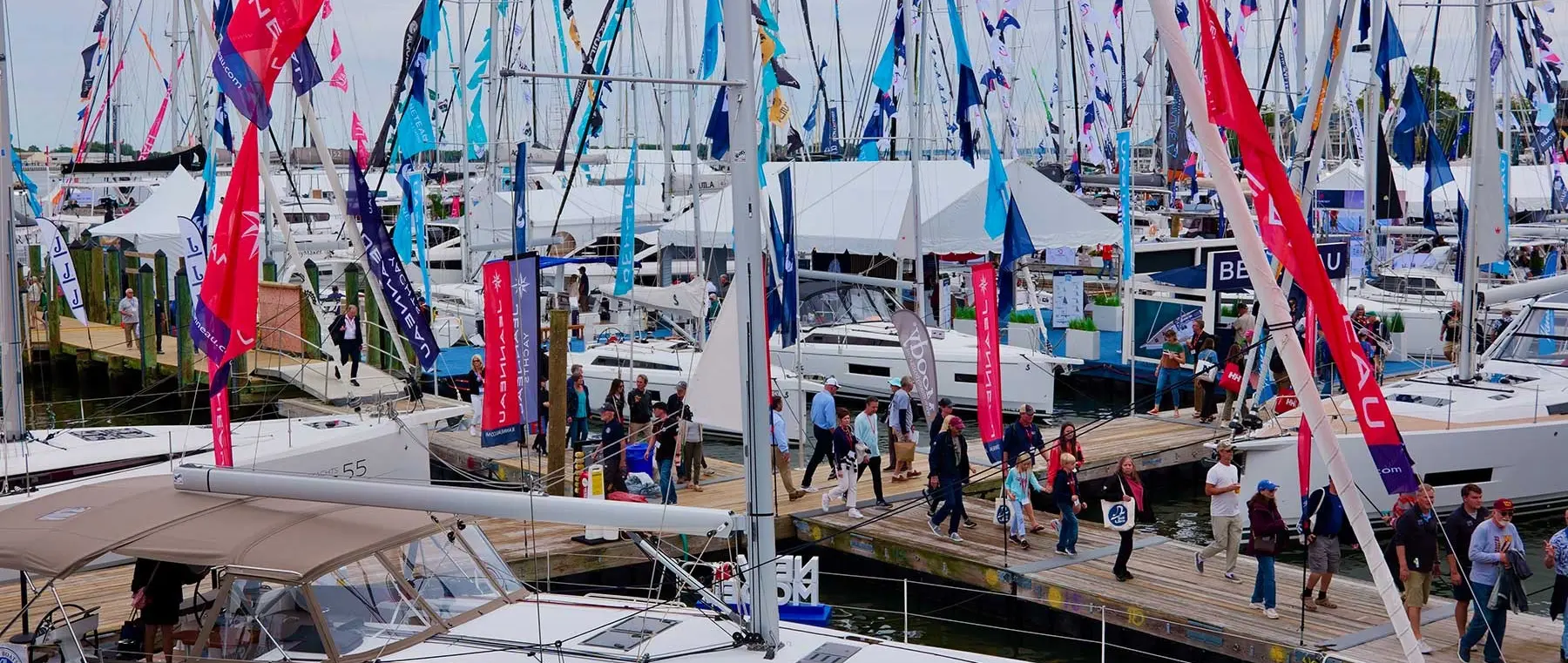
Historic docks host an active sailing show
The 2026 Annapolis Sailboat Show is taking place at the city's historic waterfront from 15 to 18 October. Organisers and Trade Only Today report more than 150 displayed boats and 500 exhibitors across floating docks and shoreside exhibition spaces.
The show is one of North America's most established sailing events, attracting people who are planning a new boat purchase as well as those interested in equipment or cruising. Its waterfront layout allows visitors to compare boats in a natural marina setting.
Monohulls and multihulls share the programme
General manager Sheila Jones told Trade Only Today that the display includes 79 monohulls and more than 40 multihulls. The broader line-up also features dinghies, racing boats and other sailing craft.
Different hull types serve different uses, from club racing to coastal cruising. Visitors should examine boarding access, handling systems, berth layouts and likely maintenance before deciding which design suits their plans.
Two miles of docks and equipment tents
Approximately two miles of floating docks are being used for the exhibition, while tents house sailmaking, rigging, navigation electronics, safety equipment and marine services. Charter businesses and sailing schools are also represented.
Equipment stands can be useful for investigating retrofit ideas, but a suitable installation depends on a particular vessel's power supply, layout and operating needs. Buyers should seek accurate technical advice rather than assume a show demonstration guarantees compatibility.
Organisers discuss shifts in the audience
Jones says the show continues to attract a stable audience while the organisers notice more women and greater diversity among attendees. Communications staff also describe growing use of digital promotion and social media among exhibitors.
These remarks reflect the organisers' observations, not an independently measured demographic study. Even so, they show that established boat shows are considering how to reach newer groups of sailors.
Visitor plans and possible purchases
Organisers expected more than 30,000 visitors during the event. As the show is still running on 17 October, that figure is a forecast rather than a confirmed final attendance total.
Visitors considering a purchase should arrange further viewings, verify specifications and investigate berth and insurance costs before committing. The show provides useful access to the industry but does not replace a proper vessel survey.
Making a serious comparison at a boat show
A major in-water exhibition is an opportunity to step between different sailing boats within a short time. Visitors can look at boarding arrangements, cockpit protection, visibility from the helm and how easily the crew might move around on deck. Those observations are difficult to obtain from brochures alone and can quickly narrow the list of suitable models.
A proper comparison should take account of the way the boat will actually be used. A family hoping to cruise with children may value sheltered seating and practical storage, while a club racer has different priorities. Exhibited equipment also varies by specification, so visitors should ask which features are included in the quoted price.
Monohulls and multihulls answer different needs
A monohull typically has a different motion and deck arrangement from a cruising catamaran. A multihull may offer wide living spaces and separate hull accommodation, but it can also require a wider berth and different handling arrangements in marinas. The right decision depends on destinations, crew and available facilities, not simply fashionable design.
Weight distribution and sail handling deserve attention whichever style is chosen. Owners should understand how a particular boat behaves when loaded for cruising and how reefs are taken in stronger wind. A show is a good place to ask questions, but meaningful performance comparisons should be grounded in reliable trials and specifications.
Equipment tents reward focused visits
The sailboat show also brings together rigging suppliers, electronics businesses, safety-equipment makers and sailing schools. Visitors can arrive with a short list of maintenance or upgrade questions and speak directly with specialists. This is especially valuable when a boat already owned is becoming harder to service or requires an updated piece of equipment.
Measurements and photographs can help a supplier determine whether a product is appropriate. A navigation screen may look attractive at a stand but prove unsuitable for the vessel's existing wiring or available mounting space. Owners should request installation documentation and clarify the location of qualified support before buying.
Training and charters can replace ownership
Not everyone attending Annapolis needs to purchase a new yacht. Sailing schools and charter operators provide routes into boating that avoid some of the responsibilities of storage and routine maintenance. A newcomer can often learn more about personal preferences from a structured trip than from trying to predict future habits.
Visitors should ask about required experience, safety briefings and the terms of any bareboat charter. A skipper responsible for a hired vessel still needs suitable competence and awareness of local navigation rules. Finding a supportive training provider may be the best outcome for somebody at the beginning of their sailing experience.
Take forecasts and attendance claims in context
Organisers' expectations about attendance can guide planning but should not be confused with a final count while an event is still open. Similarly, promotional statements about the newest technology or a 'first' model deserve confirmation against actual specifications. Trade-show enthusiasm should support research rather than replace it.
After the exhibition, buyers can revisit notes, compare total ownership costs and arrange independent surveys where appropriate. Brokers and builders should provide clear information about delivery schedules and warranty support. The Annapolis show creates access to an unusually broad range of options, but the final decision remains an individual one.
Visitors planning to travel a long distance for the show should check ticket conditions, accessible facilities and any limitations on boarding particular exhibits. Demonstration boats may have queues or restrictions, especially during busy periods. Arranging an appointment with a builder or broker in advance can protect time for detailed questions.
Anyone comparing new boats should also ask about delivery and commissioning procedures. Transport, rig stepping, equipment installation and the final handover can add work beyond the original factory price. Written confirmation helps prevent assumptions about what will be ready when the buyer arrives to take possession.
The show setting is also a chance to discuss sailing communities and local cruising destinations with people who use similar vessels. Owners can learn about practical maintenance and helpful training programmes. Advice from another sailor should still be checked against the specifications of the boat and the official requirements of the intended waterways.