
Marina conference names an AI-focused opening speaker
The Association of Marina Industries has named Jeff Bloomfield as its opening keynote speaker for the 25th annual AMI Conference & Expo, to be held in Daytona Beach, Florida, on 1–3 February 2027. The appointment was reported on 6 November 2026 and puts artificial intelligence at the centre of the organisation's latest education programme. For small-boat owners, the importance is less about fashionable software and more about how marinas manage bookings, repairs, customer enquiries and the many routine decisions that can affect a day on the water.
Bloomfield's keynote will address how businesses can use AI to support staff rather than treat technology as a simple substitute for expertise. A follow-up educational session is intended to offer practical applications. The announcement is about forthcoming talks, not a product launch or evidence that any marina has already implemented a particular system. Owners should distinguish a conference's proposed lessons from facilities and services that are actually available at their local harbour.
The event is scheduled for Daytona Beach
The 2027 AMI Conference & Expo takes place at the Ocean Center in Daytona Beach, with an agenda spanning Monday to Wednesday. The official schedule lists registration and activities on 1 February, the main opening keynote on Tuesday morning, 2 February, and a further programme concluding at midday on 3 February. The event serves marina and boatyard managers, dockmasters, suppliers and service professionals. It is not a public boat show aimed principally at people shopping for a new hull.
The 25th edition will also feature an exhibition, workshops and professional networking. Specific agenda details may change, and visitors should rely on the organiser's current schedule before making travel plans. The focus on the people running waterfront facilities matters because those businesses provide the infrastructure for recreational boating. A technically capable boat becomes much less convenient if berths, maintenance and launching services are poorly coordinated.
The keynote argues for augmented work
Bloomfield's opening presentation is billed around using AI to amplify human skills, judgment and relationships. The organiser highlights the idea that technology can help staff make better decisions and concentrate on work where their knowledge is most valuable. In a marina, that might include reducing time spent searching through records, answering repetitive questions or drafting routine customer communications. Such examples are potential uses, not specific systems or results independently verified at the event.
Responsible adoption requires care. A computer-generated response cannot decide whether a vessel is safe to lift, whether a damaged pontoon can be used or how to resolve a complex electrical fault without qualified oversight. Human expertise and clear accountability remain central to operations. The keynote's significance lies partly in encouraging marina managers to judge where new tools could genuinely reduce administrative burden while preserving customer trust and safety.
A second session promises practical ideas
Bloomfield is also scheduled to present a follow-up educational programme framed around ten ways to put AI to work in a marina. The public announcement does not list every example in advance, so it would be premature to claim that a specific booking platform, maintenance algorithm or chatbot will be demonstrated. The organisers say the session aims to offer steps marina professionals can use to improve efficiency, planning and communication.
For small-boat owners, the practical test will be whether services become clearer and more reliable. A better enquiry process should help a skipper find the correct berth for a particular hull and receive accurate information about access and charges. A well-managed maintenance record may reduce confusion about work already completed. These benefits depend on accurate data and staff capable of checking a response, not simply the presence of an AI label on a marina's website.
Berth availability remains a physical question
Marina software can help staff understand bookings, berth occupancy and customer preferences, but it cannot create a suitable berth where none exists. A six-metre motorboat may have a different draught, beam or handling requirement from a ten-metre cabin cruiser. Digital systems must preserve these details and give users accurate information about the facilities they require. The most helpful booking interface is one that matches actual space and services with the visiting boat.
Where marinas introduce automated recommendations, owners should still be able to contact a knowledgeable person for unusual requests. Weather, tidal conditions, damaged infrastructure or work at a pontoon can change which berth is suitable. A predicted vacancy is not the same as confirmation from the marina. Technology can reduce administrative delays, but safety-critical decisions require current local knowledge and dependable procedures.
Maintenance scheduling is another possible area
Many recreational owners rely on a marina or associated yard for antifouling, engine service, lifting and winter storage. Managing these jobs requires availability of skilled labour, equipment, parts and suitable weather windows. Software tools may assist with prioritising work or spotting incomplete records, provided information is correctly maintained. A small yard could benefit from less time spent chasing paperwork, yet the boat still needs a qualified technician to inspect and repair it.
AI-generated maintenance suggestions must not be treated as a substitute for manufacturer instructions, engineering judgment or appropriate inspection. An algorithm can be mistaken about model variations or misread a fault description. The responsible use case is supporting trained personnel with information they can verify, while making the work order and final result clearer to customers. That is a more practical measure of success than simply processing more enquiries with fewer staff.
Customer service involves privacy and trust
A marina may hold detailed customer information, including vessel identification, berthing contracts, contact details and payment records. Using modern software for administrative work introduces questions about data handling, access control and accuracy. Businesses should understand what is shared with any external provider, what records are retained and who can see them. An assistant that can draft a message is not necessarily authorised to reveal an owner's financial or personal information.
Small-boat owners benefit from services that protect their records while making routine transactions easier. A marina should have a clear process for correcting an error, reviewing an automated response and referring a complicated problem to staff. These safeguards do not depend on whether a marina is large or small. The most credible technology projects improve convenience without sacrificing privacy or accountability.
The conference covers more than AI
AMI's published agenda includes a marina and boatyard tour, training sessions and an exhibition programme, alongside discussions of marina management and the changing industry. The organiser has also highlighted a broader conversation involving private equity investors and waterfront businesses. These matters can affect the ownership and management of facilities where small craft are stored or maintained. They do not imply that every marina is being sold or that berth prices will necessarily rise.
An individual marina's charges are determined by its business, investment needs, local demand and available services. Industry conferences can help operators discuss such issues, but the public announcement does not provide a forecast of berth fees or predict policy changes. For owners, the useful approach is to follow actual marina notices and contracts rather than infer immediate local consequences from the themes of a professional gathering.
Professional training is still a priority
The conference is organised by a trade association that promotes education and recognised marina-management qualifications. Its wider programme includes opportunities for staff to develop technical and operational skills. A facility with clear procedures for dock operations, electrical connections, lifting equipment and customer communications is better placed to serve boaters safely. New software can help organise those procedures, but cannot take responsibility for a skipper's or yard worker's physical actions.
Owners may judge a marina by the quality of the service they receive: whether a launch booking is honoured, whether an enquiry receives a useful answer and whether staff can assist when something unexpected happens. Training and experience remain important in every one of those situations. The attention being given to AI should be assessed within that wider commitment to professional standards rather than as a stand-alone transformation.
What the November announcement establishes
The confirmed news is the choice of Jeff Bloomfield to deliver an AI-centred opening keynote at the AMI Conference & Expo on 2 February 2027, with a further session intended to identify practical uses. The event itself runs from 1 to 3 February at the Ocean Center in Daytona Beach. The association is positioning new technology as a way to strengthen marina employees and customer service, not simply replace staff or eliminate professional decisions.
Leisure Boat Guide's interest is the real-world experience of people using boats under twelve metres, who need predictable access, competent repairs and trustworthy information. If marina technology eventually helps staff deliver those basics more efficiently, boat owners stand to benefit. But no specific installation, cost saving or customer improvement can be claimed on the basis of a conference programme alone. Those outcomes will require evidence from facilities that adopt and test the ideas.
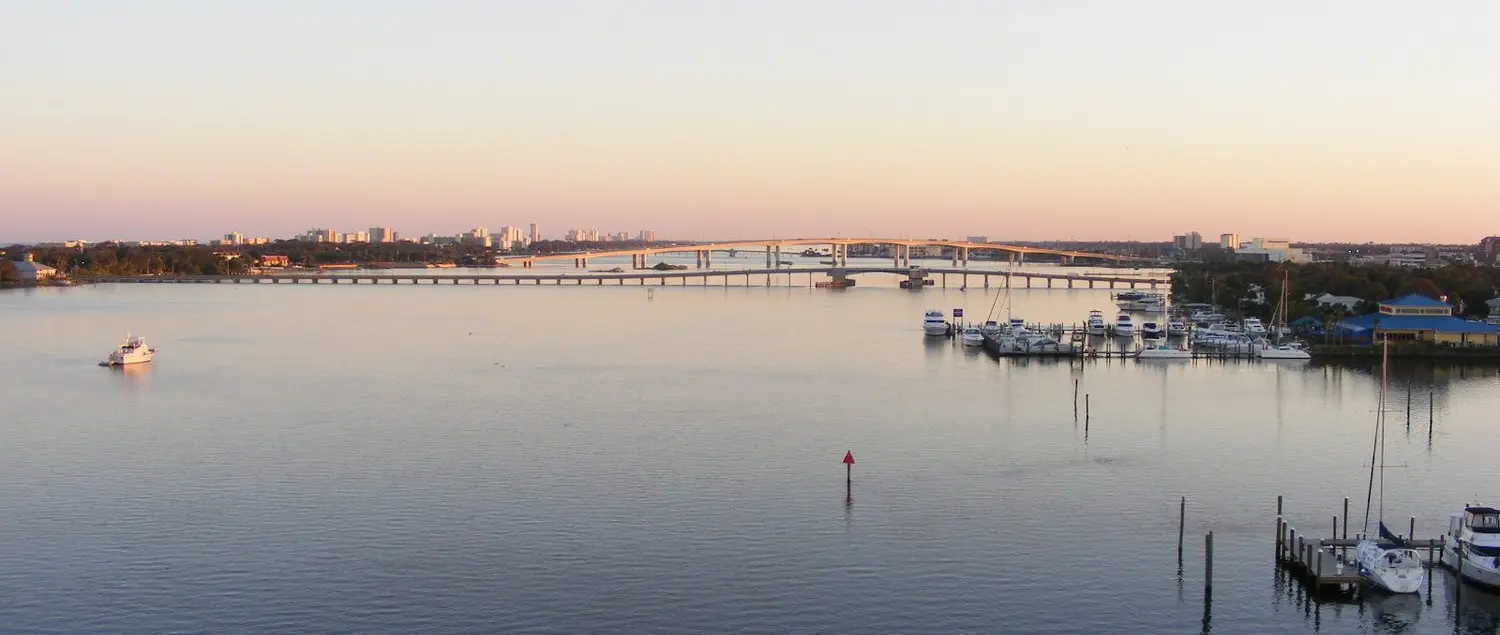
Sources: Boating Industry, 6 November 2026 and Association of Marina Industries official event schedule. Photograph: boating activity on the Halifax River near Daytona Beach, by Gamweb, Wikimedia Commons, CC BY-SA 3.0; illustrative location photograph, not of the conference.
